
Florida Motorcycle Insurance Requirements: What Riders Must Know
Florida doesn't require motorcycle insurance, but riders face financial risks without it. Learn what coverage you need and what to do after a crash.
.webp)
Riley Beam
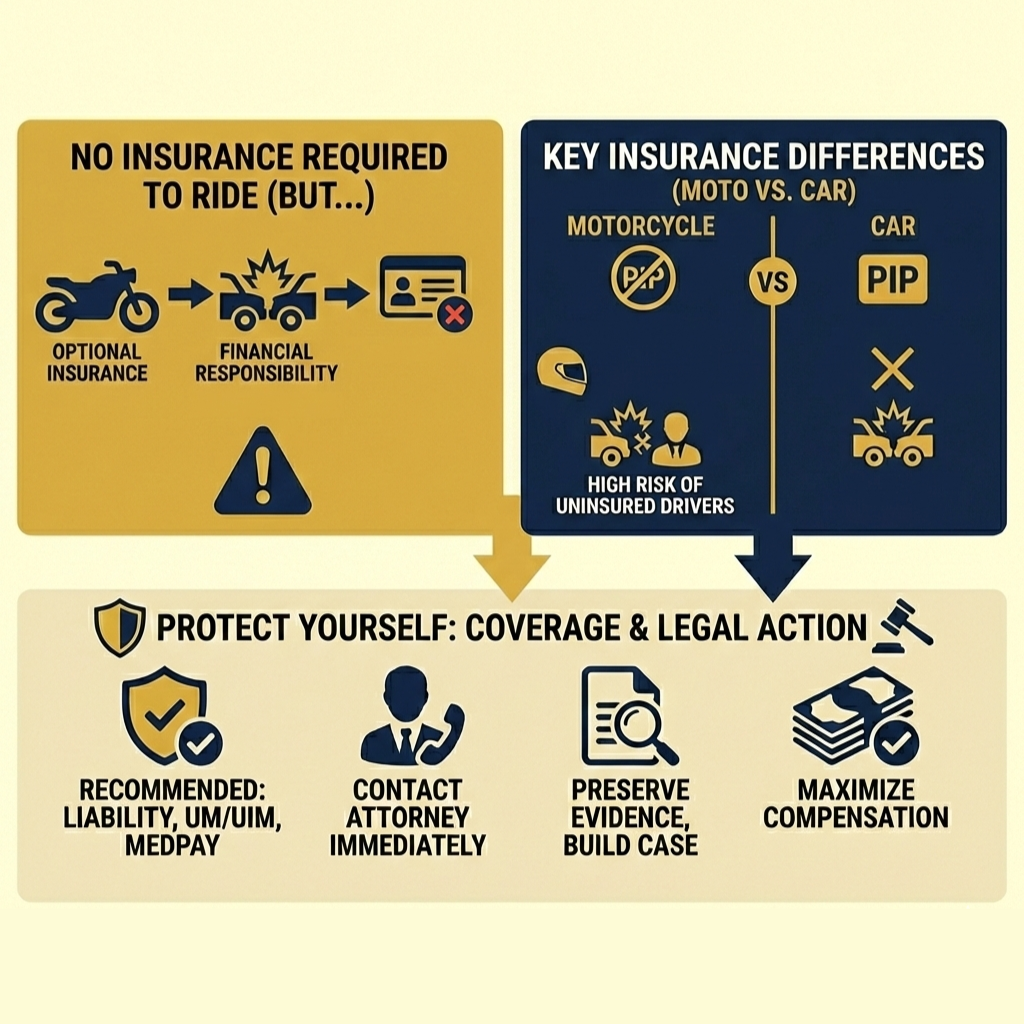
- Florida does not require traditional motorcycle insurance to register or ride, but riders must prove financial responsibility if they cause an accident and face license suspension if they cannot.
- Unlike car owners, motorcyclists are excluded from Florida's no-fault insurance system, which means they cannot access Personal Injury Protection (PIP) benefits after a crash, even if they carry PIP on another vehicle.
- Because motorcycle accidents often cause severe injuries and riders have fewer insurance safety nets, contacting an experienced personal injury attorney as soon as possible after a crash is critical to protecting your rights and maximizing your compensation.
Worried About Your Injury Case? We'll Review It - Free!

Does Florida Require Motorcycle Insurance?
If you ride a motorcycle in Florida, you may be surprised to learn that the state does not require you to carry motorcycle insurance to register your bike or to ride it on public roads. Florida is one of only a handful of states that takes this approach. That might sound like good news for your wallet, but it comes with a catch that every rider needs to understand.
While you do not need to show proof of insurance to register or operate a motorcycle, you are legally required to demonstrate "financial responsibility" if you cause an accident. Under Florida Statute Chapter 324, financial responsibility means proving that you can pay for bodily injury and property damage resulting from a crash you caused. If you cannot provide that proof after an accident, you face serious consequences, including suspension of your driver's license, suspension of your motorcycle registration, and mandatory liability coverage requirements for up to three years.
In practical terms, this means that while insurance is technically optional before an accident, it becomes mandatory after one. And by then, it is too late to protect yourself. That is why most attorneys and insurance professionals strongly recommend that every Florida motorcyclist carry at least a basic liability policy. As our motorcycle accident lawyers can tell you, the riders who suffer the most after a crash are often the ones who went without coverage.
Three Ways to Prove Financial Responsibility
Florida law provides three methods for motorcyclists to satisfy the financial responsibility requirement. The first and most common is to purchase a liability insurance policy that meets the state's minimum limits: $10,000 per person for bodily injury, $20,000 per accident for bodily injury, and $10,000 for property damage liability. This is commonly referred to as "10/20/10 coverage."
The second option is to obtain a self-insurance certificate from the FLHSMV by demonstrating a personal net worth of at least $40,000. The third is to file a financial responsibility certificate backed by a certificate of deposit of at least $30,000, with power of attorney over that deposit granted to the FLHSMV.
While the self-insurance and certificate of deposit options exist, they carry added risk. If your financial situation changes, you could lose your riding privileges. For the vast majority of riders, a traditional liability insurance policy is the simplest and most reliable choice.
Motorcycle Insurance vs. Car Insurance in Florida: Key Differences
Florida's insurance requirements create a stark divide between how the state treats motorcycle owners and car owners. Understanding these differences is essential, because they directly affect your financial protection after an accident.
No-Fault Insurance Does Not Apply to Motorcycles
Florida is a "no-fault" state for auto insurance, meaning drivers of four-wheeled vehicles are required to carry $10,000 in Personal Injury Protection (PIP) and $10,000 in property damage liability. PIP covers a portion of your medical expenses and lost wages after a crash, regardless of who was at fault. We explain how this system works in our guide to Florida's no-fault insurance system.
However, Florida's no-fault law only applies to motor vehicles with four or more wheels. Motorcycles are explicitly excluded. This means that as a motorcyclist, you cannot access PIP benefits after a crash even if you carry PIP on your car or another vehicle. Florida's compulsory auto laws apply to PIP and physical damage but not to third-party bodily injury coverage, creating a significant gap for motorcyclists.
No Mandatory Bodily Injury Coverage for Cars Either
Here is something that surprises many people: Florida does not currently require car owners to carry bodily injury liability (BIL) insurance either. The minimum requirements for a four-wheeled vehicle are only $10,000 in PIP and $10,000 in property damage liability. That means the driver who hits you may not carry any bodily injury coverage at all.
For motorcyclists, this is a dangerous combination. You have no PIP safety net, and the at-fault driver may have no bodily injury coverage to compensate you. According to the Insurance Research Council's 2025 study, roughly one in five Florida drivers was uninsured in 2023, one of the highest rates in the nation. This makes carrying your own uninsured and underinsured motorist (UM/UIM) coverage especially critical if you ride a motorcycle in Florida.
A Side-by-Side Comparison
To summarize the key differences: Car owners must carry $10,000 PIP and $10,000 property damage liability as a condition of registration. Motorcyclists have no insurance requirement for registration, but must prove financial responsibility (typically 10/20/10 liability) after causing an accident. Car occupants can use PIP to cover initial medical costs regardless of fault. Motorcyclists cannot use PIP at all, even if they have it on another vehicle. Both car drivers and motorcyclists may be dealing with an at-fault party who carries no bodily injury coverage, but motorcyclists lack even the PIP backstop that car occupants have.
The Helmet Law and Its Insurance Connection
Florida's motorcycle helmet law, found in Florida Statute §316.211, has a direct tie to insurance requirements that every rider should understand.
Who Must Wear a Helmet
Under the statute, all motorcycle operators and passengers must wear a DOT-approved helmet unless they meet two conditions. First, the rider must be 21 years of age or older. Second, the rider must carry an insurance policy providing at least $10,000 in medical benefits coverage for injuries sustained in a motorcycle crash. This medical benefits coverage can come from a dedicated motorcycle insurance policy or from a qualifying health insurance plan. Riders under 21 must wear a helmet at all times, regardless of insurance status.
Why This Matters for Your Injury Claim
The helmet exemption creates a practical insurance requirement even for riders who might otherwise go without coverage. But the $10,000 medical benefits minimum is, frankly, very low. A single emergency room visit after a motorcycle accident can easily exceed that amount.
There is another important consideration: if you are injured in a motorcycle accident and were not wearing a helmet, the insurance company may try to reduce your compensation by arguing that your injuries would have been less severe if you had worn one. Florida's modified comparative negligence law allows fault to be apportioned between parties, and under the 2023 reforms, you are completely barred from recovery if you are found more than 50% at fault. While not wearing a helmet is not necessarily negligence, insurance companies routinely use it as leverage against injured riders. An experienced personal injury lawyer can help counter these arguments and protect your right to fair compensation.
Why Motorcycle Riders Need More Coverage Than the Minimum
The minimum financial responsibility requirements in Florida, even if you carry a full 10/20/10 liability policy, are woefully inadequate for the realities of a motorcycle crash. The numbers paint a sobering picture.
The Severity of Motorcycle Accidents in Florida
Florida has held the highest motorcycle fatality rate in the nation for three consecutive years. According to data compiled from the FLHSMV Crash Dashboard, the state recorded 8,869 motorcycle crashes in 2025, resulting in 574 fatalities and 7,646 injuries. Motorcyclists represent roughly 20% of all Florida traffic fatalities despite accounting for a fraction of total vehicles on the road. Nationally, the Centers for Disease Control and Prevention (CDC) reports that motorcyclists are significantly more likely to die in a traffic crash than occupants of passenger vehicles.
The injuries are often catastrophic. Without the protective shell of a car, riders frequently suffer traumatic brain injuries, spinal cord damage, severe road rash, multiple fractures, and internal organ injuries. The medical costs for these injuries can run into hundreds of thousands, or even millions, of dollars. A $10,000 insurance policy barely covers a single ambulance ride and ER visit.
Recommended Coverage for Florida Riders
Insurance professionals and attorneys alike recommend that Florida motorcyclists carry significantly more than the state minimums. A commonly recommended baseline is a 50/100/25 policy, which provides $50,000 per person and $100,000 per accident in bodily injury coverage, plus $25,000 in property damage. Beyond that, riders should strongly consider adding:
Uninsured/Underinsured Motorist (UM/UIM) Coverage: Given Florida's high rate of uninsured drivers, this is arguably the single most important coverage for motorcyclists. UM/UIM pays for your injuries when the at-fault driver has no insurance or insufficient coverage. Without it, you may have no practical way to recover compensation, especially since you cannot fall back on PIP.
Medical Payments (MedPay) Coverage: This covers your medical expenses regardless of fault, functioning similarly to the PIP coverage that motorcyclists are excluded from. It can help fill the gap left by the no-fault exclusion.
Collision and Comprehensive Coverage: Collision covers damage to your motorcycle from an accident, while comprehensive covers non-accident damage such as theft, vandalism, and weather. If you have a loan on your bike, your lender will likely require both.
According to Progressive, the average annual cost of a motorcycle liability policy in Florida was approximately $198 in 2024. When you consider the potential financial exposure of riding without adequate coverage, that is a remarkably small price to pay for protection.
What to Do If You Are Injured in a Motorcycle Accident
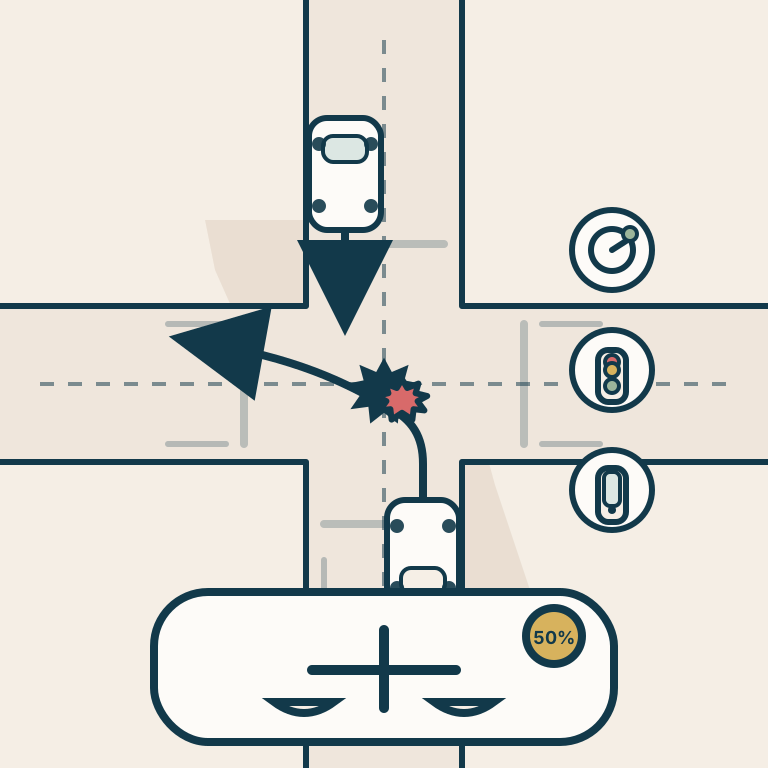
Motorcycle accidents happen fast, and the aftermath can be overwhelming. Whether the crash was caused by a distracted driver, a left-turn collision at an intersection, or unsafe road conditions, the steps you take immediately after the accident can have a major impact on your ability to recover compensation.
Immediate Steps After a Crash
Your first priority is always your health and safety. Call 911 and seek medical attention, even if you feel you can walk away from the scene. Some of the most serious motorcycle injuries, including traumatic brain injuries and internal bleeding, may not produce obvious symptoms right away. Document the scene by taking photos of your motorcycle, any other vehicles involved, road conditions, and your visible injuries. Collect contact information from witnesses and the other driver, but avoid discussing fault with anyone at the scene or with the other driver's insurance company. As we discuss in our guide on what to tell your lawyer after a car accident, the details you share early on matter significantly for the outcome of your case.
Why You Should Contact a Personal Injury Lawyer Immediately
Because motorcyclists fall outside Florida's no-fault system, the legal process for recovering compensation works differently than it does for car accident victims. You do not need to meet a "serious injury threshold" to sue the at-fault driver. You can pursue a liability claim for any injury. However, this also means you are directly dealing with the at-fault driver's insurance company (or lack thereof) from the start, and those insurers are often aggressive in denying or minimizing motorcycle claims.
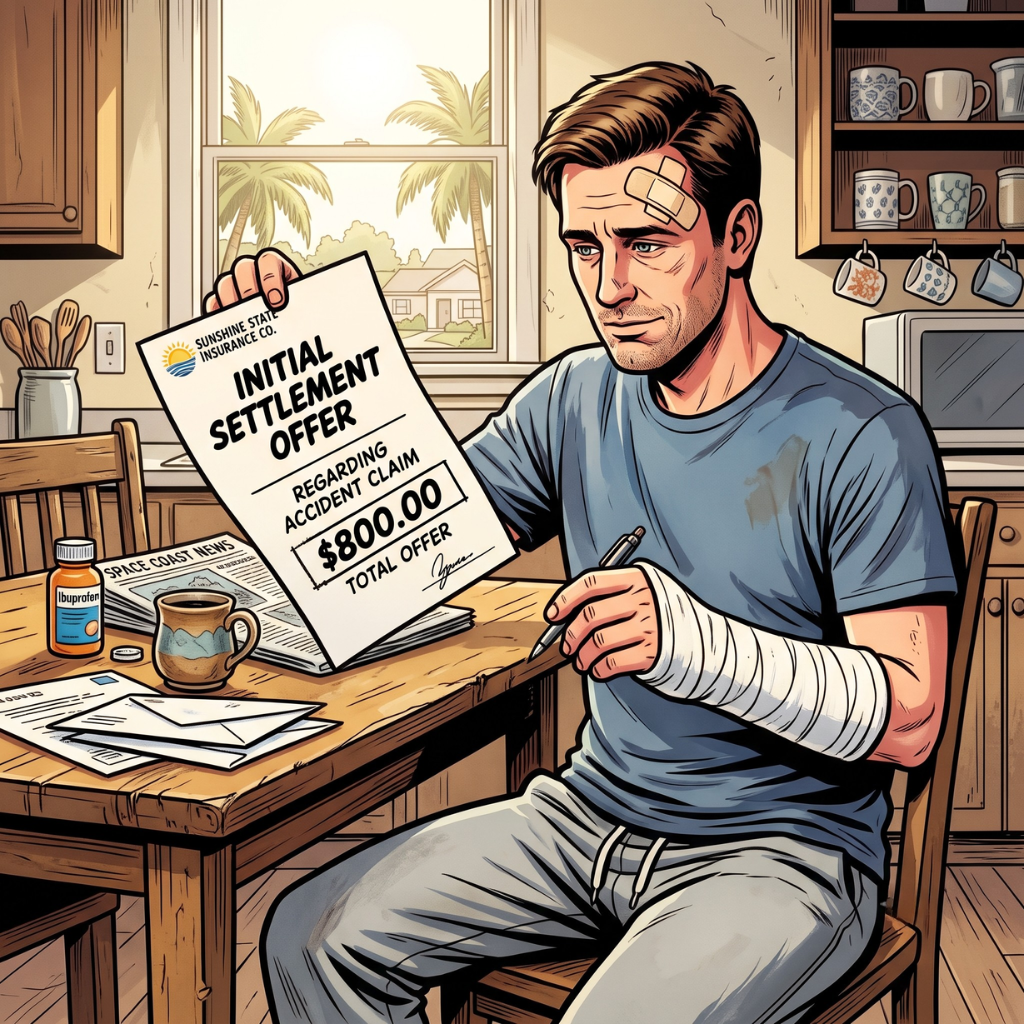
Insurance companies frequently exploit anti-motorcycle bias. They may argue that you were riding recklessly, that you were not wearing proper gear, or that your injuries were pre-existing. They know that many riders carry minimal or no insurance, and they use that vulnerability to push lowball settlements. An experienced motorcycle accident attorney understands these tactics and knows how to counter them with solid evidence and aggressive advocacy.
Time is also a critical factor. Under Florida's 2023 tort reform (HB 837), the statute of limitations for personal injury claims is now just two years from the date of the accident. Evidence disappears quickly. Skid marks fade, surveillance footage is overwritten, and witnesses' memories become less reliable. The sooner you have an attorney working on your case, the stronger your claim will be.
When motorcycle accidents result in the most tragic outcome, families may also need to pursue a wrongful death claim, which carries its own set of complex legal requirements. Having experienced legal counsel from the beginning ensures that all potential claims are preserved and properly pursued.
Protect Yourself Before and After an Accident
Florida's approach to motorcycle insurance puts more responsibility on the rider than almost any other state. The lack of mandatory insurance, combined with the exclusion from no-fault protections, means that you are largely on your own when it comes to financial protection. That is not a reason to panic. It is a reason to prepare.
Before your next ride, review your insurance coverage. At minimum, consider carrying liability coverage that goes well beyond the 10/20/10 floor. Add uninsured/underinsured motorist coverage. Add MedPay. If you choose to ride without a helmet, make certain that your $10,000 medical benefits coverage is in place and understand that $10,000 will not go far if you are seriously hurt.
If you or someone you love has already been injured in a motorcycle crash, do not try to handle the insurance company alone. The legal landscape for motorcyclists in Florida is uniquely challenging, and the stakes are high. At Douglas R. Beam, P.A., our motorcycle accident lawyers have spent over 35 years fighting for injured riders in Central Florida. We have recovered more than $1 billion for our clients, and we understand the specific legal and insurance issues that motorcyclists face.
Our consultations are always free, and we handle every case on a contingency fee basis. You pay nothing unless we win. Contact us today to discuss your case and learn what your options are. The sooner you reach out, the better we can protect your rights and help you pursue the full compensation you deserve.
Sources
- The Florida Senate – Florida Statute Chapter 324 – Financial Responsibility
- The Florida Senate – Florida Statute §316.211 – Equipment for Motorcycle and Moped Riders
- Florida Department of Highway Safety and Motor Vehicles – FLHSMV Crash Dashboard
- Florida Department of Highway Safety and Motor Vehicles – FLHSMV Uninsured Motorist Rate
- Insurance Information Institute – Facts + Statistics: Uninsured Motorists
- Progressive Insurance – Florida Motorcycle Insurance
- Centers for Disease Control and Prevention – CDC Motorcycle Safety
- Insurance Research Council – Uninsured Drivers Study (2025)
This article provides general information and is not a substitute for legal advice. Laws can change, and the details of your situation matter. For personalized guidance, please contact a qualified Florida personal injury attorney.
Not Sure What To Do Next? We Can Help – Fast & Free.
.webp)


Worried About Your Injury Case?
We'll Review It - Free

Don’t miss an article
Florida law, local insights, and the occasional dog pic.
Delivered straight to your inbox.
More articles
Browse all articles


.png)
Free Case Review
Get a complimentary review of your case