
How Florida's Comparative Negligence Law Affects Your Settlement
Florida's 2023 comparative negligence law bars recovery if you're over 50% at fault. Learn how this impacts your settlement & how to protect your claim.
.png)
.webp)
Riley Beam
- Florida's 2023 tort reform shifted from pure to modified comparative negligence, meaning if you're found more than 50% at fault for your accident, you cannot recover any compensation.
- Insurance companies now have greater leverage in settlement negotiations because they can use the comparative fault defense to reduce or eliminate your recovery.
- Working with an experienced trial attorney who understands how to build evidence proving the other party's fault is more critical than ever for protecting your settlement value.
Worried About Your Injury Case? We'll Review It - Free!

Understanding Florida's Comparative Negligence System
If you've been injured in an accident in Florida, one of the most important legal concepts you need to understand is comparative negligence. This principle determines how much compensation you can receive when multiple parties share responsibility for an accident. The way Florida handles comparative negligence changed significantly in 2023, and these changes could dramatically affect your personal injury settlement.
At Douglas R. Beam, P.A., we've spent nearly four decades helping injury victims navigate Florida's complex legal landscape. When the state's comparative negligence rules changed in March 2023, it fundamentally altered how personal injury cases are evaluated, negotiated, and resolved. Understanding these changes is essential for anyone pursuing a claim.
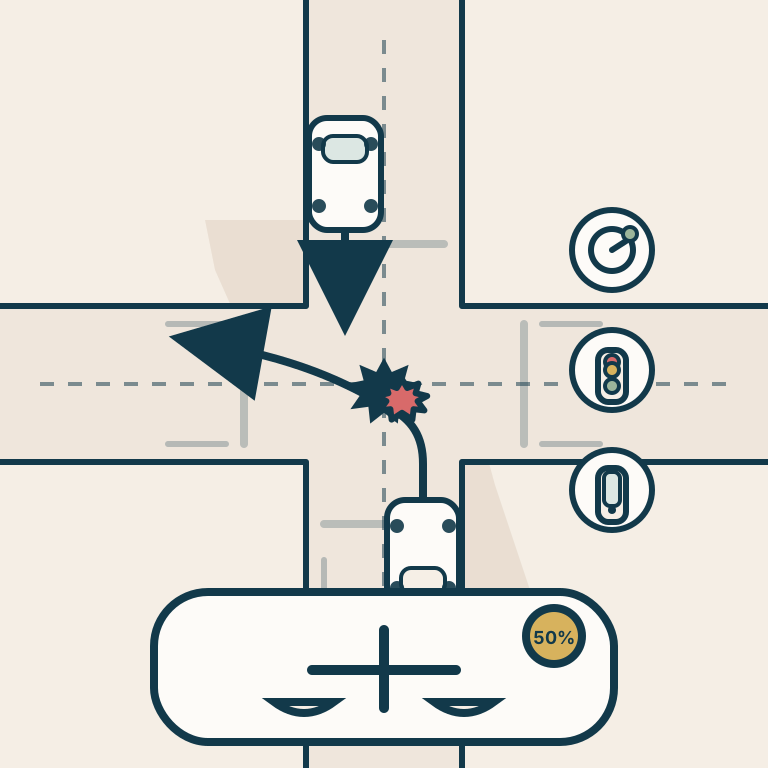
Comparative negligence is a legal doctrine that assigns percentages of fault to each party involved in an accident. According to the Cornell Law School Legal Information Institute, comparative negligence allows courts to apportion fault among all parties and reduce damages accordingly. For example, in a car accident where one driver ran a red light but the other was speeding, both drivers may share some degree of fault. The comparative negligence system determines how this shared fault affects each party's ability to recover damages.
Florida Statute 768.81 governs comparative fault in our state. Before March 24, 2023, Florida followed a "pure comparative negligence" system. Under that approach, an injured person could recover damages even if they were primarily at fault for their accident. If you were found to be 80% responsible for a crash, you could still recover 20% of your damages from the other at-fault party. This system was generous to plaintiffs and remained in place for decades.
The passage of House Bill 837, known as Florida's Tort Reform Act of 2023, changed everything. Governor Ron DeSantis signed this legislation into law on March 24, 2023, and it took effect immediately for most cases. The law fundamentally restructured how fault is assessed and how it affects your right to compensation. For injury victims across Florida, from car accidents to slip and fall injuries, this shift has real consequences for settlement values.
The 51% Bar Rule: What It Means for Your Case
Florida now operates under what legal professionals call a "modified comparative negligence" system with a 51% bar. According to the amended Florida Statute 768.81(6), "any party found to be greater than 50 percent at fault for his or her own harm may not recover any damages." This means that if you are found to be more than 50% at fault for your accident, you are completely barred from recovering any compensation. Not reduced compensation, zero compensation.
Let's illustrate this with a practical example. Imagine you're injured in a collision where you sustained $100,000 in damages, including medical bills, lost wages, and pain and suffering. Under the old pure comparative negligence system, if a jury determined you were 60% at fault and the other driver was 40% at fault, you would still recover $40,000 (40% of your $100,000 in damages).
Under Florida's current modified comparative negligence law, that same scenario results in you receiving nothing. Because your fault exceeds 50%, the bar applies, and your claim is defeated entirely. This represents one of the most significant changes to Florida personal injury law in decades.
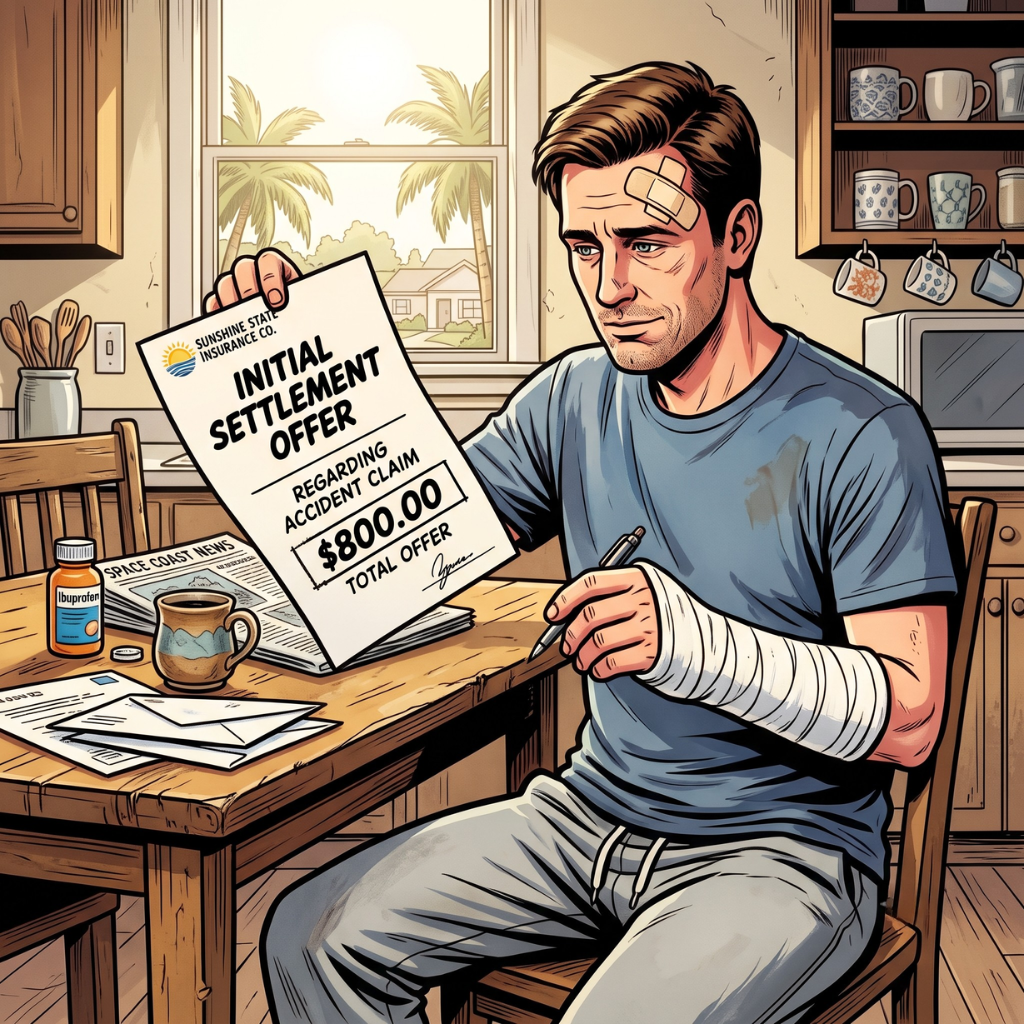
The implications extend beyond the courtroom. Insurance adjusters and defense attorneys now have a powerful tool in settlement negotiations. If they can argue that you bear significant responsibility for your accident—even if their arguments are questionable—they can use the threat of the 51% bar to pressure you into accepting lower settlement offers. The risk of walking away with nothing creates leverage that didn't exist under the old system.
Consider how this plays out in common accident scenarios. In rear-end collisions, the following driver is typically presumed at fault, but insurance companies may argue that you contributed by braking suddenly or having non-functional brake lights. In premises liability cases involving slip and falls, property owners frequently claim that visitors should have noticed hazardous conditions. In motorcycle accidents, defense attorneys often argue that riders were lane-splitting or driving aggressively, even when evidence suggests otherwise.
Each of these arguments aims to push your fault percentage over the 50% threshold. At our firm, we've seen insurance companies become more aggressive in assigning fault to injured victims since the 2023 reforms took effect. This is why thorough investigation and evidence preservation have become more critical than ever in personal injury cases.
How Fault Percentages Are Determined in Florida
Understanding how fault is actually determined can help you appreciate why experienced legal representation matters so much under the new law. Fault allocation isn't a mathematical formula. It's a judgment call based on evidence, testimony, and legal argument.
When a personal injury case goes to trial, the jury is responsible for determining each party's percentage of fault. Jurors consider all available evidence, including police reports, witness statements, photographs, video footage, expert testimony, and the accounts of those involved. They then assign a percentage of fault to each party, and these percentages must total 100%.
In settlement negotiations, fault percentages are estimated based on how attorneys believe a jury would likely decide. Insurance adjusters make their own assessments, which often favor their insured clients. The gap between these assessments is where negotiation happens.
Several types of evidence are particularly important for establishing fault in Florida accident cases. Traffic camera footage and dashcam recordings can provide objective documentation of what happened. Cell phone records may show whether a driver was distracted at the time of an accident. Medical records can establish the nature and severity of injuries and sometimes suggest the mechanics of how the accident occurred. Expert witnesses, including accident reconstructionists, biomechanical engineers, and medical professionals, can offer opinions that carry significant weight with juries.
Police reports, while not definitive, often influence how fault is initially perceived. If an officer cited the other driver for a traffic violation, that citation can support your claim that the other party was primarily at fault. However, the absence of a citation doesn't mean the other driver wasn't negligent. Police officers don't always witness accidents and may not have complete information when preparing their reports.
Building a strong case for the other party's fault requires prompt action. Evidence can disappear quickly, surveillance footage gets overwritten, witnesses' memories fade, and physical evidence at accident scenes gets cleaned up or removed. This is why we advise potential clients to contact an attorney as soon as possible after an accident. Early investigation can make the difference between proving the other party was primarily at fault and losing your case to the 51% bar.
Exceptions and Special Circumstances Under Florida Law
While the 51% bar applies broadly to negligence cases in Florida, there are important exceptions and special circumstances that may affect your claim. Understanding these nuances is essential for evaluating your legal options.
Medical malpractice cases are treated differently under Florida law. According to Florida Statute 768.81(6), the modified comparative negligence standard "does not apply to an action for damages for personal injury or wrongful death arising out of medical negligence." This means that if you've been harmed by medical negligence, you can still recover damages even if you're found to be more than 50% at fault. This exception recognizes the unique nature of the doctor-patient relationship and the difficulty patients may have in assessing their own role in medical outcomes.
Wrongful death cases follow the comparative negligence rules that would have applied to the deceased person's claim had they survived. If your loved one was killed in an accident, the fault percentages assigned to them will affect your family's ability to recover. In cases where the deceased bore more than 50% responsibility, the wrongful death claim would be barred under the new law. Our wrongful death attorneys help families understand how these rules apply to their specific circumstances.
Cases involving intentional misconduct are also handled differently. If the defendant's actions were intentional rather than merely negligent, comparative fault principles may not apply in the same way. Florida courts have long recognized that intentional wrongdoers should not benefit from the plaintiff's contributory conduct in the same manner as negligent defendants.
The timing of your accident matters significantly for determining which law applies. The new modified comparative negligence standard applies to causes of action that accrued on or after March 24, 2023. If your accident occurred before that date, your case may still be governed by the old pure comparative negligence rules, even if you file your lawsuit after the law changed. Determining when a cause of action "accrues" can involve complex legal analysis, particularly in cases where injuries weren't immediately apparent.
Product liability claims present another area of complexity. When defective products cause injuries, multiple parties may bear responsibility, including manufacturers, distributors, and retailers. How comparative fault applies in these cases depends on the specific legal theories pursued and the roles of various defendants. Our team has extensive experience with serious injury cases involving complex liability questions.
Protecting Your Settlement: Strategies That Work
Given the stakes under Florida's current comparative negligence law, protecting your settlement requires a strategic approach from the very beginning of your case. Here are the key strategies that can help maximize your recovery.
First, document everything immediately after your accident. Take photographs of the scene, your injuries, and any property damage. Get contact information for witnesses. Write down your account of what happened while details are fresh. This contemporaneous documentation can be invaluable when fault is disputed later.
Second, be extremely careful about what you say after an accident. Statements like "I'm sorry" or "I didn't see you" can be used against you to argue comparative fault. Even casual comments to insurance adjusters can be taken out of context. Many people don't realize that recorded statements given to insurance companies can become powerful evidence in fault disputes.
Third, seek medical attention promptly and follow your treatment plan consistently. Gaps in medical treatment can be used to argue that your injuries weren't as serious as claimed or that you failed to mitigate your damages. Defense attorneys may characterize missed appointments as evidence of comparative fault in causing your own harm.
Fourth, preserve all evidence that might be relevant to your case. This includes keeping damaged clothing and other personal property, maintaining records of all expenses related to your injury, and documenting how the injury affects your daily life. Request that businesses and government entities preserve any surveillance footage that may have captured your accident before it's automatically deleted.
Fifth, work with an attorney who understands how to build a compelling case for the other party's fault. This means more than just filing paperwork. It requires thorough investigation, retention of appropriate experts, and development of a narrative that clearly places primary responsibility on the defendant. In our experience, cases that are properly developed from the beginning achieve better outcomes than those where important evidence is lost or overlooked.
At Douglas R. Beam, P.A., our approach has always emphasized thorough preparation and aggressive advocacy. Doug Beam and Riley Beam have built our reputation on turning difficult cases into successful outcomes. The 2023 law changes have only reinforced the importance of this approach.
Why Experienced Legal Representation Matters More Than Ever
The shift to modified comparative negligence has raised the stakes for personal injury victims in Florida. The potential for a complete bar on recovery means that fault arguments that might once have simply reduced settlements now threaten to eliminate them entirely. In this environment, the quality of your legal representation can be the deciding factor in whether you receive fair compensation.
Insurance companies have adjusted their strategies since the 2023 reforms. They're more likely to conduct extensive investigations into injured parties' conduct, looking for any evidence that might support a comparative fault argument. They're more aggressive in settlement negotiations, knowing that the threat of the 51% bar gives them leverage they didn't previously have. And they're more willing to take cases to trial when they believe they can convince a jury to assign majority fault to the plaintiff.
Countering these tactics requires attorneys who understand both the law and the practical realities of how fault is argued and determined. It requires resources to conduct thorough investigations and retain qualified experts. And it requires trial experience that gives credibility to the threat of taking a case before a jury if the insurance company won't offer a fair settlement.
Our firm has recovered over $1 billion for our clients throughout our history because we prepare every case as if it's going to trial. Insurance companies know which attorneys are willing to fight and which are looking for quick settlements. When adjusters see our name on a case, they know they're dealing with attorneys who have won hundreds of jury verdicts and who won't be intimidated by aggressive fault arguments.
The boutique nature of our practice means we can give every case the attention it deserves. We don't take on hundreds of cases hoping most will settle quickly. We select cases where we believe we can make a real difference for our clients, and we invest the time and resources necessary to achieve the best possible outcomes. In an era where comparative fault can eliminate your recovery entirely, this level of attention isn't a luxury. It's a necessity.
If you've been injured in an accident in Florida, don't let the insurance company control the narrative about fault. Contact Douglas R. Beam, P.A. today for a free consultation. We'll evaluate your case, explain how comparative negligence might affect your claim, and discuss strategies for protecting your right to compensation. Remember, under our no-fee-unless-we-win policy, you pay nothing unless we recover money for you.
Florida's comparative negligence law may have changed, but your right to pursue fair compensation hasn't. With the right legal team on your side, you can navigate these new challenges and fight for the recovery you deserve.
Sources
- Florida Statute 768.81 – Comparative Fault
- House Bill 837 (2023) – Civil Remedies
- Governor Ron DeSantis Signs Comprehensive Legal Reforms into Law – Executive Office of the Governor of Florida (March 24, 2023)
- Comparative Negligence – Cornell Law School Legal Information Institute
- Florida Makes Major Changes to Comparative Negligence Law – Jimerson Birr Law Firm
- Florida Enacts Transformative Tort Reform Legislation – King & Spalding
This article provides general information and is not a substitute for legal advice. Laws can change, and the details of your situation matter. For personalized guidance, please contact a qualified Florida personal injury attorney.
Not Sure What To Do Next? We Can Help – Fast & Free.
.webp)


Worried About Your Injury Case?
We'll Review It - Free

Don’t miss an article
Florida law, local insights, and the occasional dog pic.
Delivered straight to your inbox.
More articles
Browse all articles



.png)
Free Case Review
Get a complimentary review of your case