
Traumatic Brain Injury Claims in Florida: What Victims Need to Know
Learn how traumatic brain injury claims work in Florida, including compensation, deadlines, proving damages, and the value of an experienced TBI lawyer.

.webp)
Riley Beam
- Florida's two-year statute of limitations for personal injury claims means TBI victims must act quickly to protect their right to compensation, even while still recovering.
- Because traumatic brain injuries often produce delayed or "invisible" symptoms, building a strong claim requires early medical documentation and expert testimony from neurologists, neuropsychologists, and life care planners.
- TBI compensation in Florida can include past and future medical expenses, lost earning capacity, rehabilitation costs, pain and suffering, and the injury's impact on family life. But you need an experienced trial attorney to prove the full scope of damages.
Worried About Your Injury Case? We'll Review It - Free!

Understanding Traumatic Brain Injuries
A traumatic brain injury, or TBI, happens when an external force disrupts normal brain function. That force can come from a violent blow to the head, a sudden jolt to the body, or an object penetrating the skull. According to the Centers for Disease Control and Prevention (CDC), there were over 69,000 TBI-related deaths in the United States in 2021 alone. That's roughly 190 deaths every day.
The CDC identifies falls, motor vehicle crashes, assaults, and firearm-related incidents as the most common causes of TBIs. For personal injury claims in Florida, car accidents, truck crashes, motorcycle collisions, pedestrian accidents, and slip-and-fall incidents are the leading causes. If you were hurt in any of these situations due to someone else's negligence, you may have grounds for a personal injury claim.
Severity Levels and Why They Matter Legally
Medical professionals classify TBIs into three categories: mild, moderate, and severe. A mild TBI, which includes most concussions, can still cause significant cognitive and emotional problems. While the word "mild" describes the initial intensity of the injury, these injuries can still produce lasting challenges with memory, concentration, and problem-solving. Moderate and severe TBIs can result in extended unconsciousness, permanent cognitive impairment, personality changes, and physical disability.
From a legal standpoint, the severity of a TBI directly affects the value of a claim. Severe TBIs that require lifelong care and eliminate someone's ability to work will involve far greater damages than a concussion with a shorter recovery timeline. However, even "mild" TBIs deserve serious legal attention because their effects can be underestimated by insurance adjusters. Our brain injury lawyers understand how to document the full scope of a TBI so that victims receive fair compensation, regardless of its initial classification.
Common Causes of TBI in Florida Personal Injury Cases
Florida's roads, weather, and year-round outdoor lifestyle create conditions where traumatic brain injuries happen with alarming frequency. Understanding the most common causes is important because it helps identify who may be legally responsible for your injury.
Motor Vehicle Accidents
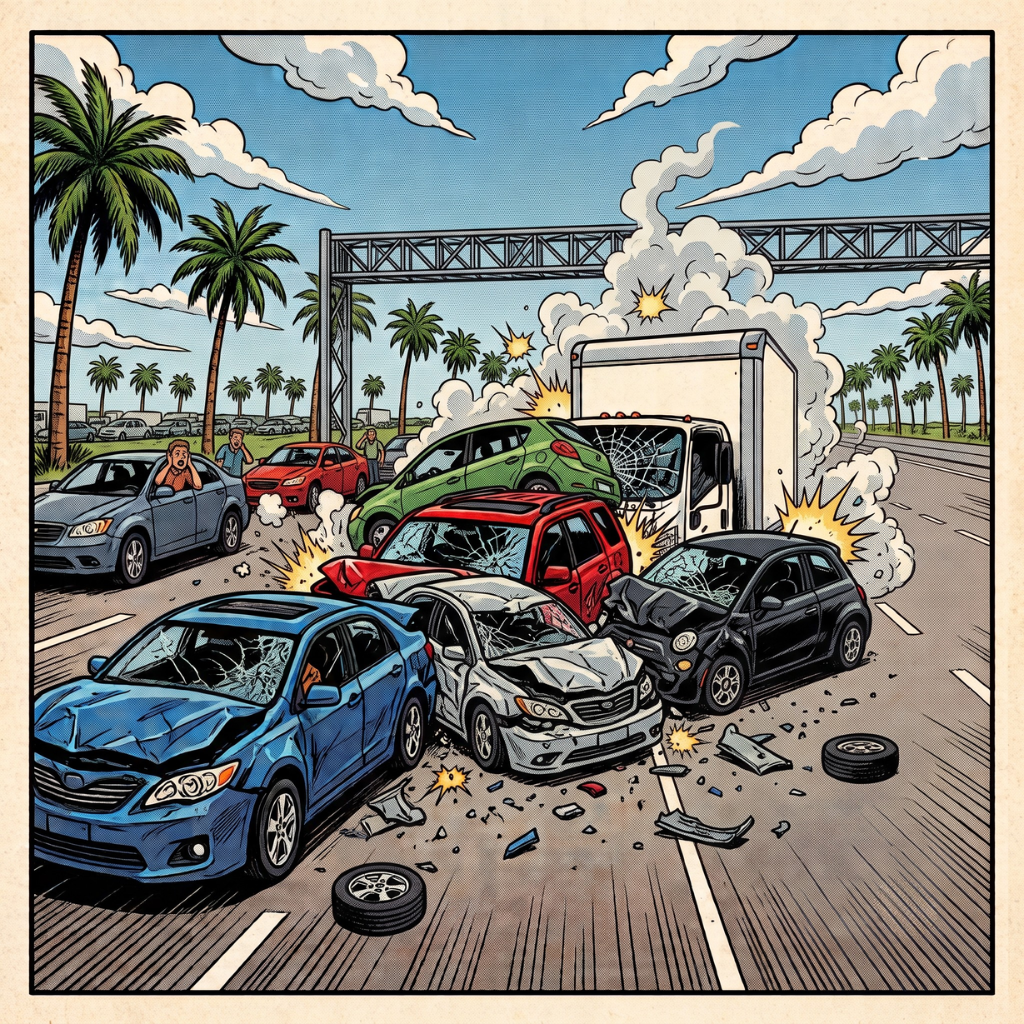
Motor vehicle crashes are among the leading causes of traumatic brain injuries nationwide. In Florida, high-speed collisions on highways like I-95 and busy local roads can cause the brain to slam against the inside of the skull, a mechanism known as a coup-contrecoup injury. Even with airbags and seatbelts, the sudden deceleration of a crash can cause significant brain damage. If a negligent driver caused the collision that led to your TBI, you may be able to pursue compensation through a car accident claim, truck accident claim, or motorcycle accident claim.
Falls and Premises Liability
Falls are another leading cause of TBI, particularly among older adults. The CDC reports that people aged 75 and older have the highest rates of TBI-related hospitalizations and deaths. In Florida, slip-and-fall accidents at stores, restaurants, hotel pools, and other commercial properties can result in devastating head injuries. When a property owner fails to maintain safe conditions, such as neglecting wet floors, broken handrails, or poor lighting, they may be held liable under Florida's premises liability laws.
Other Common Causes
TBIs also frequently result from pedestrian accidents, bicycle accidents, boating accidents, assaults, and workplace injuries. Each type of incident involves different legal theories and potentially different liable parties. For example, a construction site head injury might involve both a negligent employer and a defective piece of equipment. An experienced personal injury attorney can investigate the circumstances and identify every responsible party.
The Challenge of "Invisible" Injuries: Why TBI Claims Are Complex
One of the most frustrating aspects of a traumatic brain injury is that it can be invisible to everyone except the person living with it. Unlike a broken bone that shows up clearly on an X-ray, a TBI may not be immediately apparent on standard imaging. Symptoms can be delayed by hours, days, or even weeks after the initial injury.
Delayed and Evolving Symptoms
A person might walk away from a car accident feeling mostly fine, only to develop persistent headaches, memory problems, difficulty concentrating, mood swings, or sensitivity to light in the days and weeks that follow. Two people with a TBI may not share any of the same symptoms, making diagnosis difficult. This delayed onset is one reason insurance companies try to argue that the injury was not caused by the accident or is not as severe as claimed.
This is also why it is so important to see a doctor as soon as possible after any accident involving a blow to the head or sudden jolt to the body. Early medical documentation creates the foundation for a strong claim. For more guidance on what to do after an accident, see our guide on what to tell your lawyer after a car accident.
Why Insurance Companies Fight TBI Claims
Because TBI symptoms can be subjective (headaches, cognitive fog, emotional instability) insurance companies frequently challenge whether the injury is as serious as the victim claims, or whether the accident actually caused the injury at all. They may point to a lack of visible damage on a CT scan or argue that symptoms are related to a pre-existing condition. This is why TBI claims demand expert medical testimony and thorough documentation that goes well beyond a standard emergency room visit.
At Douglas R. Beam, P.A., we've seen firsthand how insurers question even the most obvious brain injuries. In our $28.5 million brain injury verdict, we assembled a team of neurologists, neuropsychologists, and imaging specialists to walk the jury through every diagnostic test and every lost capability. That level of preparation is what separates a successful TBI claim from a denied one.
Compensation Available in Florida TBI Claims
The financial impact of a traumatic brain injury can be staggering. Medical bills pile up quickly, and the long-term costs of rehabilitation, therapy, and ongoing care can reach into the millions. Florida law allows TBI victims to seek compensation for a wide range of damages when another party's negligence caused the injury.
Economic Damages
Economic damages cover the financial losses you can calculate with receipts, bills, and records. In TBI cases, these typically include past and future medical expenses (emergency treatment, surgeries, hospital stays, prescription medications, and follow-up appointments), rehabilitation costs (physical therapy, occupational therapy, speech therapy, and cognitive rehabilitation), lost wages and lost earning capacity if the injury prevents you from returning to work or working at the same level, the cost of home modifications and assistive technology needed to accommodate new limitations, and in-home care or nursing services for severe injuries. A life care planner can project these costs over a victim's remaining lifetime, which is essential for ensuring full compensation. This is especially important in catastrophic TBI cases where care needs may last for decades.
Non-Economic Damages
Non-economic damages compensate for losses that are real but harder to quantify. These include pain and suffering, both physical and emotional, loss of enjoyment of life if the TBI prevents you from participating in activities you once loved, emotional distress including depression, anxiety, and PTSD that commonly accompany brain injuries, and the impact on personal and family relationships. Family members may also experience significant changes when a loved one suffers a TBI. These include personality shifts, emotional volatility, and the burden of caregiving that can take a profound toll. In cases where a TBI leads to death, surviving family members may pursue a wrongful death claim for additional damages.
For a deeper understanding of how Florida handles fault in injury cases and how that affects your compensation, read our article on how Florida's comparative negligence law affects your settlement.
Florida Laws That Affect Your TBI Claim
Several important Florida laws directly impact how a traumatic brain injury claim is filed and resolved. Understanding these rules is critical because missing a deadline or failing to account for a legal change can reduce or even eliminate your ability to recover compensation.
The Two-Year Statute of Limitations
Under Florida Statute § 95.11, as amended by House Bill 837 in 2023, the statute of limitations for most personal injury claims based on negligence is now two years from the date the injury occurs. Before this change, victims had four years to file a lawsuit. This shortened deadline is especially concerning for TBI victims because brain injuries often involve lengthy initial treatment and recovery periods. You may still be in the hospital or undergoing rehabilitation when your filing deadline is approaching. Working with an attorney early in the process helps ensure that critical deadlines are not missed.
Modified Comparative Negligence
HB 837 also changed Florida from a pure comparative negligence state to a modified comparative negligence state. Under the new rule, if you are found to be more than 50% at fault for the accident that caused your TBI, you are completely barred from recovering any compensation. Even if you bear some fault but it is 50% or less, your recovery will be reduced by your percentage of responsibility. This change gives insurance companies additional leverage to argue shared fault, making it more important than ever to have an attorney who can build strong evidence of the other party's liability. Our article on how to pick a personal injury lawyer explains what to look for when choosing legal representation.
Florida's No-Fault Insurance System and the Serious Injury Threshold
Florida's no-fault auto insurance system requires drivers to carry Personal Injury Protection (PIP) coverage, which pays up to $10,000 for medical expenses and lost wages regardless of who caused the accident. However, PIP coverage is far from sufficient for most TBI cases. To file a claim against the at-fault driver for damages beyond PIP, including pain and suffering, your injuries must meet Florida's "serious injury threshold." This means proving a permanent injury, significant and permanent loss of an important bodily function, significant scarring or disfigurement, or death. Most moderate-to-severe TBIs will meet this threshold, but proving it requires proper medical documentation. For more on this, see our article explaining Florida's no-fault insurance system.
Building a Strong TBI Claim: How an Experienced Attorney Helps
Traumatic brain injury cases are among the most complex in personal injury law. They require a unique combination of medical knowledge, investigative skill, and courtroom experience. Here is how an experienced TBI attorney builds a case that accounts for the full impact of the injury.
Medical Evidence and Expert Witnesses
A successful TBI claim starts with comprehensive medical evidence. This goes beyond the initial emergency room visit. It includes diagnostic imaging such as CT scans, MRIs, and in some cases functional neuroimaging that can reveal damage not visible on standard tests. Neuropsychological testing provides a detailed picture of cognitive deficits including problems with memory, attention, processing speed, and executive function.
Expert witnesses are often essential in TBI cases. Neurologists and neuropsychologists can explain the injury's cause, severity, and long-term prognosis to a jury. Life care planners map out the future medical needs and associated costs. Economists calculate lost earning capacity and the present value of future expenses. In more complex cases, accident reconstruction experts may be needed to establish exactly how the injury occurred.
Documenting the Full Impact
The true cost of a TBI extends far beyond medical bills. A thorough attorney will document how the injury has affected every aspect of the victim's life: the ability to work, relationships with family and friends, daily activities, hobbies, independence, and emotional well-being. Testimony from family members, coworkers, and treating physicians can paint a complete picture of how the person's life has changed since the injury.
Why Trial Experience Matters
Insurance companies pay close attention to whether your attorney has actual trial experience. They know that firms willing and able to take cases to verdict tend to secure higher settlements because insurers understand they cannot bluff their way to a low offer. At Douglas R. Beam, P.A., our trial-tested attorneys have recovered over $1 billion for clients, including record-setting brain injury verdicts. Doug Beam, the firm's founding partner and 2025 President of the National Trial Lawyers, has tried more than 150 jury trials. That track record gives our clients significant leverage at the negotiating table and in the courtroom.
If you or someone you love has suffered a traumatic brain injury due to another party's negligence, the most important step you can take is to speak with an experienced attorney as soon as possible. Early legal involvement ensures that evidence is preserved, medical documentation is thorough, and the two-year filing deadline does not pass you by. At Douglas R. Beam, P.A., your initial consultation is always free, and we do not charge a fee unless we recover compensation for you. Contact us today to discuss your case with a Melbourne brain injury attorney who will fight for the outcome you deserve.
Sources
- Centers for Disease Control and Prevention – TBI Data
- Centers for Disease Control and Prevention – Facts About TBI
- Florida Department of Health – Deaths From Traumatic Brain Injury
- The Florida Senate – House Bill 837 (2023)
- Florida Statutes § 95.11 – Statute of Limitations
- USAFacts – How Common Are Traumatic Brain Injuries in the US?
- University of Florida, Department of Neurosurgery – Traumatic Brain Injury
This article provides general information and is not a substitute for legal advice. Laws can change, and the details of your situation matter. For personalized guidance, please contact a qualified Florida personal injury attorney.
Not Sure What To Do Next? We Can Help – Fast & Free.
.webp)


Worried About Your Injury Case?
We'll Review It - Free

Don’t miss an article
Florida law, local insights, and the occasional dog pic.
Delivered straight to your inbox.
More articles
Browse all articles


.png)
Free Case Review
Get a complimentary review of your case