
Daycare Injuries in Florida: What Parents Need to Know
Hurt at a Florida daycare? Learn how state regulations protect children, what makes daycare injury cases unique, & how you can recover damages.
.webp)
Riley Beam
- Florida daycare facilities have legal obligations under Chapter 402 of the Florida Statutes and DCF regulations to keep children safe, and any violation can serve as direct evidence of negligence in a personal injury lawsuit.
- Florida's 2023 tort reform shortened the personal injury statute of limitations to two years, making prompt action critical even when the injured party is a young child.
- Daycare injury cases involve unique legal rules including limited tolling for minors, mandatory court approval of settlements over $15,000, and the general unenforceability of parental liability waivers in commercial settings.
Worried About Your Injury Case? We'll Review It - Free!

The Reality of Daycare Injuries in Florida
When you drop your child off at daycare, you trust that the staff will keep them safe. For most families, that trust is justified. But injuries do happen, sometimes through innocent accidents and sometimes through clear negligence. Knowing the difference matters when you are trying to figure out what to do next.
According to the Center for Injury Research and Policy at Nationwide Children's Hospital, more than 213,000 children under 18 are treated in U.S. hospital emergency departments for playground-related injuries every year, with most occurring at school or in parks and most caused by falls. A peer-reviewed systematic review of unintentional injuries in U.S. child care centers found rates ranging from roughly 11 to 18 injuries per 100 children per year, with the most severe injuries (fractures and concussions) coming from falls off playground structures.
Florida is home to thousands of licensed child care facilities and family day care homes serving hundreds of thousands of children. The Florida Department of Children and Families (DCF) directly oversees licensing in most of the state's 67 counties, including Brevard County. A handful of counties (Broward, Palm Beach, Pinellas, and Sarasota) operate their own local licensing agencies that must meet or exceed state minimum standards. Even a small percentage of injuries across that population adds up to a meaningful number of Florida families who need real answers.
Florida's Daycare Safety Laws and Regulations
Florida regulates child care through a layered framework of statutes and administrative rules. Understanding the basics helps families recognize when something has gone wrong.
Licensing Standards Under Chapter 402
The core of Florida child care law sits in Sections 402.301 through 402.319 of the Florida Statutes. These provisions set minimum standards for sanitation, supervision, staff training, physical facilities, and emergency procedures. The corresponding rules in Chapter 65C-22 of the Florida Administrative Code govern licensed child care facilities, and Chapter 65C-20 covers family day care and large family child care homes.
One of the most important protections is the mandatory staff-to-child ratio. Under Florida Statute § 402.305(4), licensed daycares must maintain specific ratios based on the ages of the children in care:
- One staff member for every 4 infants (birth through 1 year)
- One staff member for every 6 children ages 1 to 2
- One staff member for every 11 children ages 2 to 3
- One staff member for every 15 children ages 3 to 4
- One staff member for every 20 children ages 4 to 5
- One staff member for every 25 children ages 5 and older
These ratios are legal requirements, not suggestions. When a daycare violates them by understaffing a classroom or playground, the risk of injury rises sharply, and the violation can become powerful evidence in a negligence case.
Mandatory Reporting, Training, and Background Checks
Florida Statute § 39.201 makes every person in Florida a mandatory reporter of suspected child abuse, abandonment, or neglect. Reports go to the Florida Abuse Hotline (1-800-96-ABUSE), and failure to report can carry criminal penalties. Daycare employees must also pass Level 2 background screening through the Florida Department of Law Enforcement and FBI, complete a 40-hour introductory child care course, and receive ongoing training in topics such as recognizing shaken baby syndrome, preventing sudden infant death syndrome, and pediatric CPR. Gaps in any of these requirements can become important evidence if a child is harmed.
Common Causes of Daycare Injuries
Daycare injury cases tend to fall into recognizable patterns. Some involve a single dramatic event. Others reveal a slow pattern of supervisory failures that should have been caught long before a child was ever hurt.
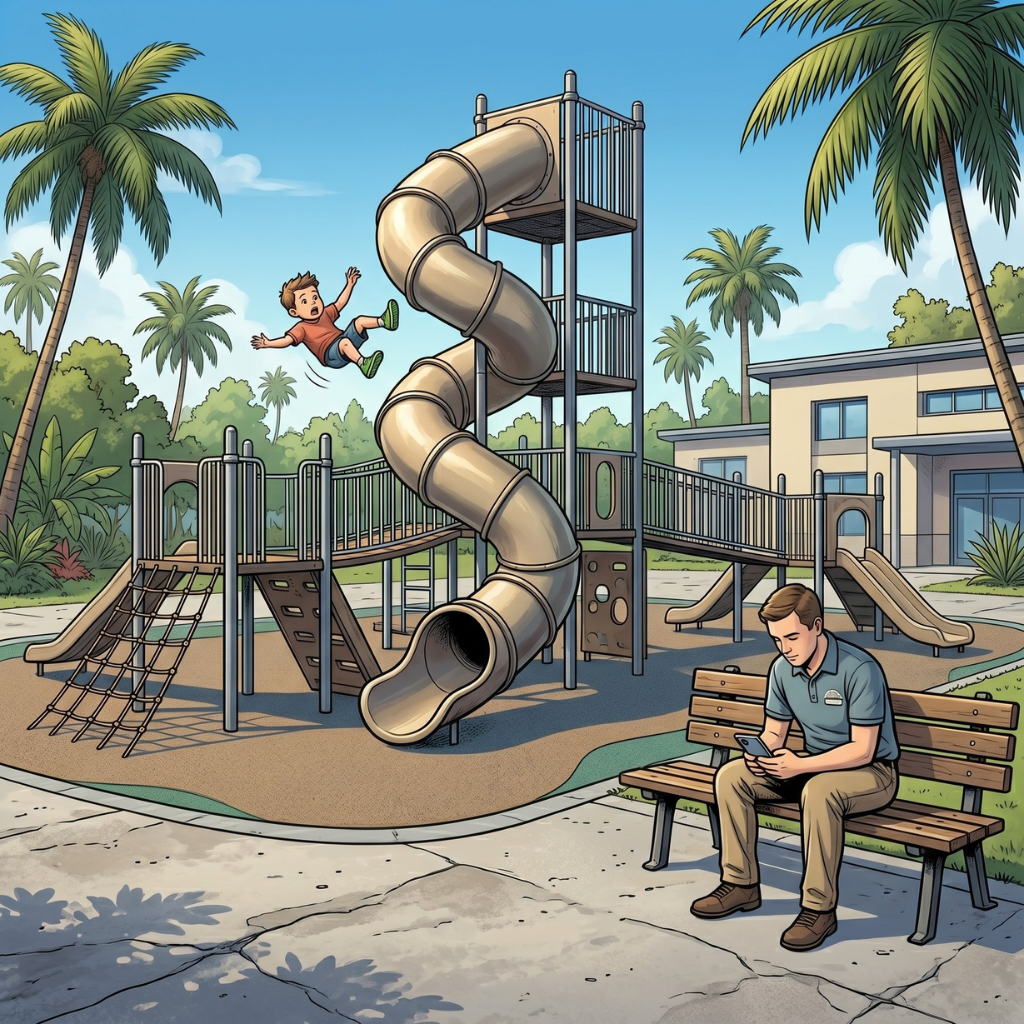
Playground falls are the leading cause of injuries to young children both at home and at daycare. Falls from slides, climbing structures, and swings can produce broken bones, dental injuries, and in serious cases, traumatic brain injuries. Whether the injury was foreseeable usually turns on the equipment's condition, the surface beneath it, and the level of staff supervision at the time.
Behind almost every daycare injury claim is also a question of supervision. Were staff watching the children? Were they properly positioned? Was the room understaffed because of absences or ratio violations? Cases have involved children wandering off premises, being left in transport vehicles, drowning in unsecured pools, or being seriously harmed by another child while no caregiver was nearby.
A daycare's physical space must be reasonably safe for small children. Unsecured furniture, broken stairs or railings, cleaning chemicals within reach, exposed electrical hazards, and choking-sized objects are all preventable risks. These cases are governed by the same body of premises liability law that applies to other commercial properties, with one important difference: the people on the premises are young children who cannot be expected to protect themselves.
Other cases involve child-on-child harm and, in the most serious situations, abuse or neglect by staff. Toddlers bite, hit, and push, but staff have a duty to intervene before minor conflicts escalate. And when a caregiver was hired without proper background screening or kept on staff after warning signs surfaced, the daycare itself may share legal responsibility for what that caregiver later did. Cases involving sexual abuse of a child by a daycare employee fall within a separate, sensitive body of law. Our sexual abuse attorneys handle these cases with the care they require.
Who Can Be Held Liable for a Daycare Injury
A daycare injury claim in Florida rarely centers on just one person. Multiple parties may share legal responsibility depending on how the harm occurred.
The daycare operator carries primary responsibility for the safety of the children in its care. Under the doctrine of respondeat superior, employers are accountable for harm caused by their employees acting within the scope of employment. If a caregiver ignored ratio requirements, failed to address a known hazard, or left children unsupervised, the operator can be held liable. The operator is also responsible for negligent hiring, training, supervision, and retention of staff.
When a daycare leases its space, a separate property owner or landlord may share liability for structural elements such as staircases, playground fencing, or shared common areas. If a defective product caused the injury, for example a faulty crib or a broken playground component, the manufacturer or distributor may be liable under Florida product liability law. And when a child care program operates inside a public school or government facility, a separate set of procedural rules applies under Florida Statute § 768.28, including a shorter notice deadline and caps on recoverable damages. These distinctions matter, and they are part of why early consultation in any personal injury case can change the outcome.
Unique Legal Challenges in Florida Daycare Injury Cases
Daycare injury cases involve complications that families rarely encounter elsewhere. Several Florida-specific rules deserve careful attention.
Florida's 2023 tort reform, enacted through House Bill 837, shortened the personal injury statute of limitations from four years to two years for negligence claims accruing on or after March 24, 2023. That deadline applies to daycare injury cases too. Florida law does pause the statute in some circumstances when the injured person is a minor, but the protection is narrower than many parents assume. Under Florida Statute § 95.051, tolling applies primarily when the minor has no parent, guardian, or guardian ad litem available to bring the claim, and even then the statute imposes an outer limit of seven years from the date the cause of action accrued. The safest assumption is that the standard two-year deadline applies. Our blog post on car accidents involving children walks through related timing principles in detail.
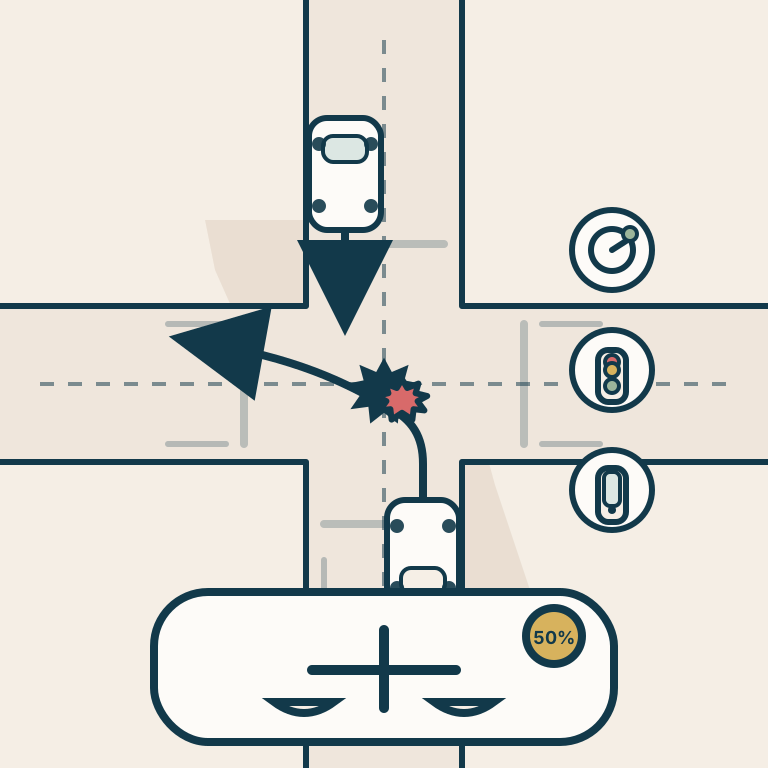
Florida also operates under a modified comparative negligence system, meaning a plaintiff who is more than 50% at fault cannot recover any damages. Our deep dive on how Florida's comparative negligence law affects your settlement explains the framework. The good news for daycare cases: very young children generally cannot be assigned legal fault under Florida law, which removes a common defense tactic insurers use to shift blame in adult premises cases.
Two more rules matter at the resolution stage. First, when a minor's net recovery exceeds $15,000, Florida law requires court approval of the settlement and may require appointment of a guardian ad litem to represent the child's interests separately from the parents. Second, many daycares ask parents to sign liability waivers at enrollment. The Florida Supreme Court addressed parental waivers directly in Kirton v. Fields, 997 So. 2d 349 (Fla. 2008), holding that pre-injury releases signed by parents on behalf of a minor child in a commercial setting are generally unenforceable. The Florida Legislature later passed Florida Statute § 744.301 to allow parental waivers for the "inherent risks" of commercial activities, but the statute expressly does not allow parents to waive claims for the negligence of the activity provider, its employees, or its agents. In plain terms: a daycare cannot use a routine enrollment waiver to escape liability for its own negligence. If you signed something at drop-off, do not assume it bars your claim.
How Douglas R. Beam, P.A. Can Help
When your child is hurt at daycare, the emotional impact arrives all at once. You also face practical concerns: medical bills, missed work, and a long road of follow-up care that may stretch for years. We have spent decades representing Florida families in cases involving serious injuries to children, including traumatic brain injuries, premises liability claims, and wrongful death actions. We know how to move quickly, preserve evidence like surveillance footage, staff schedules, and DCF inspection records before it disappears, and build cases that hold negligent facilities accountable. The same investigative principles we apply in other premises cases, including those we discuss in our post on restaurant accidents in Florida, guide our work in daycare matters.
We charge no fee unless we win, and every consultation is free. If you believe a Florida daycare's negligence caused your child's injury, contact us today to tell us what happened. Your child deserves answers, and we will help you get them.
Sources
- Florida Statutes § 39.201 — Required Reports of Child Abuse, Abandonment, or Neglect
- Florida Statutes § 95.051 — When Limitations Tolled
- Florida Statutes § 402.305 — Licensing Standards; Child Care Facilities
- Florida Statutes § 768.28 — Waiver of Sovereign Immunity in Tort Actions
- Florida HB 837 (2023) — Civil Remedies
- Florida Department of Children and Families — Child Care Laws and Requirements
- Florida Department of Children and Families — Child Care Licensure
- Florida Department of Children and Families — Abuse Hotline
- Center for Injury Research and Policy at Nationwide Children's Hospital — Playground Safety
- Alkon et al., — Unintentional Injuries in Child Care Centers in the United States: A Systematic Review
- Kirton v. Fields, 997 So. 2d 349 (Fla. 2008)
- Florida Administrative Code — Child Care Standards
- Florida Administrative Code — Family Day Care Standards and Large Family Child Care Homes
This article provides general information and is not a substitute for legal advice. Laws can change, and the details of your situation matter. For personalized guidance, please contact a qualified Florida personal injury attorney.
Not Sure What To Do Next? We Can Help – Fast & Free.
.webp)


Worried About Your Injury Case?
We'll Review It - Free

Don’t miss an article
Florida law, local insights, and the occasional dog pic.
Delivered straight to your inbox.
More articles
Browse all articles




.png)
Free Case Review
Get a complimentary review of your case