
How Dashcam and Doorbell Footage Can Prove Fault in Florida
Dashcam and doorbell video can make or break a Florida injury claim. Learn how this footage proves fault, what the law allows, and how to preserve it.
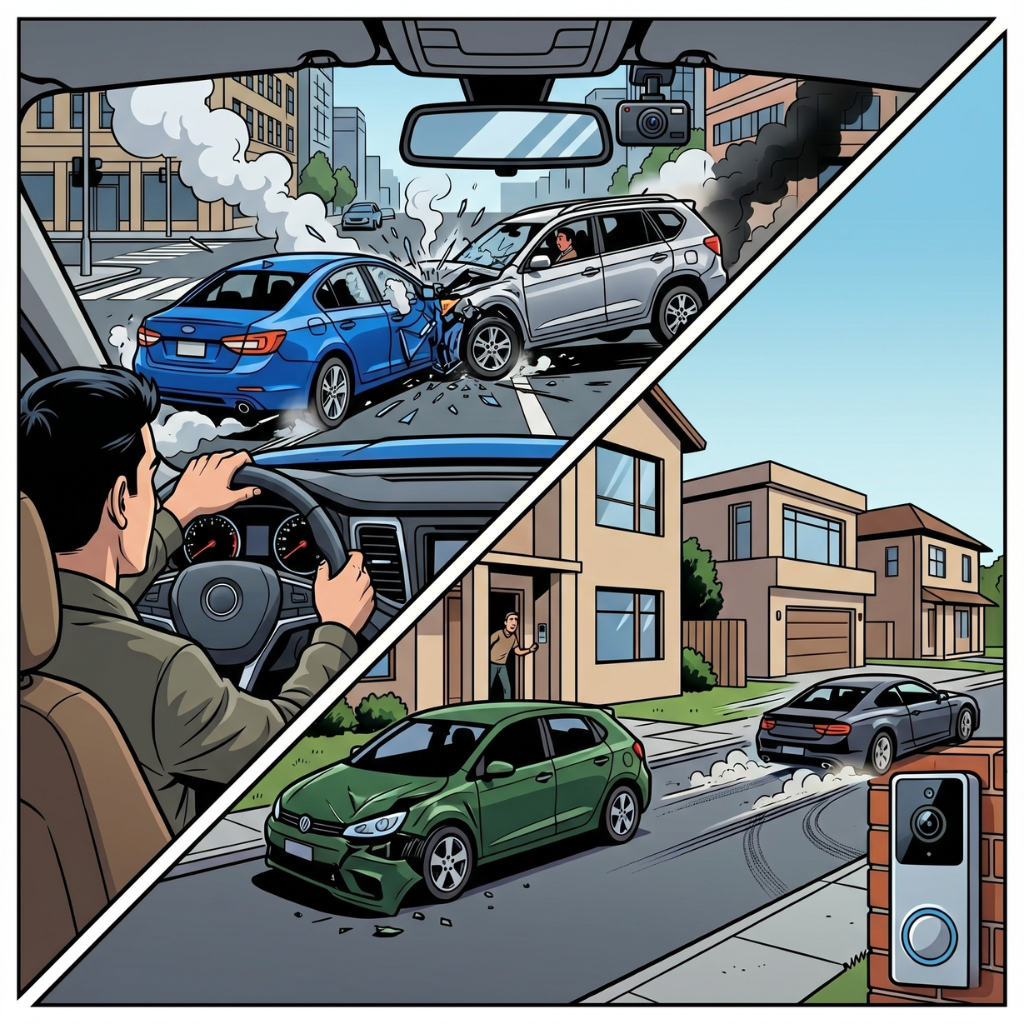
.webp)
Riley Beam
- Dashcam and doorbell cameras can capture objective, time-stamped evidence that settles disputes over who caused a crash or a fall, often carrying more weight than conflicting eyewitness accounts.
- In Florida, silent video recording in public is legal, but audio recording is governed by the state's all-party consent law, so footage with sound can raise separate legal issues.
- Video is frequently deleted within days, so acting quickly to preserve it is one of the most important things you can do after an injury.
Worried About Your Injury Case? We'll Review It - Free!

Fault used to come down to two people telling two different stories. Today, there is a good chance a camera saw what happened. Dashboard cameras now sit on millions of windshields, and video doorbells from Ring, Nest, and Arlo have become standard fixtures on homes and businesses across Brevard County. When you are hurt and the other side denies responsibility, that footage can be the difference between a denied claim and a full recovery.
At Douglas R. Beam, P.A., our personal injury lawyers have spent nearly four decades proving fault for injured people throughout Florida. This guide explains how dashcam and doorbell footage proves who was at fault, what Florida law allows you to record and use, and the steps you need to take to keep that evidence from disappearing.
Why Video Evidence Carries So Much Weight in a Florida Injury Case
Video is powerful because it is objective. A camera does not get nervous, it does not have a reason to shade the truth, and it does not forget. When an insurance adjuster is faced with two conflicting accounts, they often use that confusion as a reason to deny or reduce a claim. A clear clip removes the guesswork and replaces opinion with a visual record of what actually happened.
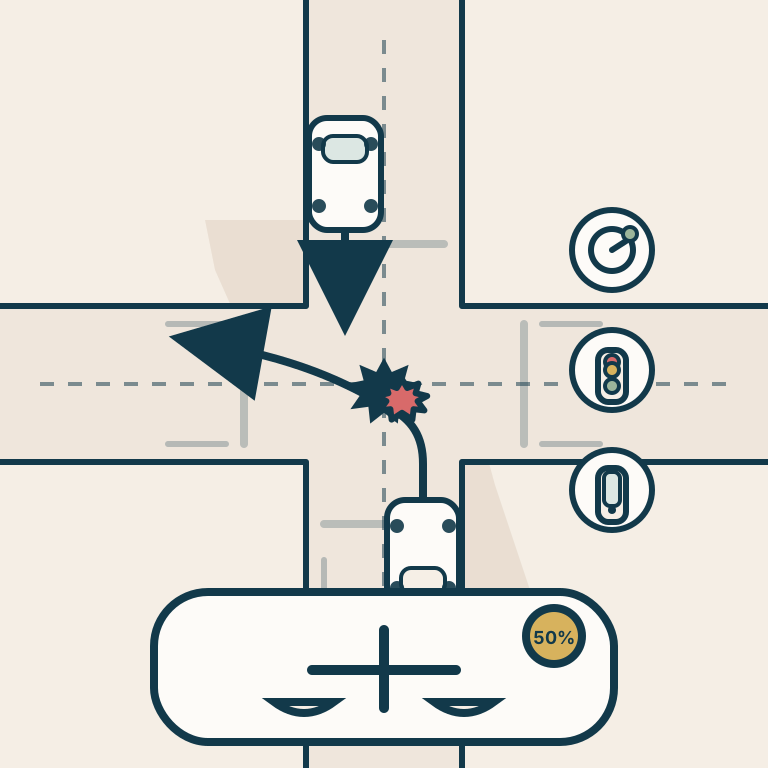
That objectivity matters more than ever under Florida's current fault rules. When the Legislature passed House Bill 837 in March 2023, Florida moved from a pure comparative negligence system to a modified comparative negligence standard. Under this law, if you are found to be more than 50 percent at fault for an accident, you cannot recover any compensation at all. If you share some fault but 50 percent or less, your recovery is reduced by your share of the blame. Our post on how Florida's comparative negligence law affects your settlement breaks down exactly how this plays out.
In that environment, a few percentage points can be worth thousands of dollars, and proving you were not the careless one is essential. Footage that shows the other driver ran a red light, or that a hazard sat on a store floor for an hour, can keep your share of fault low and protect your right to recover.
How Dashcam Footage Helps Prove Fault on the Road
A dashcam records the road from your point of view, which makes it one of the most persuasive forms of evidence in a traffic case. It is useful in car accidents, and just as valuable in truck, motorcycle, bicycle, and pedestrian collisions.
Capturing the Moment of Impact
The clearest value of a dashcam is that it can record the crash itself. Footage can show which driver had the right of way, whether someone ran a stop sign or traffic light, how fast the vehicles were traveling, and whether a turn was made safely. In a disputed left-turn case or an intersection collision, that visual record can settle a fault question that would otherwise turn into a “he said she, said” situation. Our discussion of who is at fault in a left-hand turn accident shows how often these cases hinge on small details that a camera captures and memory does not.
Disproving the Other Driver's Story
Just as important, a dashcam can disprove a false version of events. Drivers sometimes claim you stopped suddenly, drifted into their lane, or were speeding. Insurers may repeat those claims to shift blame onto you. When the video shows otherwise, that defense collapses. Even partial or unclear footage helps, because courts evaluate video based on what it does show. A clip that captures the seconds before impact, combined with the police report and witness statements, can build a strong, well-documented case.
How Doorbell and Home Security Cameras Capture What Witnesses Miss
Dashcams are not the only cameras watching. Video doorbells and home security systems record sidewalks, driveways, porches, and streets around the clock, and they often capture incidents that no human witness saw.
Crashes Near Driveways and Sidewalks
A doorbell camera angled toward the street can record a collision in front of the house, a hit-and-run driver fleeing the scene, or a pedestrian or cyclist being struck. This unbiased footage can establish the right of way, show excessive speed, or identify a vehicle that left. When the people involved tell different stories, video from a neighbor's porch can break the tie. In many cases, that recording can be requested or subpoenaed even though it belongs to someone who was not part of the accident.
Slip and Falls and the "How Long Was the Hazard There" Question
In a slip and fall or other premises liability case, timing is everything. Under Florida Statute § 768.0755, if you slip on a foreign substance in a business, you must prove the business had actual or constructive knowledge of the dangerous condition. Constructive knowledge can be shown by proving the hazard existed long enough that a reasonable business should have found and fixed it. Surveillance and doorbell footage is exactly the kind of evidence that proves it, by showing a spill sitting untouched for an hour while employees walked past. Our article on whether a store is liable for a customer injury explains this burden in more detail. The same cameras can also document a dog bite or the immediate aftermath of a fall, countering any later claim that your injuries were minor.
What Florida Law Says About Recording and Using Video
Helpful footage only matters if it was obtained legally and can be admitted in court. Two issues come up most often.
Video Versus Audio
Florida is an all-party consent state for audio. Under Florida Statute § 934.03, it is illegal to intercept and record a private conversation without the consent of everyone involved, and a violation can be charged as a third-degree felony. Importantly, this statute covers oral, wire, and electronic communications, not silent video. As Recording Law explains, recording video in public, such as a street or sidewalk, generally does not require anyone's consent. The complication is sound. A dashcam that records conversations inside your car, or a doorbell that picks up a neighbor's private conversation, can run afoul of the audio rule even when the video itself is fine. This is one reason to let an attorney review footage before you share it.
Getting Video Admitted in Court
Before any video can be used as evidence, it has to be authenticated. Florida Statute § 90.901 requires proof sufficient to show that the footage is what you claim it to be, meaning a fair and accurate depiction of the event. The standard is not difficult to meet, but it does require that the recording be unaltered and properly accounted for. Saving the original file and its metadata, rather than a trimmed or re-recorded copy, helps preserve that integrity.
Preserving Footage Before It Disappears
The biggest threat to video evidence is not the other side hiding it. It’s the clock. Many commercial surveillance systems automatically overwrite footage within 24 to 72 hours, and consumer doorbell cameras often store clips for only a week or two unless someone saves them. Once that window closes, the evidence is usually gone for good.
That is why fast action is critical. If you have your own dashcam or phone video, do not edit or delete it. Save the original to a secure place such as a hard drive or cloud account. For footage owned by a business, a neighbor, or another third party, the smart move is to let a lawyer handle it rather than knocking on doors yourself. An attorney can send a preservation letter, also called a spoliation letter, that puts the owner on formal legal notice to keep the recording. If the footage belongs to a business that ignores that notice and destroys it, a court may impose sanctions or instruct the jury to assume the missing video would have hurt that party's case. When voluntary cooperation is refused, your attorney can pursue the footage through a subpoena once a claim is filed. Acting early also protects the rest of your case, because witness memories fade and physical evidence disappears, as we explain in our guide to the personal injury claims process in Florida.
How an Experienced Florida Injury Lawyer Puts Video to Work
Finding footage is only the first step. The real value comes from knowing how to use it. An experienced attorney identifies every possible camera near the scene, secures the recordings before they vanish, and presents them in the right context. Even when a camera did not capture the accident itself, the surrounding footage can establish timing, conditions, and behavior that prove negligence.
Video is at its most powerful when paired with other evidence. Combined with your medical records, a clear clip lets a jury see exactly what happened and then see the harm it caused. We also use footage to shut down the insurance company's blame-shifting before it gains traction, which matters under Florida's 50 percent fault bar and the two-year deadline that HB 837 placed on most negligence claims.
If you or a loved one has been hurt and you believe a dashcam, doorbell, or security camera may have captured what happened, contact us today for a free case review. There is no cost and no obligation. We work on contingency, meaning you pay nothing unless we win. Our clients consistently recover far more than the first offer, and our results speak for themselves.
Sources
- Florida Statute § 934.03 – Interception and Disclosure of Wire, Oral, or Electronic Communications Prohibited
- Florida Statute § 90.901 – Requirement of Authentication or Identification
- Florida Statute § 768.0755 – Premises Liability for Transitory Foreign Substances in a Business Establishment
- Florida HB 837 – Civil Remedies (2023 Tort Reform)
- Recording Law – Florida Recording Laws: Two-Party Consent Rules
This article provides general information and is not a substitute for legal advice. Laws can change, and the details of your situation matter. For personalized guidance, please contact a qualified Florida personal injury attorney.
Not Sure What To Do Next? We Can Help – Fast & Free.
.webp)


Worried About Your Injury Case?
We'll Review It - Free

Don’t miss an article
Florida law, local insights, and the occasional dog pic.
Delivered straight to your inbox.
More articles
Browse all articles
.png)



Free Case Review
Get a complimentary review of your case