
Workers' Comp vs. a Third-Party Injury Claim: Which Applies?
Hurt on the job in Florida? Learn when workers' comp applies, when you can also file a third-party injury claim, and how the two work together.
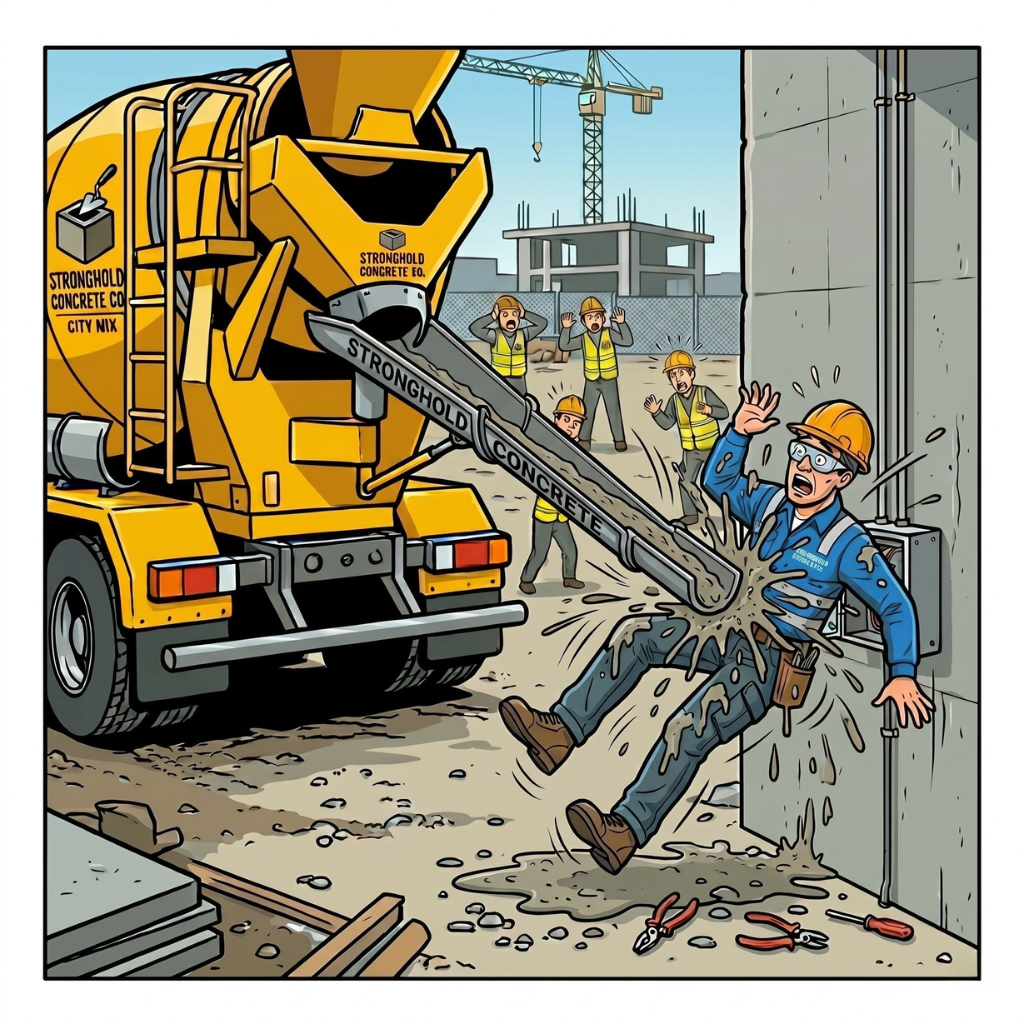
.webp)
Riley Beam
- Almost every Florida work injury starts as a no-fault workers' compensation claim that pays for medical care and partial lost wages without you having to prove anyone was at fault.
- When someone other than your employer or a co-worker caused your injury, you may also bring a separate third-party injury claim that can recover damages workers' comp never pays, including full lost wages and pain and suffering.
- You can pursue both claims at the same time, but each carries its own two-year filing deadline, and your employer's insurer can place a lien on part of any third-party recovery.
Worried About Your Injury Case? We'll Review It - Free!

Two Systems, One Workplace Injury
After a serious accident at work, the legal questions usually come second to the practical ones. How will you pay the medical bills? What happens to your paycheck while you heal? Who is responsible for what happened to you? In Florida, the answers can run along two very different tracks, and knowing which one applies to your situation is the difference between a partial recovery and full compensation.
The first track is workers' compensation. It is a no-fault system that almost every injured employee in the state can use, and it is designed to deliver medical care and wage replacement quickly, without a fight over who caused the accident. The second track is a third-party injury claim. This is a traditional personal injury lawsuit against someone other than your employer whose negligence contributed to your harm. Most work injuries involve only the first track. But a meaningful number involves both, and those are often the cases where the most money is left on the table when people do not know their rights.
The two systems are not in competition, and using one does not lock you out of the other. The real task is figuring out who was at fault, what each claim can pay, and how to coordinate them. Our work injury lawyers in Melbourne, FL handle this analysis every week.
How Florida Workers' Compensation Works
Florida's workers' compensation system is built around a simple trade. In exchange for prompt, guaranteed benefits, injured workers give up the right to sue their employer in most situations. This is sometimes called the "grand bargain," and it is the foundation of nearly every work injury claim in the state.
A No-Fault Safety Net
The biggest advantage of workers' comp is that fault does not matter. You do not have to prove your employer did anything wrong. If you were hurt in the course and scope of your job, you are generally entitled to benefits even if the accident was partly your own doing. Those benefits include medical treatment for the work injury and partial wage replacement while you cannot work.
The wage piece is where many workers are surprised. Under Florida Statute § 440.15, temporary total disability benefits are generally paid at two-thirds (66 and two-thirds percent) of your average weekly wage, up to a state cap, rising to 80 percent for a limited time after certain catastrophic injuries like the loss of a limb. Benefits do not begin until you have missed more than seven days of work, and you are only paid for that first week if your disability lasts more than 21 days. In short, the system replaces part of your income, not all of it, and it pays nothing for the pain, stress, and disruption the injury causes.
Workers' comp also comes with strict housekeeping rules. You must report your injury to your employer within 30 days under Florida Statute § 440.185, and you generally have two years from the date you knew or should have known your injury was work-related to file a formal petition for benefits under Florida Statute § 440.19. In most cases your employer or its insurance carrier, not you, gets to choose the doctor who treats you. Missing a deadline or skipping a step can put your benefits at risk, which is one reason early legal guidance matters even when the claim seems straightforward.
The Trade-Off: You Usually Cannot Sue Your Employer
Here’s the catch in the grand bargain. Because your employer is paying for benefits regardless of fault, the law protects that employer from being sued for the same injury. Florida Statute § 440.11 makes workers' compensation the "exclusive" remedy against your employer, and it extends that immunity to your co-workers when they are acting in furtherance of the business. So even if a supervisor's poor decision or a fellow employee's carelessness led to your injury, you usually cannot take them to court.
There are narrow exceptions. If your employer failed to carry the required workers' compensation insurance, you may be able to sue the employer directly. The same is true if an employer engaged in conduct that was virtually certain to injure you, or if a co-worker acted with gross negligence or unprovoked physical aggression. These exceptions are limited and hard to prove, which is exactly why the third-party claim, discussed next, is so important.
When a Third-Party Claim Also Applies
A third party is anyone who is not your employer and not a co-worker. When that kind of outside person or company causes your injury through negligence, the exclusive remedy rule does not protect them, and you can file a regular personal injury claim against them at the same time you collect workers' comp. Florida law specifically allows this. Under Florida Statute § 440.39, an injured worker may accept compensation benefits and still pursue a separate action against a third-party tortfeasor who caused the harm. Identifying that third party is the heart of the matter.
Negligent Drivers
A large share of work injuries happen on the road. If you drive for a living, make deliveries, travel between job sites, or run errands for your employer and another driver causes a crash, that driver is a third party. You can claim workers' comp through your employer and also pursue the at-fault motorist. These cases frequently involve commercial vehicles, so our car accident and truck accident attorneys often handle the third-party side while the comp claim moves in parallel.
Defective Equipment, Tools, and Products
Workers are regularly hurt by machinery and products that fail. A press without a proper guard, a defective ladder, a tool that shatters, or a chemical that was mislabeled can all point to a manufacturer or distributor rather than your employer. When a dangerous or defective product causes the injury, you may have a product liability claim against the company that made or sold it, in addition to your workers' compensation benefits.
Negligent Contractors, Subcontractors, and Property Owners
Construction sites are crowded with separate companies, and that creates third-party opportunities. If a subcontractor on a different part of the project, an equipment supplier, or a property owner creates a hazard that injures you, that company may be liable even though your own employer is immune. Florida's rules on contractor and subcontractor immunity are technical, and they turn on details like who secured workers' compensation coverage and whose negligence caused the harm. The same logic applies when a property owner's unsafe premises injure a worker who was sent there to do a job. Sorting out which outside party is on the hook is precisely the kind of question that rewards careful investigation.
Why It Matters: What Each Claim Can Recover
The reason the distinction is worth so much comes down to what each claim pays. Workers' compensation is deliberately limited. It covers your authorized medical care and a fraction of your lost wages, and that is largely it. It does not pay for pain and suffering, it does not close the gap between your real wages and the two-thirds the statute provides, and it does not compensate you for the long-term effect a serious injury has on your life.
A third-party claim is a full personal injury case, so it reaches all of those categories. Through a third-party claim you can pursue your complete lost earnings and future earning capacity, the full cost of your medical care, and compensation for pain, suffering, disfigurement, and reduced quality of life. For a worker who suffers a catastrophic harm such as a traumatic brain injury or who loses a loved one in a fatal accident giving rise to a wrongful death claim, that difference can be enormous.
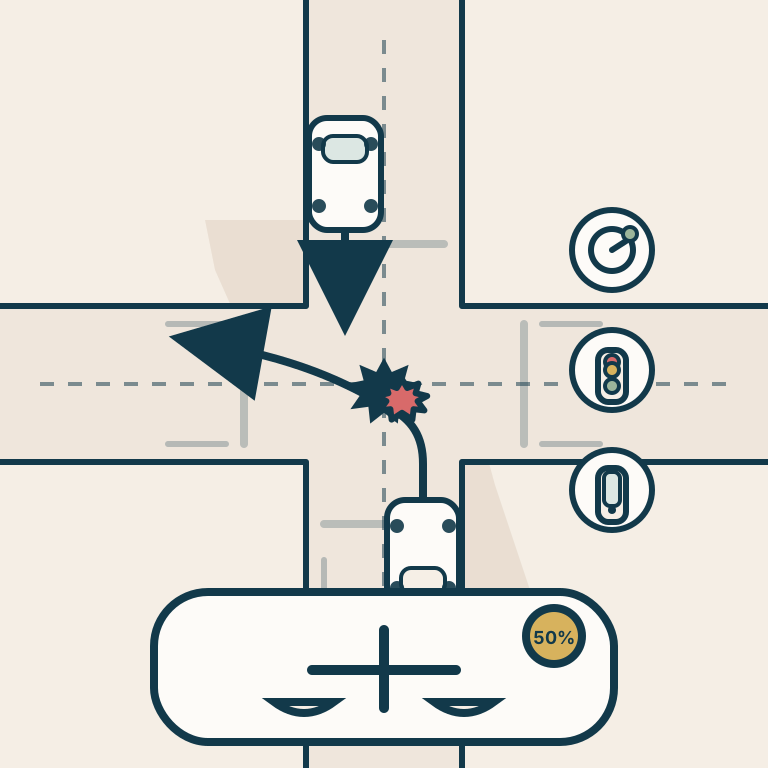
There is a trade-off to understand, though. Unlike no-fault workers' comp, a third-party claim requires you to prove the other party's negligence, and your own share of fault can reduce what you recover. Florida's 2023 tort reform, passed as House Bill 837, moved the state to a modified comparative negligence standard, which means a person found more than 50 percent at fault for an injury cannot recover damages at all. Our post on how Florida's comparative negligence law affects your settlement explains how that plays out. Your workers' comp benefits, by contrast, are not reduced by your own carelessness, which is one more reason the two claims work best together.
Pursuing Both Claims, the Comp Lien, and the Deadlines
When a third party is involved, the strongest position is usually to pursue both claims at once. Workers' comp keeps your medical care and basic income flowing while the third-party case is built, investigated, and negotiated. The third-party case then aims for the full compensation that comp alone cannot provide.
Coordinating the two is where experience pays off, largely because of the workers' compensation lien. Under Florida Statute § 440.39, the employer or insurer that paid your benefits is "subrogated" to your rights, meaning it has a legal claim to be repaid out of any money you recover from the third party. If that lien is not negotiated carefully, a chunk of your settlement can flow straight back to the comp carrier. A seasoned attorney works to reduce the lien so that more of the recovery stays with you.
Timing is just as important. Your workers' comp petition is generally subject to the two-year deadline in Florida Statute § 440.19, while your third-party negligence claim falls under the separate two-year limit that HB 837 set for most personal injury cases. These clocks run independently, and missing either one can quietly close a door you did not know you had. Because evidence at an accident scene disappears fast and witnesses move on, the practical deadline to start protecting your claim is much sooner than two years. If you want a fuller picture of how an injury case unfolds, our guide to the personal injury claims process in Florida lays out the stages step by step.
How Douglas R. Beam, P.A. Can Help
We have been fighting for injured Floridians since 1988, and we know how to look past the obvious comp claim to find the third party who actually caused the harm. That second claim is frequently where the real recovery lives, and it is also where employers, insurers, and their lawyers work hardest to limit what you get. We handle both sides of the equation, coordinate them so the comp lien does not swallow your settlement, and keep every deadline on track.
A work injury can mean mounting medical bills, a shrinking paycheck, and real worry about your job and your family's future. You should not have to navigate two legal systems on your own while you are trying to heal. Our consultations are always free, and because we work on contingency, you pay no fee unless we win. Contact us today to tell us what happened, and let us tell you which claims apply to your case.
Sources
- Florida Statutes § 440.11: Exclusiveness of Liability
- Florida Statutes § 440.15: Compensation for Disability (Wage Benefits)
- Florida Statutes § 440.185: Notice of Injury or Death; Reporting
- Florida Statutes § 440.19: Time Bars to Filing Petitions for Benefits
- Florida Statutes § 440.39: Compensation for Injuries When Third Persons Are Liable
- Florida Statutes § 95.11: Limitations Other Than for the Recovery of Real Property
- Florida HB 837 (2023): Civil Remedies
This article provides general information and is not a substitute for legal advice. Laws can change, and the details of your situation matter. For personalized guidance, please contact a qualified Florida personal injury attorney.
Not Sure What To Do Next? We Can Help – Fast & Free.
.webp)


Worried About Your Injury Case?
We'll Review It - Free

Don’t miss an article
Florida law, local insights, and the occasional dog pic.
Delivered straight to your inbox.
More articles
Browse all articles
.png)



Free Case Review
Get a complimentary review of your case