
Car Accidents with Children in Florida: Legal Rights, Unique Injuries & What Parents Must Know
Children face unique risks in car accidents. Learn how Florida law protects young victims, what makes these cases different, and your family's rights.
.webp)
Riley Beam
- Children are more vulnerable to catastrophic injuries in car accidents because their bodies are still developing, making head, spinal, and abdominal injuries more severe and harder to detect than in adults.
- Florida law provides special protections for child accident victims, including rules that prevent a child's car seat violations from being used against them in court and unique settlement approval requirements designed to safeguard their financial recovery.
- Personal injury cases with children may need to count decades of future medical care. They may also need to count lost milestones in growing up. And they may need to count long-term mental and emotional effects that may not show up for years.
Worried About Your Injury Case? We'll Review It - Free!

The Scope of the Problem: Children and Car Accidents in Florida
Few things are more terrifying for a parent than a car accident involving their child. The sirens, the emergency room, the sleepless nights. In the chaos that follows it's easy to feel overwhelmed by both the medical and legal challenges ahead. As attorneys who have represented Florida families since 1988, we know how devastating these moments can be. That's why it's important to understand not only what makes car accidents involving children different, but also how Florida law is designed to protect them.
The numbers paint a sobering picture. According to the National Highway Traffic Safety Administration (NHTSA), 1,019 children aged 14 and younger were killed in traffic crashes across the United States in 2023. Florida ranked second among the states for child traffic deaths that year, with 94 children killed. Beyond fatalities, thousands more children are injured in crashes each year, many suffering life-altering consequences.
What makes these statistics particularly troubling is that many of these injuries and deaths are preventable. NHTSA data shows that among child passengers killed in crashes where restraint use was known, a significant percentage were unrestrained. Alcohol-impaired driving also remains a deadly factor: roughly one in four child traffic fatalities in 2023 involved a driver with a blood alcohol concentration above the legal limit.
Understanding the risks is the first step toward protecting your family. And if your child has already been injured, understanding the legal landscape is essential to ensuring they receive the care and compensation they deserve. If your family has been affected by a car accident, we encourage you to reach out for a free consultation.
Why Children Are More Vulnerable to Serious Injuries
Children are not simply small adults. Their bodies are still growing and developing, which means they respond to crash forces in fundamentally different ways than adults. Understanding these differences is critical for preventing injuries and for building a strong personal injury case when the worst happens.
Physical Differences That Increase Risk
A child's head is proportionally larger and heavier relative to their body compared to an adult's. This means that in a crash, a child's head is subjected to greater forces, increasing the risk of traumatic brain injuries (TBIs). Research has shown that head injuries account for the most severe injuries in pediatric crash victims across all age groups. Brain injuries in children are especially complex. That's because their full effects may not show up right away. This delayed presentation has significant implications for brain injury claims and the compensation families seek.
Children's spines are also structurally different from adults' in several important ways. A child's spine has greater flexibility due to ligament laxity, underdeveloped muscles surrounding the vertebrae, and differently shaped vertebral bodies. While this flexibility offers some protection, it also means that a child's neck and spinal cord are more susceptible to certain types of injuries. The point where the most movement occurs in a child's cervical spine is higher (at the C2–C3 vertebrae) than in adults (C5–C6), which can result in more dangerous upper-cervical injuries in young crash victims.
Beyond the head and spine, children have less protective muscle mass and fat around their abdominal organs, making them more susceptible to internal injuries. Seat belts designed for adult bodies can actually cause abdominal compression injuries in children who are too small for standard restraints. The ribs of younger children are more flexible and less likely to fracture. This might sound like a good thing, but it actually means crash forces are transmitted more directly to the internal organs, increasing the risk of damage to the liver, spleen, kidneys, and intestines.
Psychological and Emotional Trauma
The psychological effects of a car accident on a child should never be underestimated. Children may develop post-traumatic stress disorder (PTSD). They may also have sleep problems and nightmares, and become more fearful. Younger children may regress in development, returning to behaviors like bedwetting or separation anxiety that they had previously outgrown. These injuries to the mind count as damages in a personal injury case. They may need therapy. Our blog article on emotional distress claims in Florida covers this topic in greater detail.
Florida Laws That Protect Child Accident Victims
Florida has enacted several laws specifically designed to protect children in and around motor vehicles. Understanding these laws is important both for preventing accidents and for strengthening a legal claim after one occurs.
Child Restraint Laws and Their Role in Injury Claims
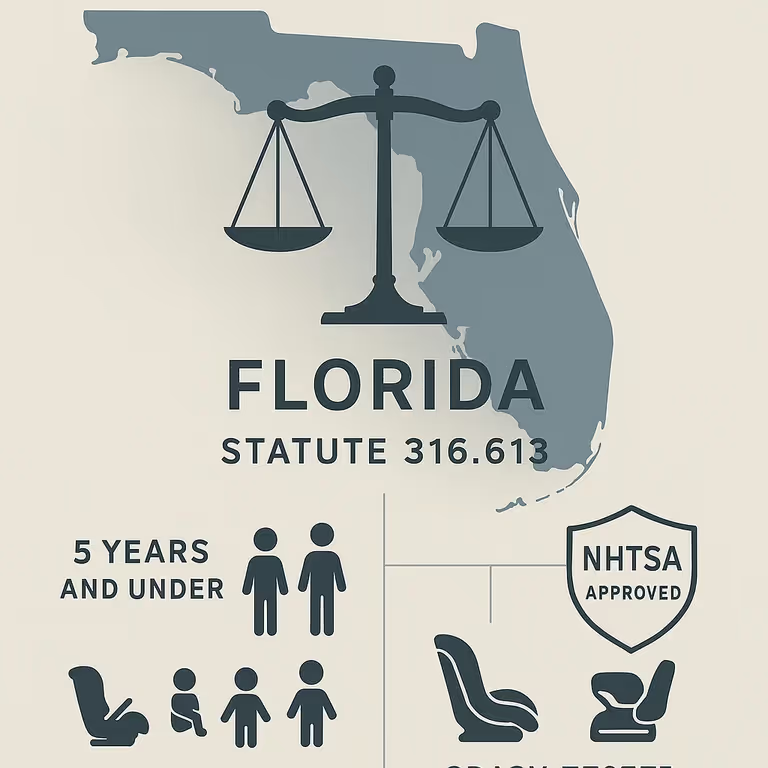
Florida's child car seat laws require all children aged five and under to be secured in a crash-tested, federally approved child restraint device. Children from birth through age three must ride in a separate carrier or integrated child seat. Children ages four and five may also use a booster seat. Violations result in a $60 fine and three points on the driver's license.
Here is where the law includes a critical protection for injured children. Florida Statute 316.613(3) specifically states that the failure to use a child passenger restraint cannot be considered comparative negligence and is not admissible as evidence in any civil trial. This means that if your child was not properly restrained at the time of a crash caused by another driver, the at-fault party cannot use that fact to reduce the compensation your child is owed. This protection is especially important under Florida's current comparative negligence framework, where being found more than 50 percent at fault bars a plaintiff from recovering any damages.
While a car seat violation cannot be used against your child in court, proper restraint use can still play a role in strengthening your case. NHTSA data indicates that child safety seats reduce the risk of fatal injury by 71 percent for infants under one year old and by 54 percent for toddlers aged one through four. If your child was properly restrained and still suffered serious injuries, this demonstrates the severity of the crash and the at-fault driver's level of negligence. It can also help counter any attempts by an insurance company to minimize your claim.
Florida is also a no-fault insurance state, which means that after a car accident, your own Personal Injury Protection (PIP) insurance pays for medical expenses regardless of who caused the crash. PIP covers up to $10,000 in medical bills and lost wages. It pays medical benefits only if the injured person gets first treatment within 14 days of the crash. However, a child may suffer serious injuries. If so, the family can seek money for pain and suffering from the driver at fault. Florida law allows this. A permanent injury is one example. Significant and permanent scarring is another. So is significant and permanent loss of an important bodily function. Depending on the facts, a child's injuries may meet this threshold.
Unique Legal Considerations in Child Injury Cases
Personal injury cases involving children carry several unique legal considerations that distinguish them from adult claims. Parents navigating this process for the first time should be aware of the following factors.
Under Florida law, a minor child cannot file a personal injury lawsuit on their own. Instead, a parent or legal guardian acts as the child's representative, bringing the claim in their capacity as the child's "natural guardian" under Florida Statute 744.301. If no parent or suitable guardian is available, the court may appoint a guardian to represent the child's interests.
Court Approval of Settlements and Filing Deadlines
One of the most important protections Florida provides for child injury victims involves the settlement process. Under Florida Statute 744.387, settlements involving minors are subject to court oversight to ensure the agreement is fair and in the child's best interest. If the gross settlement amount is $15,000 or less and no lawsuit has been filed, the natural guardians may settle without court approval. Once the gross settlement exceeds $15,000, court approval is required. If the total settlement for a child is $50,000 or more, the court generally must appoint a guardian ad litem. This is an independent person who looks out for the child. They review the settlement to make sure it serves the child's interests. Settlement funds exceeding $15,000 in net recovery are typically placed in a court-supervised guardianship account or structured settlement, ensuring the money is protected until the child turns 18. These requirements exist because children cannot evaluate or manage large financial awards on their own. The court acts as an additional safeguard, making sure that insurance companies and opposing parties do not take advantage of a child's vulnerability. An experienced personal injury attorney can guide families through this process efficiently.
The standard statute of limitations for negligence-based personal injury claims in Florida is two years from the date of the accident, following the 2023 reforms under House Bill 837. In limited circumstances, this deadline may be tolled (paused) for minor children, but the tolling provisions are narrow. Under Florida Statute 95.051, tolling generally applies only when a child has no parent, guardian, or guardian ad litem, or when the guardian's interests conflict with the child's. Even with tolling, claims must typically be filed within seven years of the date the cause of action accrued. The bottom line: parents should not assume they have extra time to file simply because the victim is a child. Acting promptly protects your child's rights and preserves critical evidence.
It is also worth noting that in negligence cases, adults are generally held to a "reasonable person" standard, but children are held to a different standard: what would be reasonable for a child of similar age, maturity, and intelligence. This distinction can be significant in cases where an insurance company argues the child contributed to their own injuries, for example by unbuckling a seat belt. A five-year-old cannot be held to the same standard of judgment as an adult, and Florida courts recognize this.
Damages and Compensation in Child Car Accident Cases
Cases with child victims can involve large damages. When a child is seriously injured, the financial and human costs extend across decades.
A child injured in a car accident may require immediate emergency treatment, surgeries, hospitalizations, and rehabilitation. But the costs do not stop there. Children who suffer traumatic brain injuries, spinal cord damage, or orthopedic injuries may need ongoing care for years. Some may need it for the rest of their lives. Children have decades of life ahead of them. So the estimated cost of their future medical treatment can be higher than it would be for an adult with the same injury. Expert testimony from physicians and life care planners is often used to calculate these future costs.
Florida law also allows injured parties to recover compensation for physical pain, emotional suffering, and the loss of the ability to enjoy life. For a child who loved sports but can no longer play, or a teenager who now lives with chronic pain and anxiety, these non-economic damages can be substantial. The younger the child, the more years of diminished quality of life they face, which is reflected in the compensation. While young children do not have current earnings to lose, they do have future earning capacity. A catastrophic injury that prevents a child from reaching their full educational or professional potential represents a significant economic loss. Economists and vocational experts can project what the child would likely have earned over a lifetime and calculate the value of that lost opportunity.
Parents may also have their own claims related to a child's injuries. These can include money back for medical bills they paid for the child. They can include lost wages from time off work to care for the child. If the injury leaves the child permanently and totally disabled, they can also include the loss of the child's companionship. In the most tragic circumstances when a child's injuries prove fatal, Florida's wrongful death laws allow families to seek compensation for their loss. Our firm has written extensively about the wrongful death claims process in Florida for families navigating this difficult situation.
Protecting Your Child's Rights After a Car Accident
If your child has been injured in a car accident, the steps you take in the days and weeks following the crash can significantly affect both their recovery and the strength of their legal claim.
Always have your child evaluated by a medical professional after a car accident, even if they appear uninjured. Many serious pediatric injuries may not present obvious symptoms immediately, including brain injuries and internal organ damage. A thorough medical evaluation creates a documented record of your child's condition, which is essential for both treatment and any future legal claim. Follow through with all recommended treatment plans, specialist referrals, and follow-up appointments.
Thorough documentation also strengthens your case. This includes obtaining the police report from the crash, photographing the accident scene and vehicle damage, keeping copies of all medical records and bills, and maintaining a journal of your child's symptoms, behaviors, and recovery progress. Note any changes in your child's sleep patterns, appetite, school performance, mood, or social interactions. These details may seem minor in the moment, but they can become critical evidence in proving the full extent of your child's damages.
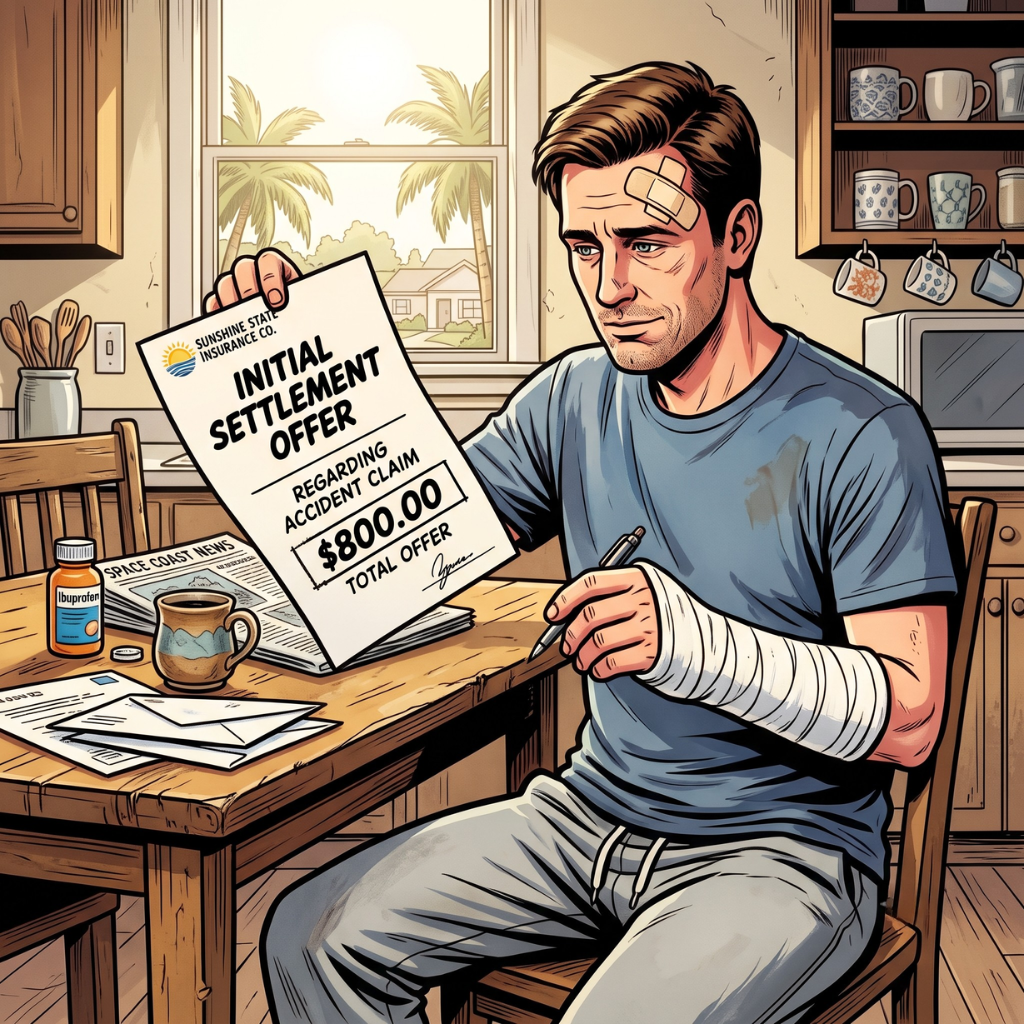
Be cautious with insurance companies. Adjusters may contact you quickly after an accident, sometimes even while your child is still receiving treatment. Avoid providing recorded statements or accepting early settlement offers. Insurers frequently attempt to resolve claims before the full extent of a child's injuries is known, and an early settlement that seems generous today may fall far short of covering years of future medical care and therapy. Our guide to what to tell your lawyer after a car accident offers practical advice for protecting your claim from the start.
Most importantly, cases involving injured children require an attorney who understands both the medical complexities of pediatric injuries and the legal nuances unique to minor claims in Florida. From navigating the court approval process for settlements to retaining the right medical experts to project future care needs, these cases demand experience and attention to detail. At Douglas R. Beam, P.A., we have been representing Central Florida families since 1988. Our firm has recovered over $1 billion in verdicts and settlements, and we bring that experience to every case involving an injured child. We take fewer cases so that every family receives the personal attention they deserve. We don't get paid unless we win.
If your child has been injured in a car accident, call us at (321) 723-6591 for a free, no-obligation consultation. We will listen to your story, answer your questions, and help you understand your options. Your child's future is too important to leave to chance.
Sources
- National Highway Traffic Safety Administration, Traffic Safety Facts Children: 2023 Data
- National Highway Traffic Safety Administration, Traffic Safety Facts Children: 2022 Data
- National Highway Traffic Safety Administration, Summary of Motor Vehicle Traffic Crashes: 2023 Data
- Eno Center for Transportation: Motor Vehicle Crash Deaths Among Children
- Newgard and Jolly: A Descriptive Study of Pediatric Injury Patterns from the National Automotive Sampling System
- Giovannini et al. Pediatric Motor Vehicle Crash Injuries: A Systematic Review for Forensic Evaluation
- Florida Statute 316.613: Child Restraint Requirements
- Florida Statute 744.387: Settlement of Claims
- Florida Statute 744.3025: Claims of Minors
- Florida Statute 95.11: Limitations Other Than for the Recovery of Real Property
- Florida House Bill 837 (2023): Civil Remedies
- NHTSA: Children Injured in Motor Vehicle Traffic Crashes
- Florida Statute 744.301: Natural Guardians
- Florida Statute 95.051: When Limitations Tolled
This article provides general information and is not a substitute for legal advice. Laws can change, and the details of your situation matter. For personalized guidance, please contact a qualified Florida personal injury attorney.
Not Sure What To Do Next? We Can Help: Fast & Free.
.webp)


Worried About Your Injury Case?
We'll Review It - Free

Don’t miss an article
Florida law, local insights, and the occasional dog pic.
Delivered straight to your inbox.
More articles
Browse all articles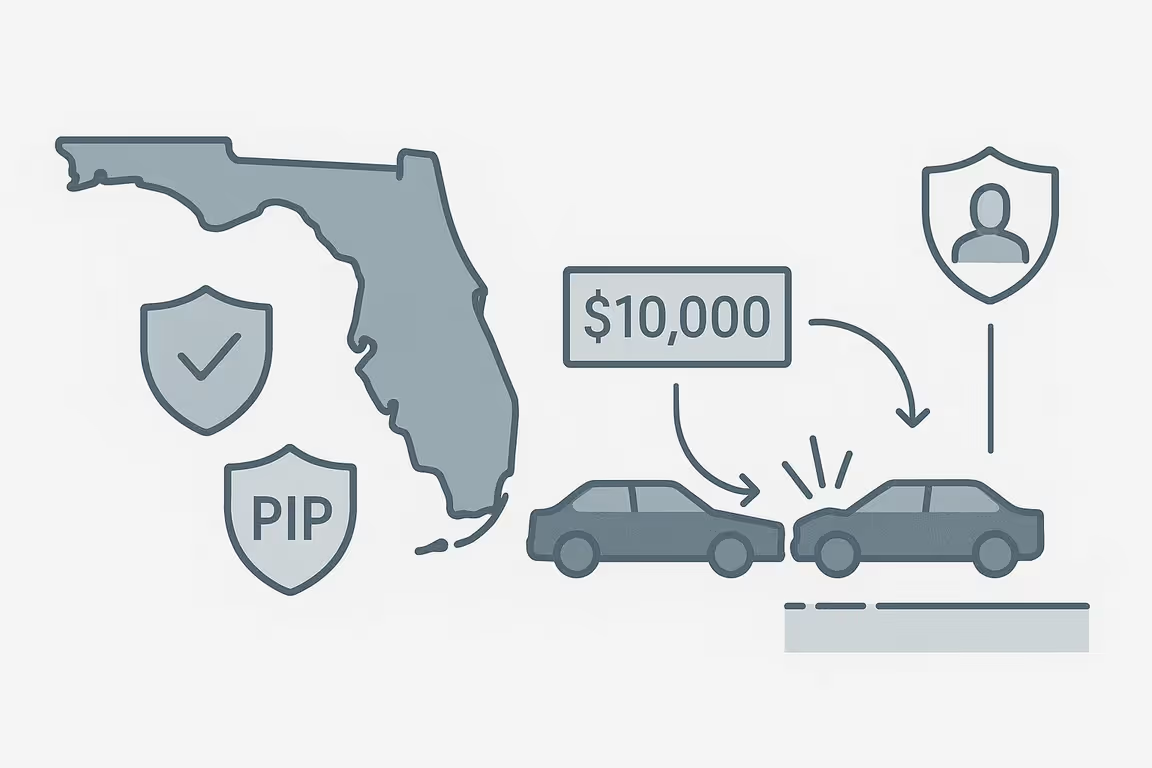


Free Case Review
Get a complimentary review of your case