
Rental Bike, E-Bike, and Scooter Accidents: Who Is Liable in Florida?
Hurt on a rental bike or scooter in Florida? Learn who is liable (drivers, rental companies, or manufacturers) and how to protect your rights.

.webp)
Riley Beam
- Injuries from rental e-bikes and scooters have surged nationally, and Florida riders face real risks from motor vehicle collisions, equipment failures, and road hazards.
- Even if you signed a rental waiver, you may still have a valid claim against the rental company, the device manufacturer, or a negligent motor vehicle driver.
- Florida's two-year statute of limitations for personal injury claims means time matters. Getting legal advice quickly can preserve your right to compensation.
Worried About Your Injury Case? We'll Review It - Free!

The Rise of Rental Micromobility and the Risks That Come With It
Rental bikes, electric bikes (e-bikes), and stand-up electric scooters have become a fixture of Florida's beach towns, tourist corridors, and urban streetscapes. A quick tap on an app and you're rolling. For visitors exploring Cocoa Beach or Melbourne's Eau Gallie Arts District, or for a local who just needs a quick trip to the waterfront, the whole experience feels effortless. That's by design.
But the numbers tell a more complicated story. According to a September 2024 report from the U.S. Consumer Product Safety Commission (CPSC), micromobility emergency department visits went from 34,000 in 2017 to 87,800 in 2023, more than doubling in just six years. A peer-reviewed study published in the American Journal of Public Health found that e-bike injury rates increased by 293% and powered scooter injury rates increased by 88% between 2019 and 2022 alone. These aren't minor scrapes. Fractures, head trauma, internal injuries, and spinal damage are well-documented outcomes when something goes wrong on a small, fast, largely unprotected vehicle.
Florida sits squarely at the center of these trends. Warm weather, flat terrain, and a tourism-heavy economy have made rental micromobility popular statewide, in Tampa, Miami, Orlando, and right here on the Space Coast. But popularity doesn't come with built-in protection. If you've been hurt on a rental bike, e-bike, or scooter in Florida, understanding your legal options starts with understanding how these accidents happen and who can be held accountable.
Common Accident Risks for Rental Riders
Rental bikes and scooters are not always in the same condition as a device you own and maintain yourself. They sit outside in the elements, get ridden by dozens of strangers, and sometimes go days between inspections. That reality creates a specific set of risks that riders need to understand before they ever unlock one from a kiosk.
Speed and Handling Surprises
E-bikes and e-scooters accelerate quickly, often far faster than a new rider expects. Many e-bikes assist riders up to 20–28 miles per hour, and even stand-up rental scooters typically reach around 15 mph. A 2024 Harvard Health analysis of the research noted that the higher speeds of these devices leave less reaction time when unexpected potholes or turning vehicles appear, and that injuries tend to be more severe when accidents do occur. Riders who haven't been on a bicycle in years or who have never used a throttle-assist vehicle face particular risk during those first few minutes of unfamiliarity.
Road Hazards and Infrastructure Gaps
Florida's roads aren't always built with micromobility in mind. Cracked pavement, uneven surfaces where asphalt meets a crosswalk, poorly marked bike lanes, and storm drain grates positioned at the edge of the lane can all send a rider over the handlebars in a fraction of a second. Unlike a car driver, a person on a rental scooter has no crumple zone, no airbags, and often no helmet.
Alcohol and Inattention
Research consistently shows higher rates of alcohol involvement in e-scooter accidents compared to conventional bicycles. An American Journal of Public Health study found that powered scooter injuries had the highest proportion of alcohol use among all micromobility device types. This matters for liability: if you were riding impaired, Florida's modified comparative fault rules can significantly reduce or eliminate your ability to recover compensation. We cover how that system works in our post on how Florida's comparative negligence law affects your settlement.
When a Motor Vehicle Is Involved
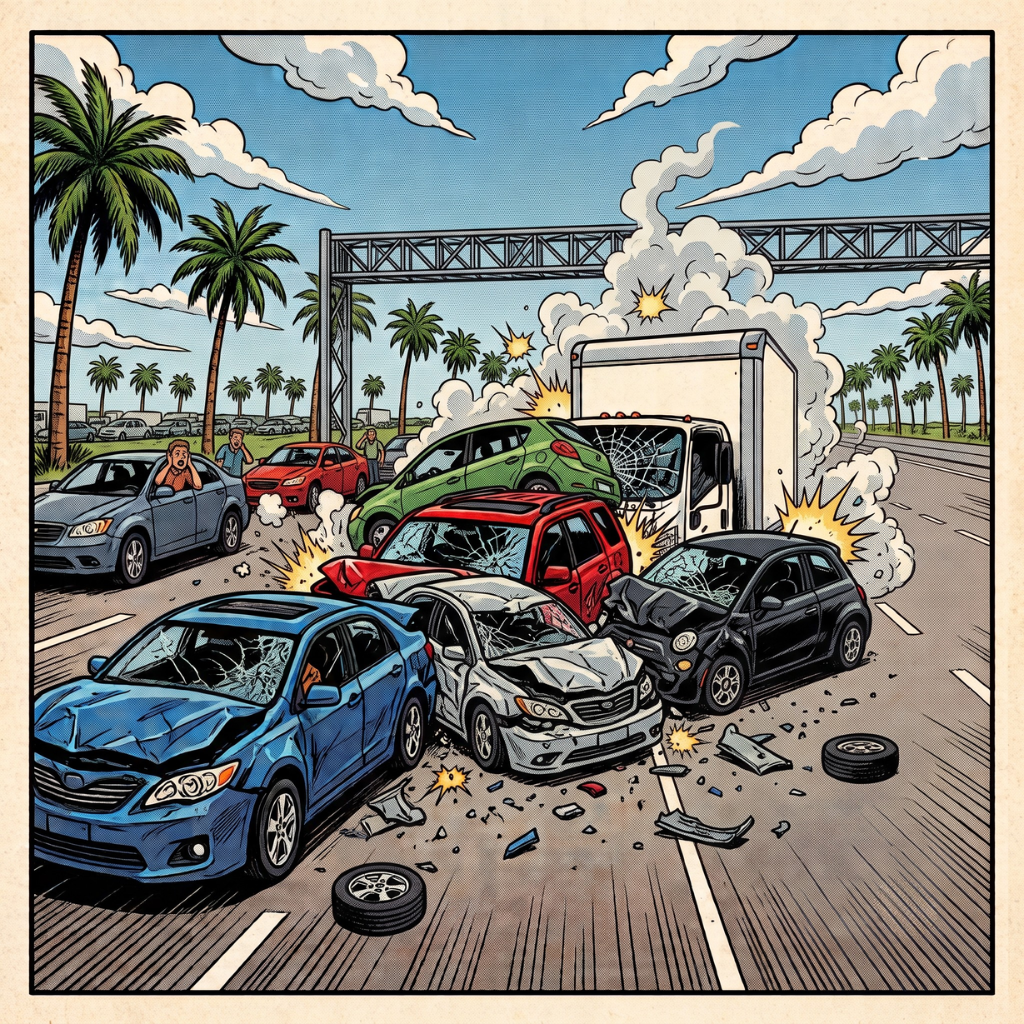
The most serious rental bike and scooter injuries in Florida tend to involve a motor vehicle. Drivers don't always see scooter or e-bike riders, especially when checking a phone, making an unsignaled turn, or sweeping across a bike lane at an intersection. E-bikes are notably quiet, which compounds the problem. A passing car may not register that a rider is in the lane until it's too late. That same CPSC report found that motor vehicle involvement was a factor in the majority of fatal e-bike accidents.
Under Florida law, e-bike riders are classified as vulnerable road users under Florida Statute § 316.027, and motor vehicle drivers are required to maintain at least three feet of clearance when passing. When a driver's negligence causes a crash (whether through speeding, running a red light, distracted driving, or failure to yield) that driver can be held liable for your injuries. This is true even if you were riding a rented device.
If the at-fault driver carries insurance, their liability coverage is the primary source of compensation for medical bills, lost wages, and pain and suffering. If the driver is uninsured or underinsured, your own auto policy, specifically uninsured/underinsured motorist (UM/UIM) coverage, may provide a path to recovery. Our bicycle accident lawyers have extensive experience navigating these claims throughout Brevard County and Central Florida.
Motor vehicle collisions with rental riders can also cause traumatic brain injuries. Research published by the American College of Surgeons reported a 49-fold increase nationally in e-bike riders presenting with head trauma over a five-year period, a trend attributed in part to the absence of mandatory helmet laws for adult riders in Florida. If you weren't wearing a helmet, that doesn't automatically end your case, but it is a factor that an experienced attorney needs to address head-on.
Rental Company Liability: What They Owe You
When you rent a bike or scooter through a company, that company has a legal obligation to provide equipment that is reasonably safe to operate. That’s true whether it's Bird, Lime, or a local shop on the Brevard County beachfront. That means performing regular inspections, maintaining brakes, checking tires, ensuring lights work, and pulling devices from service when they are damaged or defective.
If a rental company fails to meet that standard and a rider is injured as a result, the company may be held liable under Florida negligence law. That could involve a brake that doesn't engage, a tire that gives out, a steering component that's loose. The legal question is whether the company knew or reasonably should have known about the problem and failed to fix it.
This is where rental agreements can complicate the picture. Nearly every rental company requires users to accept a terms-of-service agreement before riding, and those terms typically include liability waivers. Under Florida law, a waiver is only enforceable if it is clear, unambiguous, and specific about the rights the rider is giving up. Even a carefully worded waiver does not insulate a company from liability for gross negligence, conduct that reflects a conscious and deliberate disregard for a rider's safety. Florida courts have been consistent on this point: you cannot contract your way out of responsibility for reckless behavior.
Product Defects and Manufacturer Liability
Not every rental accident traces back to the rental company's failure to maintain its fleet. Sometimes the problem is built into the device itself. Manufacturing defects, design flaws, and battery failures have all been documented across the micromobility industry. Lithium-ion battery fires, in particular, have caused serious burn injuries when batteries overheat or are improperly manufactured. Faulty accelerator mechanisms, unreliable brake systems, and unstable frames have also been linked to severe crashes.
When an injury stems from a defect in the design or manufacture of the e-bike or scooter independent of anything the rider or rental company did, the manufacturer, distributor, or component supplier may face liability under Florida's product liability framework. These cases require a thorough investigation of the device and often turn on testimony from mechanical or engineering experts who can explain exactly how the defect caused the failure and the injury.
If you've been seriously hurt and you have reason to believe the device itself was defective, preserving the evidence is critical. Our personal injury attorneys can help you act quickly to secure the device and begin building the factual record your case will need.
Waivers, Florida Law, and What to Do After an Accident
If you've been hurt on a rental bike, e-bike, or scooter in Florida, there are a few things that need to happen promptly. First, get medical attention even if you feel okay in the moment. Adrenaline can mask injury severity, and a medical record from the day of the accident creates a documented link between the crash and your injuries. Second, don't return the device to its dock or station before photographing it thoroughly. Images of the device, the scene, skid marks, damaged components, and your injuries are all potential evidence. Third, contact a personal injury attorney who can evaluate your claim while everything is still fresh.
Florida's Two-Year Statute of Limitations
Florida's 2023 tort reform cut the statute of limitations for personal injury claims from four years to two. You now have two years from the date of your accident to file a lawsuit. If the accident resulted in a death, the same two-year window applies to wrongful death claims. Miss that deadline and your ability to recover anything is almost certainly forfeited. With claims involving rental companies, government entities (for road-condition claims), or product manufacturers, the investigation and filing process can take meaningful time, which is exactly why earlier is better.
What That Waiver Actually Covers
Most riders don't read the fine print when they unlock a rental scooter. The agreement you tap "agree" to often bundles arbitration clauses, jury trial waivers, and broad assumptions of risk into a single screen. These provisions are not automatically valid under Florida law. An attorney can analyze the specific agreement, assess whether it meets Florida's standards for enforceability, and identify whether the company's conduct rises to the level of gross negligence that voids the waiver entirely. In many cases, the waiver protects against ordinary, foreseeable risks but not against a company that knowingly sent out a broken device.
At Douglas R. Beam, P.A., we've helped clients across Melbourne, Cocoa Beach, and throughout Brevard County and Central Florida get the compensation they're owed after serious accidents. We don't charge a fee unless we win. If you've been hurt on a rental bike, e-bike, or scooter, call us for a free consultation and let us find out what your case is actually worth.
Sources
- U.S. Consumer Product Safety Commission — Micromobility Products-Related Deaths, Injuries, and Hazard Patterns: 2017–2023
- Burford KG, Itzkowitz NG, Rundle AG, DiMaggio C, Mooney SJ — The Burden of Injuries Associated With E-Bikes, Powered Scooters, Hoverboards, and Bicycles in the United States: 2019–2022
- Harvard Health Publishing — The Popularity of E-Bikes and E-Scooters Is Soaring, But Are They Safe?
- Maa J, Doucet JJ, Ignacio R, Alfrey E. — Electric Bikes Are Emerging as Public Health Hazard
- Florida Statute § 316.027 – Crashes Involving Death or Personal Injury
- Rosen Injury Law — 2026 Comprehensive Guide: Upcoming Florida E-Bike Legislation and Current Laws
- InjuryLawyers.com — Florida E-Scooter Laws: What Every Rider Must Know
This article provides general information and is not a substitute for legal advice. Laws can change, and the details of your situation matter. For personalized guidance, please contact a qualified Florida personal injury attorney.
Not Sure What To Do Next? We Can Help – Fast & Free.
.webp)


Worried About Your Injury Case?
We'll Review It - Free

Don’t miss an article
Florida law, local insights, and the occasional dog pic.
Delivered straight to your inbox.
More articles
Browse all articles

.png)
Free Case Review
Get a complimentary review of your case