
Reckless Driving in Florida: What It Means and How It Affects an Injury Claim
Reckless driving is a criminal offense in Florida under Fla. Stat. § 316.192. Learn the penalties and how a charge impacts your personal injury claim.
.webp)
Riley Beam
- Florida defines reckless driving as operating a vehicle with willful or wanton disregard for the safety of persons or property under Florida Statute § 316.192, and a conviction can carry jail time, large fines, license suspension, and even felony charges when someone is seriously hurt.
- Reckless driving is treated as far more serious than careless or aggressive driving, and a citation or conviction is strong evidence of fault that can also open the door to punitive damages in a Florida personal injury case.
- If you were injured by a reckless driver in Florida, acting quickly to preserve evidence and consulting an experienced injury attorney can make a major difference in what you ultimately recover.
Worried About Your Injury Case? We'll Review It - Free!

Most traffic citations end with a fine and a few points on your license. Reckless driving is different. In Florida, it is a criminal offense, and when an accident is involved, it can reshape the personal injury claim that follows. This guide explains how Florida defines reckless driving, what the penalties look like, and why this single charge can change what you owe, or what you may be owed, after a wreck.
What Florida Law Says About Reckless Driving
Florida's reckless driving statute is short but powerful. Under Florida Statute § 316.192, "any person who drives any vehicle in willful or wanton disregard for the safety of persons or property is guilty of reckless driving." The statute also creates a separate, automatic category: under § 316.192(1)(b), fleeing a law enforcement officer in a motor vehicle is reckless driving "per se," meaning no further proof of dangerous behavior is required.
Willful or Wanton Disregard
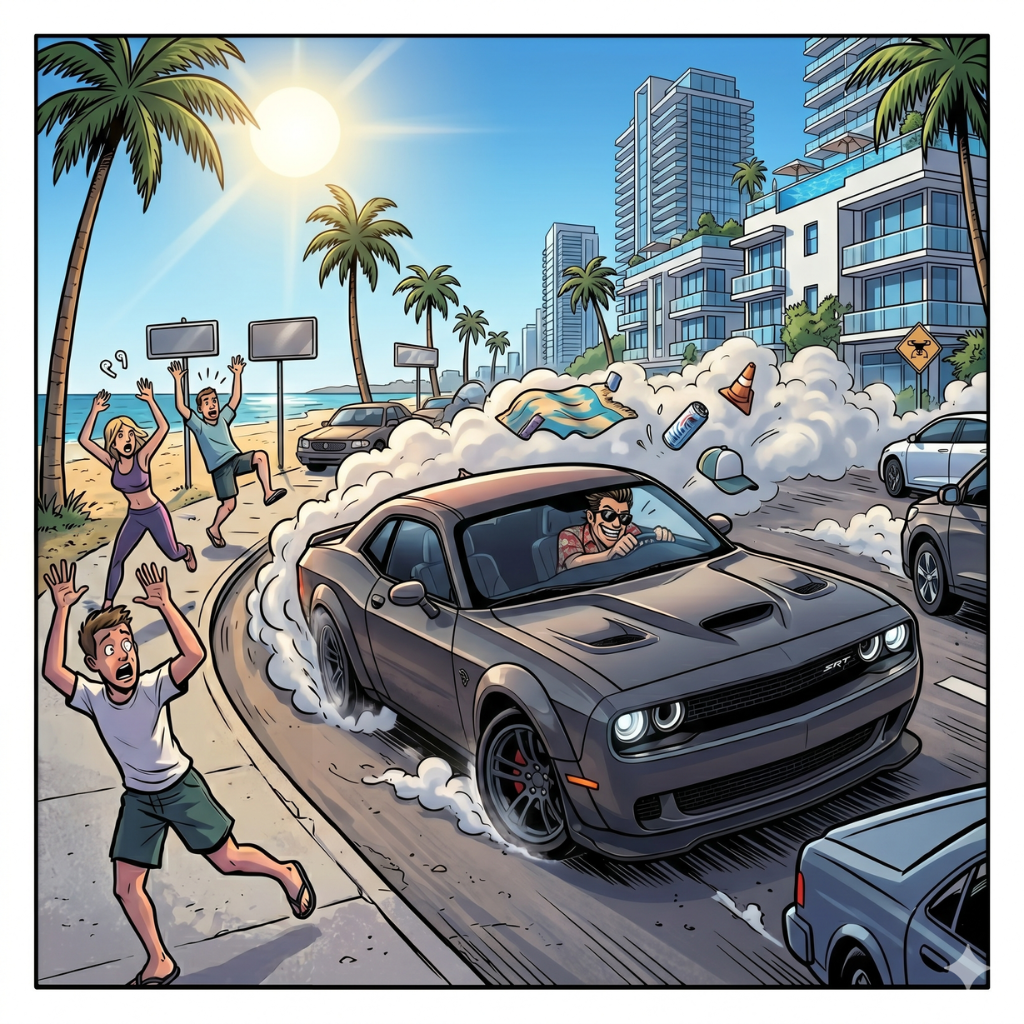
The phrase "willful or wanton disregard" is the heart of the statute. "Willful" means the driver acted intentionally and knowingly. "Wanton" means conscious indifference to the consequences. Together, they describe a driver who knew (or should have known) that the conduct was dangerous and chose to do it anyway. That is a higher standard than ordinary inattention. A driver who drifts out of a lane because they glanced at the radio is usually not reckless. A driver who weaves through traffic at 90 miles per hour on I-95, races another vehicle off a red light, or flees from police almost always is.
What Counts as Reckless Driving
Florida courts have applied the statute to behaviors including excessive speeding, street racing, swerving through traffic to pass multiple cars, driving on a sidewalk, drag racing, and using a vehicle to intimidate another person. You can be charged with reckless driving even if no crash occurs. The conduct itself is enough.
Penalties for Reckless Driving in Florida
Because reckless driving is criminal rather than civil, penalties are far steeper than for a routine traffic ticket. They also escalate sharply when an accident, injury, or alcohol is involved.
First and Second Convictions With No Injury or Damage
Under § 316.192(2), a first conviction without any damage or injury can mean up to 90 days in jail and a fine between $25 and $500. A second or subsequent conviction can mean up to six months in jail and a fine between $50 and $1,000.
Property Damage or Non-Serious Personal Injury
When reckless driving causes property damage or a non-serious personal injury, § 316.192(3)(c)(1) elevates the charge to a first-degree misdemeanor, punishable by up to one year in jail and a fine of up to $1,000.
Serious Bodily Injury
If reckless driving causes serious bodily injury, the offense becomes a third-degree felony under § 316.192(3)(c)(2), punishable by up to five years in prison and a $5,000 fine. The statute defines "serious bodily injury" as an injury that creates a substantial risk of death, serious personal disfigurement, or protracted loss or impairment of an organ or limb.
Beyond fines and jail, a conviction adds four points to a Florida driver's license and can lead to license suspension, higher insurance premiums, and a permanent criminal record. Under § 316.192(5), if the court finds that alcohol or drugs contributed to the offense, the driver must also complete a substance abuse education course.
Reckless Driving vs. Careless and Aggressive Driving
It is easy to confuse the three Florida traffic laws that punish dangerous driving, but they are different in scope and consequence.
Florida Statute § 316.1925 requires every driver to operate a vehicle "in a careful and prudent manner." Careless driving is a civil infraction, not a crime, and usually comes with a fine and three to four points on your license.
Florida Statute § 316.1923 creates an enhanced category called "aggressive careless driving." It applies when a driver commits at least two of the following in a single incident: exceeding the posted speed limit, unsafely changing lanes, following too closely, failing to yield, improperly passing, or violating traffic control devices. The Florida Department of Transportation treats aggressive driving as a priority safety issue because of its strong link to serious crashes.
The dividing line is intent. Careless and aggressive careless driving are civil infractions that focus on a failure to exercise reasonable care. Reckless driving is criminal because it requires willful or wanton disregard, and that finding carries far more weight in any related civil case.
How Reckless Driving Affects a Personal Injury Claim
When a crash involves a reckless driver, the criminal case is only one part of the picture. The civil case (the personal injury claim) is often where the most important financial issues get resolved, and a reckless driving citation or conviction can change that case in several important ways.
Strong Evidence of Negligence
To win a Florida personal injury claim, the injured person generally has to prove that the other driver was negligent. A traffic violation is not automatically "negligence per se" in Florida the way some non-traffic statutes are, but under Florida Standard Jury Instruction 401.9, violation of a traffic regulation is treated as evidence of negligence that a jury may consider. A reckless driving conviction is some of the strongest evidence of fault available, and insurance adjusters know it.
Florida's Modified Comparative Negligence Rule
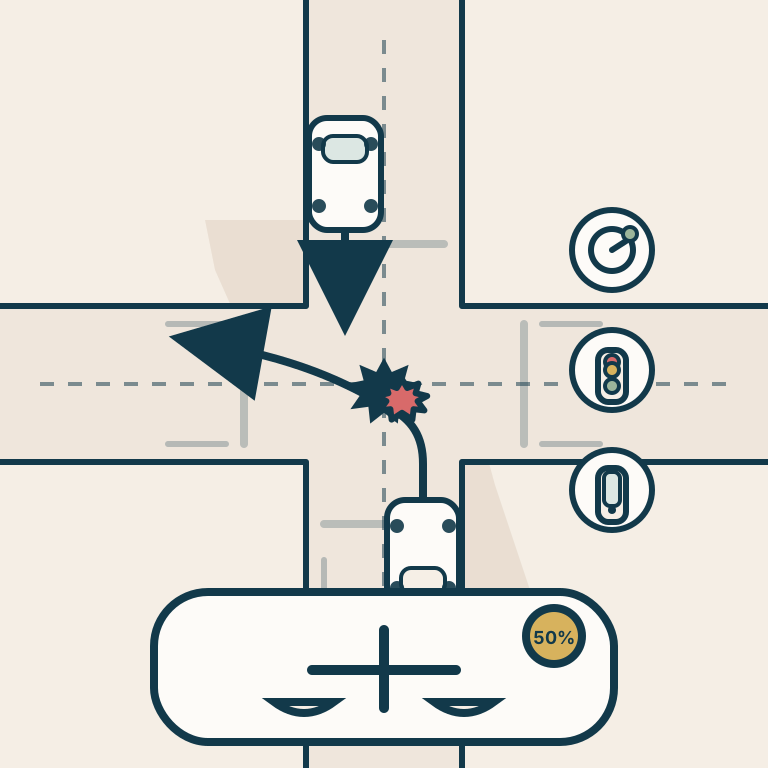
Florida follows modified comparative negligence under Florida Statute § 768.81. Each party's share of fault is assessed, and if you are more than 50 percent responsible for the crash, you cannot recover any damages from the other driver. When the other driver was reckless, it becomes much easier to keep your own share of fault below that threshold. For a deeper look, read our post on how Florida's comparative negligence law affects your settlement.
Opening the Door to Punitive Damages
Most Florida injury claims involve only compensatory damages, the money meant to cover medical bills, lost wages, pain and suffering, and other real losses. Punitive damages are different. They are designed to punish and deter. Under Florida Statute § 768.72, a plaintiff must show by clear and convincing evidence that the defendant acted with intentional misconduct or gross negligence. Reckless driving, especially when combined with alcohol, drugs, or extreme speed, often meets that standard. We explain how these awards work in our companion post on punitive damages in Florida personal injury cases. Most auto liability policies cover negligent conduct but exclude punitive damages, which can leave the reckless driver personally on the hook for the punitive portion of a verdict.
Common Reckless Driving Scenarios That Lead to Injury Claims
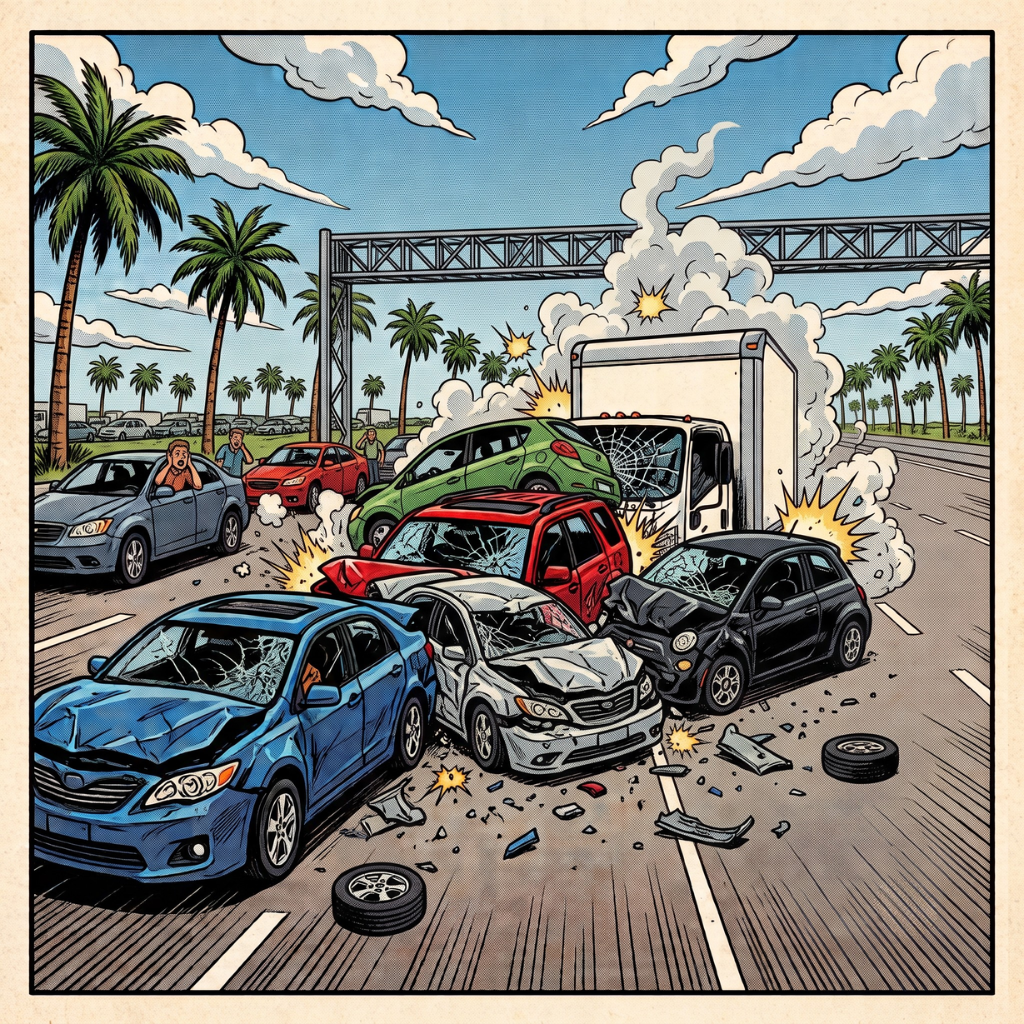
The Florida Department of Highway Safety and Motor Vehicles tracks aggressive and reckless driving as a contributing factor in thousands of crashes each year, as documented in the agency's annual Traffic Crash Facts report and updated through its Crash Dashboard. In Brevard County, we frequently see injury claims arising from high-speed crashes on I-95, US-1, and A1A; street racing and stunt driving on public roads; drivers fleeing law enforcement; severe road rage incidents involving intentional swerving or ramming; and driving while heavily impaired in a manner so extreme that the conduct is charged as reckless rather than (or in addition to) DUI.
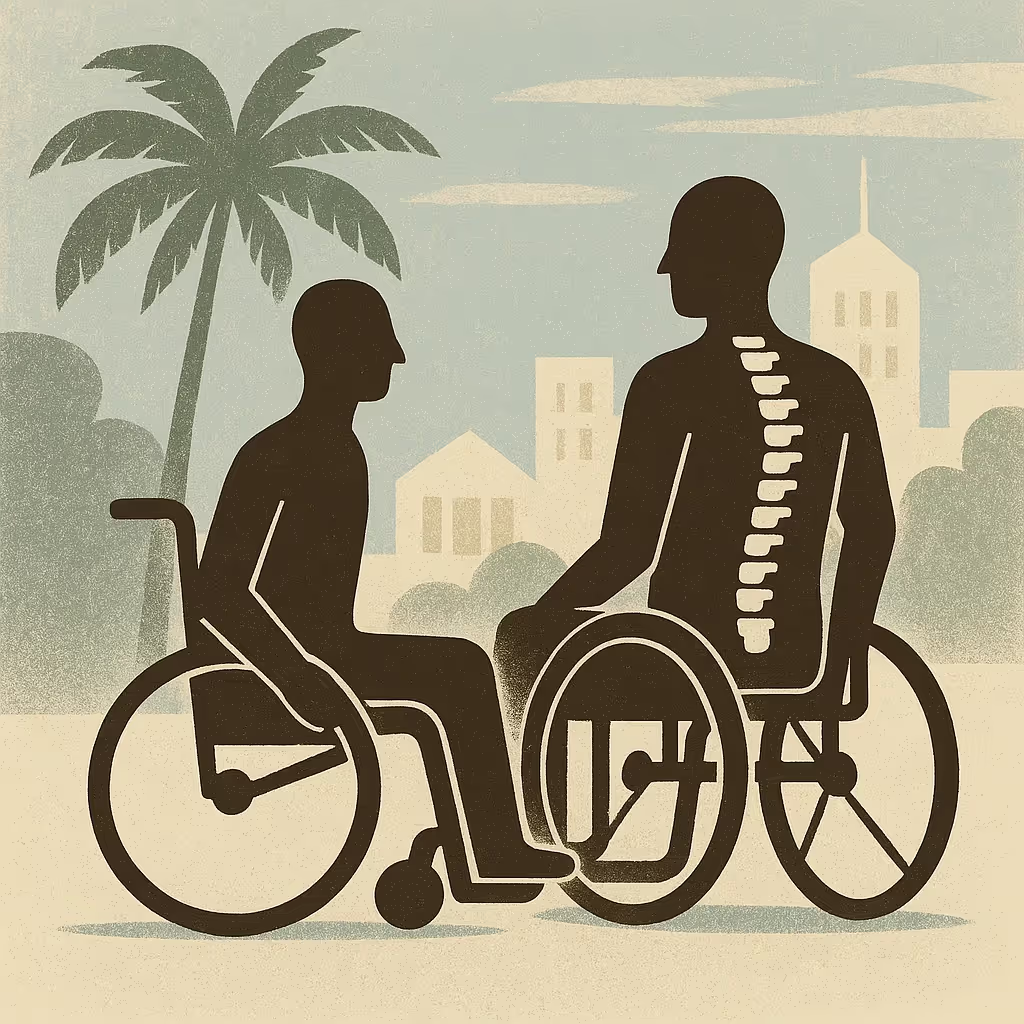
Because the impact forces in these crashes tend to be severe, victims often suffer life-changing harm. These cases frequently involve car accidents, truck accidents, motorcycle accidents, and pedestrian accidents, with injuries that can include traumatic brain injuries, spinal cord damage, multiple fractures, or wrongful death. Our brain injury lawyers and wrongful death lawyers have decades of experience handling these catastrophic cases.
What to Do If You Were Hurt by a Reckless Driver
The hours and days after a serious crash often shape the entire trajectory of a personal injury case. If a reckless driver caused your injuries, a few steps can protect both your health and your claim.
Get medical attention immediately, even if you feel fine at the scene. Traumatic brain injuries, internal bleeding, and soft-tissue damage are notorious for hiding behind adrenaline. Prompt evaluation also creates a clear medical record that ties your injuries to the crash. Make sure law enforcement is called and that the responding officer documents what happened, since the crash report and any criminal citation for reckless driving will become important pieces of your civil case.
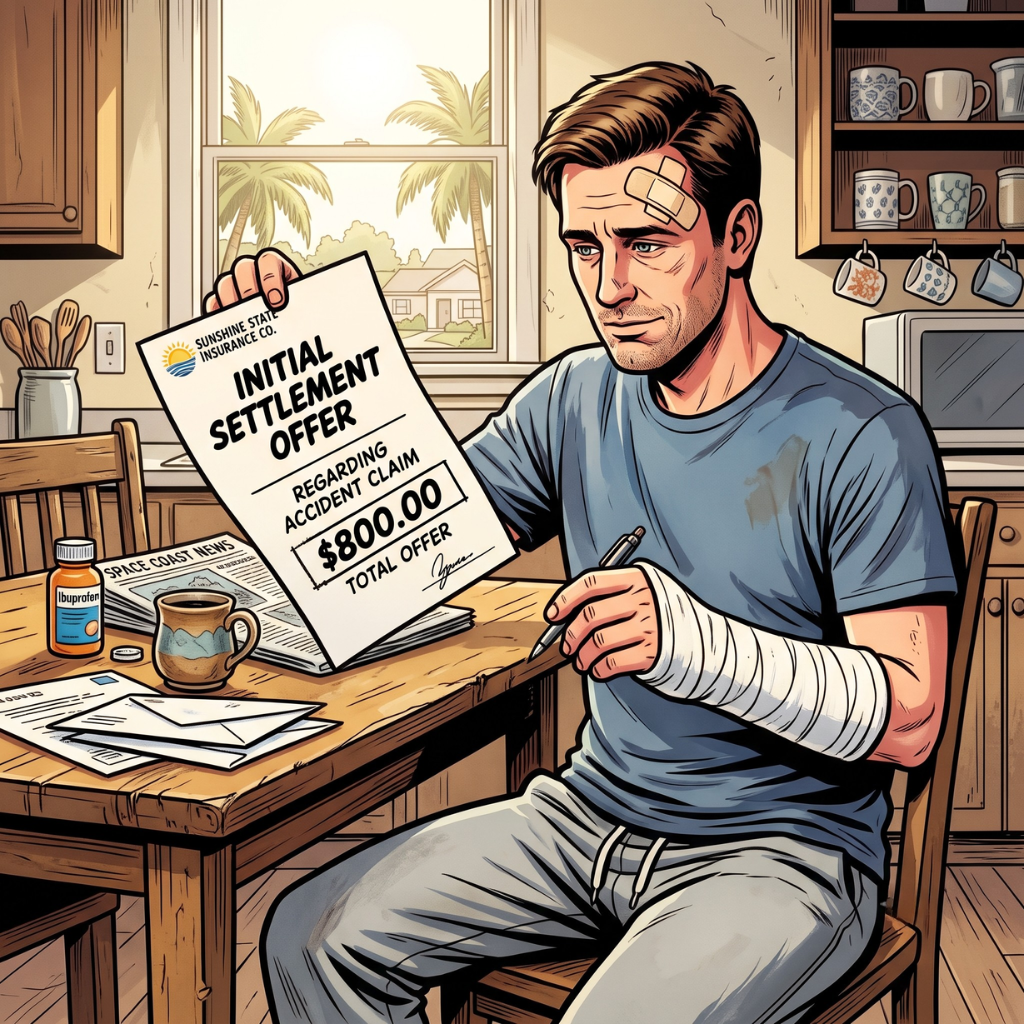
Do not give a recorded statement to the other driver's insurance company before talking to an attorney. Adjusters are trained to ask questions in ways that can shift blame back onto you. Our companion guide, what not to do after a car accident in Florida, explains the most common pitfalls. Florida's statute of limitations for most negligence claims is two years from the date of the accident, and key evidence (vehicle data, surveillance video, witness memories) can disappear quickly, so talking with an experienced personal injury lawyer early matters.
At Douglas R. Beam, P.A., we have spent nearly four decades helping Melbourne and Brevard County clients recover after serious crashes, including those caused by reckless drivers. We have recovered more than $1 billion for our clients, and we charge no fee unless we win. If you or a loved one has been hurt by a reckless driver, contact us today for a free, confidential case review. We are available 24 hours a day at (321) 723-6591.
Sources
- Florida Statute § 316.192 — Reckless Driving
- Florida Statute § 316.1925 — Careless Driving
- Florida Statute § 316.1923 — Aggressive Careless Driving
- Florida Statute § 768.72 — Pleading in Civil Actions; Claim for Punitive Damages
- Florida Statute § 768.81 — Comparative Fault
- Florida Department of Highway Safety and Motor Vehicles — Crash Dashboard
- Florida Department of Highway Safety and Motor Vehicles — Florida Traffic Crash Facts Annual Report 2024
- Florida Department of Transportation — Speed and Aggressive Driving
- The Florida Bar — Civil Jury Instructions
This article provides general information and is not a substitute for legal advice. Laws can change, and the details of your situation matter. For personalized guidance, please contact a qualified Florida personal injury attorney.
Not Sure What To Do Next? We Can Help – Fast & Free.
.webp)


Worried About Your Injury Case?
We'll Review It - Free

Don’t miss an article
Florida law, local insights, and the occasional dog pic.
Delivered straight to your inbox.
More articles
Browse all articles



.png)
Free Case Review
Get a complimentary review of your case