
Is Your Lawyer Competent? Signs of an Incompetent Attorney
Learn the warning signs of an incompetent lawyer, what Florida ethics rules actually require, and how to find an attorney who will fight for you.
.webp)
Riley Beam
- According to the ABA, "failure to know or properly apply the law" is the single most common error cited in legal malpractice claims nationwide, making a lawyer's relevant experience one of the most critical factors in hiring.
- Florida Bar Rule 4-1.1 requires attorneys to provide competent representation in every case, and Rule 4-1.4 requires them to keep you reasonably informed; violations of either rule can be reported to The Florida Bar at no cost.
- Recognizing the warning signs of a poor attorney early can help you protect your case before real damage is done; these signs include broken communication, pressure to settle quickly, or vague fee arrangements.
Worried About Your Injury Case? We'll Review It - Free!

Choosing a lawyer is one of the most consequential decisions you can make when your health, finances, or freedom are on the line. Most people assume that any licensed attorney is qualified to handle their case, but that assumption can be costly. The reality is that legal incompetence is more common than most clients realize, and it shows up in specific, recognizable patterns.
This guide is meant to help you identify those patterns. We'll walk through what the law actually requires of your attorney, the concrete signs that something is wrong, and what to look for when you're choosing representation, with a particular focus on personal injury cases in Florida.
What the Law Requires and Why It Matters
Every attorney licensed in Florida is bound by the Rules of Professional Conduct enforced by The Florida Bar and the Florida Supreme Court. Rule 4-1.1 states that a lawyer must provide competent representation to a client, defined as requiring "the legal knowledge, skill, thoroughness, and preparation reasonably necessary for the representation." Rule 4-1.4 adds that attorneys must keep clients reasonably informed about the status of their matter and promptly respond to reasonable requests for information.
These are not aspirational guidelines. They are binding professional obligations. Violations can be reported to The Florida Bar's Attorney Consumer Assistance Program (ACAP), which investigates complaints, can impose discipline, and in serious cases can recommend suspension or disbarment. The complaint process costs nothing to initiate, and ACAP staff can help you assess whether a concern rises to a reportable level before you formally file.
Despite these rules, attorney incompetence and neglect remain among the leading sources of legal malpractice claims. According to an analysis of the ABA's Profile of Legal Malpractice Claims published by the Washington State Bar Association, substantive legal errors, led by failure to know or properly apply the law, consistently make up roughly half of all malpractice claims filed nationwide, a finding the ABA's Standing Committee on Lawyers' Professional Liability has reported across every edition of its quadrennial study. Personal injury is also among the practice areas with the highest frequency of claims, and in that field the most common specific mistake is failing to timely file a case, often by missing the statute of limitations. In Florida, thanks to changes enacted through HB 837 in 2023, that window is now just two years for most personal injury claims. The stakes of hiring the wrong lawyer have rarely been higher.
The Communication Problem
When people describe a lawyer who let them down, poor communication is almost always part of the story. Calls that go unreturned for days. Case updates that never arrive. Clients who learn about significant developments only by accident, long after the fact. This pattern is more than just frustrating. It is a violation of the professional obligations your attorney accepted when they took your case.
Florida Bar Rule 4-1.4 is explicit: your lawyer must keep you reasonably informed and respond promptly to reasonable requests for information. When that doesn't happen, it typically signals one of a few things: an overloaded practice that has taken on more cases than it can manage, disorganization that puts every client at risk, or simple indifference. None of those scenarios is acceptable when you have a case with real deadlines and real consequences.
The communication problem also tends to compound itself. An attorney who doesn't communicate with you is probably not communicating well with opposing counsel, insurance adjusters, or the court either. And in a personal injury case, an attorney who goes quiet at the wrong moment (during discovery, before a filing deadline, when an important settlement offer comes in) can do serious damage to your recovery. Our post on what not to do after a car accident in Florida touches on how quickly these cases can go sideways without attentive legal guidance.
When Your Lawyer Doesn't Know the Law
The single most common category of error in legal malpractice claims, according to the ABA's own quadrennial malpractice study, is substantive error, most often failure to know or properly apply the law. This may seem like a basic expectation, of course your attorney should know the law, but it reflects a real and well-documented problem, particularly when attorneys practice across too many areas or take on cases outside their genuine expertise.
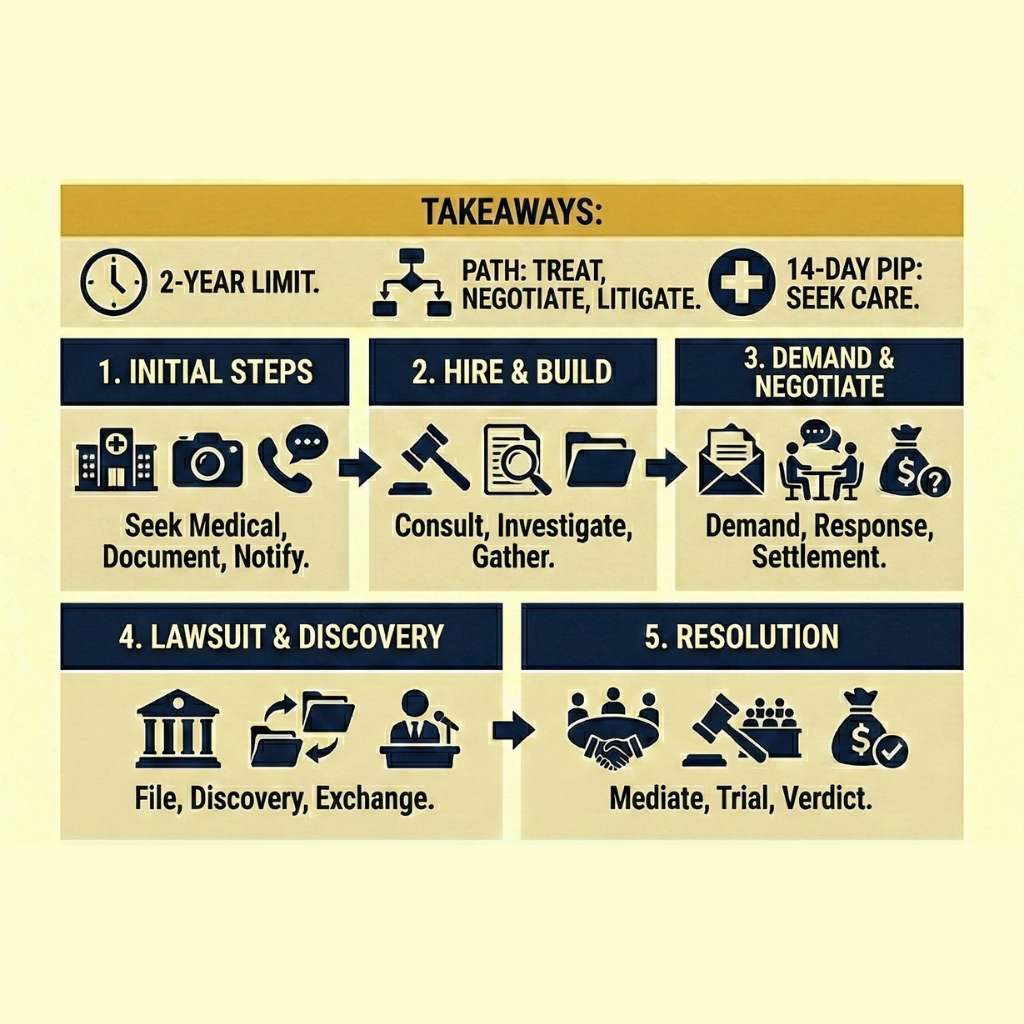
For personal injury clients in Florida, this matters in very concrete ways. Florida's legal landscape has shifted significantly in recent years. The 2023 tort reform reshaped the comparative fault standard by barring recovery entirely for plaintiffs found more than 50 percent at fault and cut the time to file most claims in half. Florida's no-fault insurance system has its own rules around Personal Injury Protection (PIP) coverage, including a 14-day deadline to seek medical treatment after an accident in order to qualify for benefits. For high-stakes claims like traumatic brain injuries, wrongful death, and catastrophic accidents, a lawyer who doesn't know these specifics cold will cost you.
Watch for attorneys who can't clearly explain how Florida's current fault and damages rules apply to your situation, who seem unfamiliar with the procedural landscape, or who haven't handled cases like yours at trial. You can verify any Florida attorney's license status and ten-year disciplinary history at no cost through The Florida Bar's Member Search. It takes minutes and provides real, useful information. A lawyer's bar standing, admission date, and any disciplinary record are all public and searchable. This is a basic step that every potential client should take before signing a retainer.
Pressure Tactics and the Settlement Mill Problem
There is a type of law firm, sometimes called a "settlement mill," that is built around volume. These firms take on large caseloads, rely heavily on support staff to manage files, and pressure clients to accept quick settlements so they can close cases and move on. You may have seen their billboards. The business model isn't illegal, but it is often incompatible with genuinely fighting for maximum compensation.
When an attorney pushes you to accept a settlement before your medical treatment is complete, before your full damages are documented, or without clearly explaining what rights you're giving up, that's a problem. It is also worth knowing that personal injury malpractice claims sometimes arise specifically from settlement pressure in a "settle and sue" scenario. This is where clients accept inadequate offers and later realize the case was never properly worked up. Your attorney is also required, under Florida Bar Rule 4-1.2, to abide by your decision on whether to settle. This means the decision should be yours, made with full information, not driven by your lawyer's need to close the file.
Promising results is also a warning sign. An attorney who guarantees a specific outcome before reviewing the evidence is not being honest with you. Competent lawyers provide realistic assessments of value, explain the range of possible outcomes, and are frank about the risks. Our guide on the personal injury claims process in Florida explains why the pace of a case matters, and why a good attorney's instinct is to build your case fully before settling, not to rush toward a number the insurance company already offered.
Disorganization, Missed Deadlines, and Fee Problems
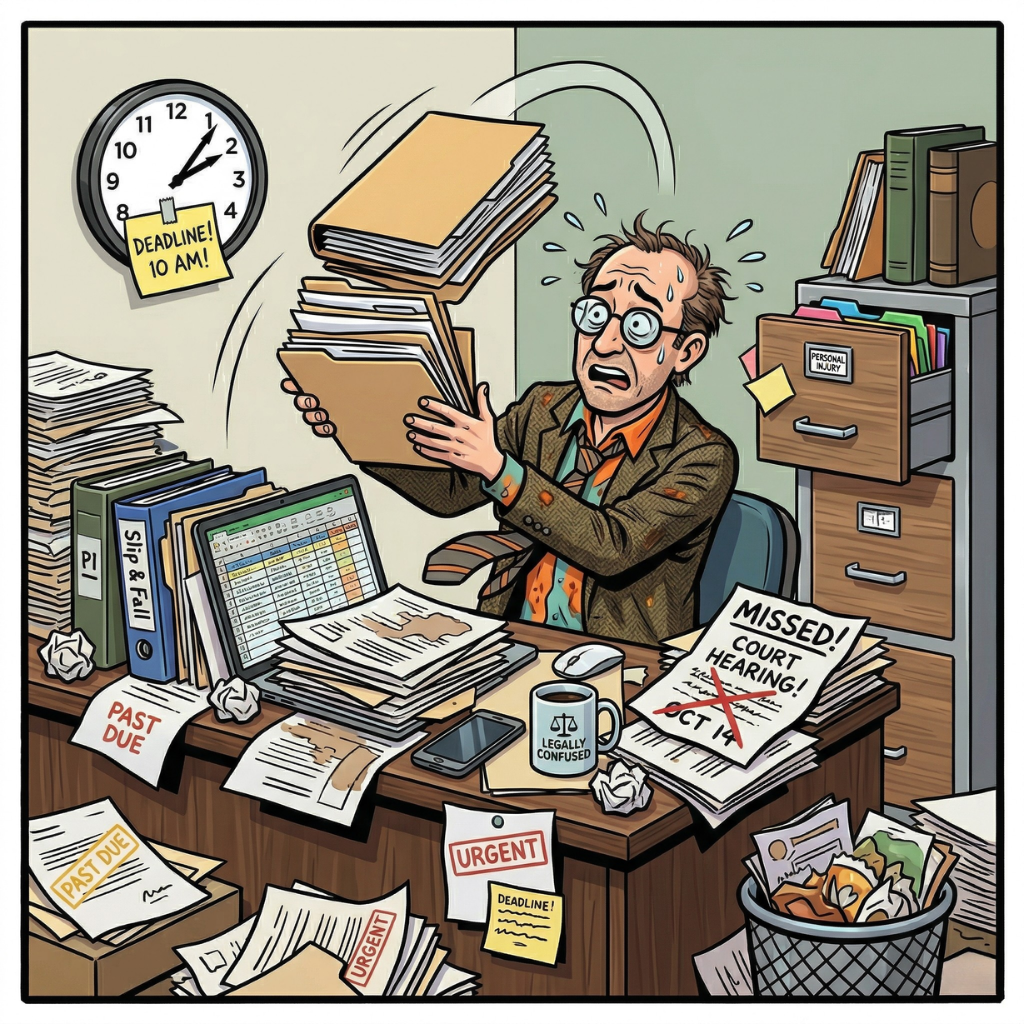
Disorganization in a law practice isn't a personality quirk. It's a liability. According to ALPS, a legal malpractice insurer, missing the statute of limitations is the most common specific error in personal injury malpractice claims. Calendaring failures (a lawyer who knew about a deadline but didn't act on it) are among the most cited triggers for administrative malpractice claims across all practice areas. When a case gets missed or a deadline gets blown, clients can lose everything, not because their underlying claim was weak, but because their attorney didn't follow through on a basic administrative obligation.
Disorganization in practice looks like this: documents that contain errors about your case, last-minute notice about hearings, vague or inconsistent answers when you ask what stage your case is in, and delays without explanation. It can also show up in billing. Under Florida Bar Rule 4-1.5, contingency fee agreements in personal injury cases must be in writing, signed by the client, and must clearly state how fees are calculated and how costs are handled. Our post on contingency fees in Florida personal injury cases details the specifics of Florida fee agreements. An attorney who is evasive about fees, changes numbers mid-case without explanation, or presents an agreement you're pressured to sign without time to review it is not operating transparently, and that should concern you.
If you believe your attorney's disorganization or billing practices have crossed into misconduct, you have options. The Florida Bar's ACAP program provides a free first step to evaluate your concern before deciding whether to file a formal grievance.
How to Choose a Lawyer Who Will Actually Fight for You
The most reliable protection against an incompetent attorney is careful selection at the start. Before you hire anyone, spend time asking real questions: How many cases like yours have they handled? How many have gone to trial? What were the outcomes? Can they explain your specific legal situation without falling back on generalities? That means things like Florida's two-year statute of limitations, the comparative fault rules, and how PIP coverage interacts with your claim.
Look beyond advertising. Billboards and television spots tell you very little about how an attorney performs. Peer recognition carries more weight: designations like the National Trial Lawyers, Super Lawyers, and Martindale-Hubbell's AV Preeminent rating reflect evaluations by other attorneys and independent organizations, not marketing budgets. You can also check any Florida attorney's standing and disciplinary record directly through The Florida Bar's Member Search. Trial experience matters in a particular way. Insurance companies know which attorneys are actually willing to take cases to verdict, and that willingness affects settlement negotiations even in cases that never reach a courtroom. Our guide on what a personal injury lawyer does in Florida explains the full scope of what strong representation looks like, from case evaluation through potential trial.
Pay attention to how you're treated in the consultation itself. Do you speak directly with an attorney, or get routed to a case manager? Does the attorney ask genuine questions about your situation, explain things in plain language, and give you an honest assessment including what may work against you? That initial conversation is a direct preview of the relationship you'll have throughout your case.
At Douglas R. Beam, P.A., we've been the "anti-big-box" firm since 1988. We take fewer cases so we can give each one the attention it deserves. We fight for the full value of your claim, not just what the insurance company first offers. If you have concerns about your current representation, or you're looking for attorneys who will be genuinely in your corner, we offer free, no-pressure consultations. Contact us anytime.
Sources
- Rules Regulating The Florida Bar — Chapter 4: Rules of Professional Conduct
- The Florida Bar — Attorney Consumer Assistance Program (ACAP): Lawyer Misconduct Complaints & Discipline
- Washington State Bar Association NW Sidebar — Risk Management by the Numbers: New ABA Study on Malpractice Claims
- ALPS Insurance — How to Manage the Risks Associated with Substantive Malpractice Missteps
- ALPS Insurance — 6 Most Common Legal Malpractice Claims in 2024
- Texas Lawyers' Insurance Exchange — Scheduling Errors and Legal Malpractice
- The Florida Bar — Member Search: Verify Attorney License and Disciplinary History
This article provides general information and is not a substitute for legal advice. Laws can change, and the details of your situation matter. For personalized guidance, please contact a qualified Florida personal injury attorney.
Not Sure What To Do Next? We Can Help – Fast & Free.
.webp)


Worried About Your Injury Case?
We'll Review It - Free

Don’t miss an article
Florida law, local insights, and the occasional dog pic.
Delivered straight to your inbox.
More articles
Browse all articles.png)



.png)
Free Case Review
Get a complimentary review of your case