
Personal Injury Depositions: What They Are, Why They Matter, and How to Prepare
What happens during a personal injury deposition in Florida? Learn why you may need to testify, who else gets deposed, and how to prepare.

.webp)
Riley Beam
- A deposition is sworn, recorded testimony taken outside the courtroom during the discovery phase of a personal injury lawsuit; it can significantly shape whether your case settles or goes to trial.
- If you filed a personal injury lawsuit, the defense attorney has the right to depose you, and your honest, well-prepared answers can strengthen your claim and increase your settlement value.
- Your personal injury attorney will prepare you for every aspect of the deposition process, protect your rights during questioning, and use depositions of the defendant and other witnesses to build the strongest possible case.
Worried About Your Injury Case? We'll Review It - Free!

What Is a Deposition in a Personal Injury Case?
If you're pursuing a personal injury lawsuit after an accident, you'll likely encounter the word "deposition" at some point. It's one of those legal terms that sounds intimidating, but once you understand what it actually involves, a lot of the anxiety tends to fade.
A deposition is a formal question-and-answer session that happens before a case goes to trial. It takes place during what's known as the "discovery" phase of a lawsuit. That's the period when both sides exchange information, gather evidence, and learn the facts of the case. During a deposition, a witness answers questions under oath while a court reporter records every word. The resulting written transcript can be used as evidence later in the case.
Under Florida Rule of Civil Procedure 1.310, any party in a lawsuit may take the testimony of any person, including other parties, by deposition upon oral examination. This means both your attorney and the defense attorney have the right to ask questions of witnesses who have information relevant to the case.
Depositions almost never happen in a courtroom. They typically take place in a conference room at one of the attorneys' offices or at a court reporter's office. A court reporter is always present to create an official, word-for-word record. In some cases, the deposition may also be recorded on video, which gives attorneys a chance to see how a witness presents their testimony, not just what they say, but how they say it.
How Depositions Fit into the Lawsuit Timeline
Depositions happen after a lawsuit has been formally filed but before the case goes to trial. In most Florida personal injury cases, the discovery phase begins shortly after the defendant responds to the initial complaint. Discovery may include written interrogatories, document requests, and depositions. A deposition is used to acquire information on the case and find evidence that could be useful to either side of the case.
It's worth noting that many personal injury cases settle before ever reaching a courtroom. However, the testimony given during depositions often plays a direct role in those settlement negotiations. If you're wondering what a personal injury lawyer does throughout this process, depositions are one of the most important tools your attorney uses to build and protect your case.
Why You May Be Required to Give a Deposition
If you're the person who filed the personal injury lawsuit (the plaintiff) then you should expect to be deposed. The defense attorney has a legal right to question you about the facts of your case, your injuries, and how the accident has affected your life. You don't need to be subpoenaed for this; as a party to the lawsuit, a formal notice of deposition is all that's required.
This can feel unsettling, especially when you're already dealing with the physical and emotional aftermath of a serious injury. But the deposition serves several important purposes that can actually help your case.
What the Defense Attorney Is Looking For
From the defense's perspective, your deposition accomplishes several things. First, it allows them to hear your account of the accident directly. They want to understand exactly what happened, in your own words: how the accident occurred, what you saw, what you felt, and what you did afterward.
Second, they're evaluating your credibility. Defense attorneys pay close attention to whether your testimony is consistent with other evidence in the case, such as police reports, medical records, and previous written statements. They also assess how you come across as a witness (whether you're calm, honest, and sympathetic) because this helps them predict how a jury might respond to you at trial.
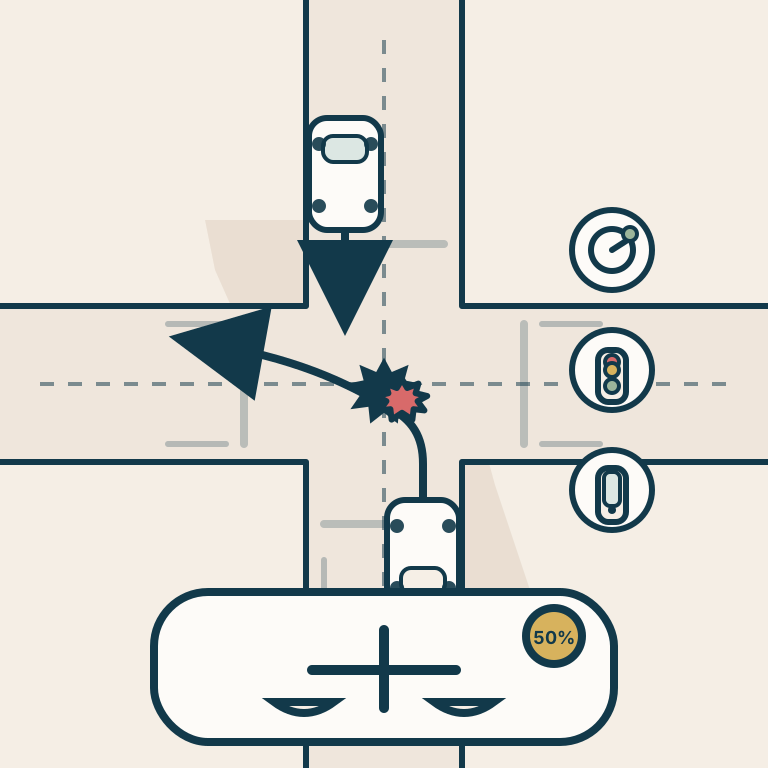
Third, the defense is looking for anything that might reduce the value of your claim or shift blame onto you. Under Florida's modified comparative negligence law, if you're found to be more than 50% at fault for the accident, you're barred from recovering any compensation at all. Defense attorneys may try to draw out answers during your deposition that support an argument for shared fault.
Why Your Deposition Can Strengthen Your Claim
While it might seem like a deposition only benefits the other side, a strong deposition performance can actually work significantly in your favor. When you testify honestly and clearly about the impact of your injuries, you create a powerful, sworn record that supports your claim for compensation. This can cover the pain you've experienced, the activities you can no longer enjoy, the financial strain of medical bills and missed work.
Insurance companies and defense attorneys rely on deposition testimony to assess the risk of going to trial. If you present as a credible, likable witness whose injuries are clearly documented, the other side may be more motivated to offer a fair settlement rather than risk a jury verdict. At Douglas R. Beam, P.A., we invest significant time preparing our clients for depositions because we know how much a well-prepared deponent can influence the outcome of a case.
What to Expect During the Deposition Process
Understanding the mechanics of a deposition can go a long way toward easing your nerves. If you've watched legal dramas on television, you may have an image of hostile attorneys pounding on tables and shouting. In reality, most personal injury depositions are far more subdued.
The Setting and Participants
Depositions usually take place in a conference room, not a courtroom. The people present typically include you (the deponent), your attorney, the defense attorney, and a court reporter. If the deposition is being video-recorded, a videographer will also be present. In some cases, the defendant or their insurance company representative may attend as well.
Before questioning begins, the court reporter will place you under oath, just as you would be sworn in before testifying at trial. This means that everything you say carries the same legal weight as courtroom testimony. Under Florida Statute 837.02, providing false statements under oath is considered perjury, which is a felony.
Typical Topics You'll Be Asked About
The defense attorney's questions generally follow a predictable structure. They'll typically start with basic background information: your name, address, date of birth, education, and employment history. These questions help establish your identity and set a comfortable tone before moving into more substantive areas.
From there, the questioning usually progresses into your medical history before the accident, the details of the accident itself, and how your injuries have affected your daily life. If you've been involved in a car accident, expect detailed questions about your driving, the road conditions, and the moments before and after the crash. For slip and fall cases, the focus may shift to what you were wearing on your feet, whether you noticed the hazard, and what the lighting conditions were like.
You can also expect questions about the medical treatment you've received, any ongoing symptoms you're experiencing, and how the injury has affected your ability to work, care for your family, or participate in activities you previously enjoyed. This information helps both sides assess the full value of the claim including damages for medical bills, lost wages, pain and suffering, and diminished quality of life.
How Long a Deposition Typically Lasts
Unlike in some states, Florida's Rules of Civil Procedure do not impose a statewide time limit on depositions, so the length varies depending on the complexity of the case and the number of questions the defense attorney asks. A straightforward personal injury deposition might take two to three hours, while more complex cases involving catastrophic injuries can last a full day or even longer, such as those involving traumatic brain injuries or wrongful death claims.
You are allowed to take breaks during a deposition. If you need to use the restroom, get water, or simply take a moment to collect your thoughts, you can ask for a pause. However, you generally cannot consult with your attorney about substantive testimony while a question is pending.
Who Else Can Be Deposed in a Personal Injury Case?
Depositions aren't just for plaintiffs. In fact, one of the most valuable aspects of the discovery process is the opportunity for your attorney to depose the other parties and witnesses in the case. Under Florida law, any person with knowledge of facts relevant to the lawsuit can be deposed.
The Defendant
Your attorney will almost certainly depose the person or entity you're suing. In a truck accident case, for example, your lawyer might depose both the truck driver and a representative of the trucking company. The goal is to pin down the defendant's version of events, identify inconsistencies in their story, and uncover evidence that supports your claim. Defendants are required to answer questions honestly under oath, and any statements they make can be used against them at trial.
Eyewitnesses and Bystanders
People who witnessed the accident firsthand can be deposed through a subpoena, a legal document that compels them to appear and testify. Eyewitness testimony can be critical in establishing what happened, especially when the plaintiff's and defendant's accounts of the accident differ. Your attorney may depose bystanders who saw the collision, employees who were present during a slip and fall, or anyone else who has direct knowledge of the incident.
Medical Providers and Expert Witnesses
Doctors, surgeons, and other medical professionals who treated you may be deposed to explain the nature and severity of your injuries, the treatment you've received, and your expected prognosis. In cases involving serious injuries like brain injuries, expert witnesses such as neurologists, life care planners, and economists may also be deposed to establish the long-term impact and cost of your injuries.
Corporate Representatives
When a business or corporation is the defendant, your attorney may request a corporate representative deposition (sometimes called a Rule 30(b)(6) deposition in federal cases, or its equivalent under Florida rules). In this type of deposition, the company must designate a representative who can speak on behalf of the organization about specific topics such as safety policies, training procedures, or maintenance records. This can be especially important in premises liability, work injury, and product liability cases.
How to Prepare for Your Deposition
Preparation is the single most important factor in a successful deposition. The more prepared you are, the more confident and composed you'll feel and the stronger your testimony will be.
Work Closely with Your Attorney
Before your deposition, your personal injury attorney should schedule one or more preparation sessions with you. During these sessions, your lawyer will walk you through the types of questions you can expect, practice your responses, and help you understand the ground rules. At Douglas R. Beam, P.A., we take deposition preparation seriously because we've seen how much it matters in the final outcome of a case. We believe that when our clients understand the process and feel supported, they give their best testimony.
Key Rules to Follow During Testimony
Several time-tested principles can help you navigate your deposition with confidence. First, always tell the truth. Your testimony is given under oath, and inconsistencies between what you say in a deposition and what you've said elsewhere can severely damage your credibility. Second, listen carefully to each question and take a moment to think before you respond. There's no rush. If you don't understand a question, ask the attorney to rephrase it.
Third, answer only the question that was asked. One of the most common mistakes deponents make is volunteering extra information beyond what was requested. Longer answers give the opposing attorney more material to work with and more potential avenues to challenge your story. Keep your responses accurate but concise. Fourth, it's perfectly acceptable to say "I don't know" or "I don't remember" if that's the honest answer. Guessing or speculating can create problems later if your estimate turns out to be wrong.
Review Your Records Before the Deposition
In the days before your deposition, review any relevant documents. This might include the accident or police report, your medical records, photographs from the scene, and any written statements you've previously given. Refreshing your memory about specific details will help you give more precise and consistent testimony. This can include dates, times, and the sequence of events. If you're unsure which records to review, your attorney can guide you. This is also a good time to revisit what information you should be sharing with your lawyer. Our guide on what to tell your lawyer after a car accident outlines the details that are most helpful for building a strong case.
How Deposition Testimony Influences Your Case Outcome
Depositions are not just a procedural formality. They can be one of the most decisive factors in how your personal injury case resolves. The testimony gathered during depositions shapes settlement negotiations, trial strategy, and ultimately the amount of compensation you receive.
Impact on Settlement Negotiations
The vast majority of personal injury cases settle before trial, and deposition testimony is often the driving force behind settlement decisions. After depositions are complete, both sides have a much clearer picture of the strengths and weaknesses of the case. Defense attorneys and insurance adjusters review deposition transcripts carefully to assess their exposure at trial. If a plaintiff comes across as honest, sympathetic, and consistent in their deposition, the insurance company has a stronger incentive to settle for a fair amount rather than risk a larger jury verdict.
Conversely, if the defendant or their witnesses performed poorly in their depositions by contradicting prior statements, appearing evasive, or failing to adequately explain their actions, the defense side may feel more pressure to settle. Your attorney's skill in deposing the other side can directly increase the value of your claim.
Using Deposition Testimony at Trial
If your case does proceed to trial, deposition transcripts can be used in several powerful ways. If a witness changes their story between their deposition and their trial testimony, the opposing attorney can use the deposition transcript to "impeach" the witness, essentially showing the jury that the witness has been inconsistent, which undermines their credibility.
Deposition testimony can also be read into the record at trial if a witness is unavailable to testify in person, such as when a medical expert has a scheduling conflict or a witness has moved out of state. Video depositions are especially impactful in these situations because the jury can see the witness's demeanor, body language, and emotional reactions.
Why Experienced Representation Makes the Difference
A personal injury deposition is one of the most consequential events in your case, and the quality of your legal representation directly affects how it goes. An experienced trial attorney knows how to prepare you so that you testify with confidence and authenticity. They also know how to take aggressive, strategic depositions of the defendant and other witnesses by asking the right questions to lock in favorable testimony and expose weaknesses in the defense.
At Douglas R. Beam, P.A., our attorneys have spent more than thirty-five years taking and defending depositions in personal injury cases across Florida. Doug Beam, the 2025 President of the National Trial Lawyers, and Riley Beam, the 2023 President of the NTL 40 Under 40, bring national-level trial experience to every case including during the critical deposition phase. We've recovered over $1 billion in verdicts and settlements for our clients, and that track record starts with the careful, thorough preparation we bring to every stage of your case.
If you're facing a personal injury lawsuit and want to understand what a deposition will look like in your case, we're here to answer your questions. Contact us today for a free, no-obligation consultation. And remember, you don't pay us anything unless we win.
Sources
- The Florida Bar – Florida Rule of Civil Procedure 1.310 – Depositions Upon Oral Examination
- AllLaw.com – Will I Need to Give a Deposition in My Personal Injury Case?
- U.S. District Court, Middle District of Florida – Civil Discovery Handbook: General Policy and Practice
- Goings Law Firm – What Happens at a Deposition? Personal Injury Lawsuits
- Fine, Farkash & Parlapiano, P.A. – What's a Deposition?
- Law Offices of Suarez & Montero – Depositions in Florida Personal Injury Cases
- Florida Statute 837.02 – Perjury in Official Proceedings
This article provides general information and is not a substitute for legal advice. Laws can change, and the details of your situation matter. For personalized guidance, please contact a qualified Florida personal injury attorney.
Not Sure What To Do Next? We Can Help – Fast & Free.
.webp)


Worried About Your Injury Case?
We'll Review It - Free

Don’t miss an article
Florida law, local insights, and the occasional dog pic.
Delivered straight to your inbox.
More articles
Browse all articles





.png)
Free Case Review
Get a complimentary review of your case