
Vehicle Maintenance and Liability for Negligence in Florida
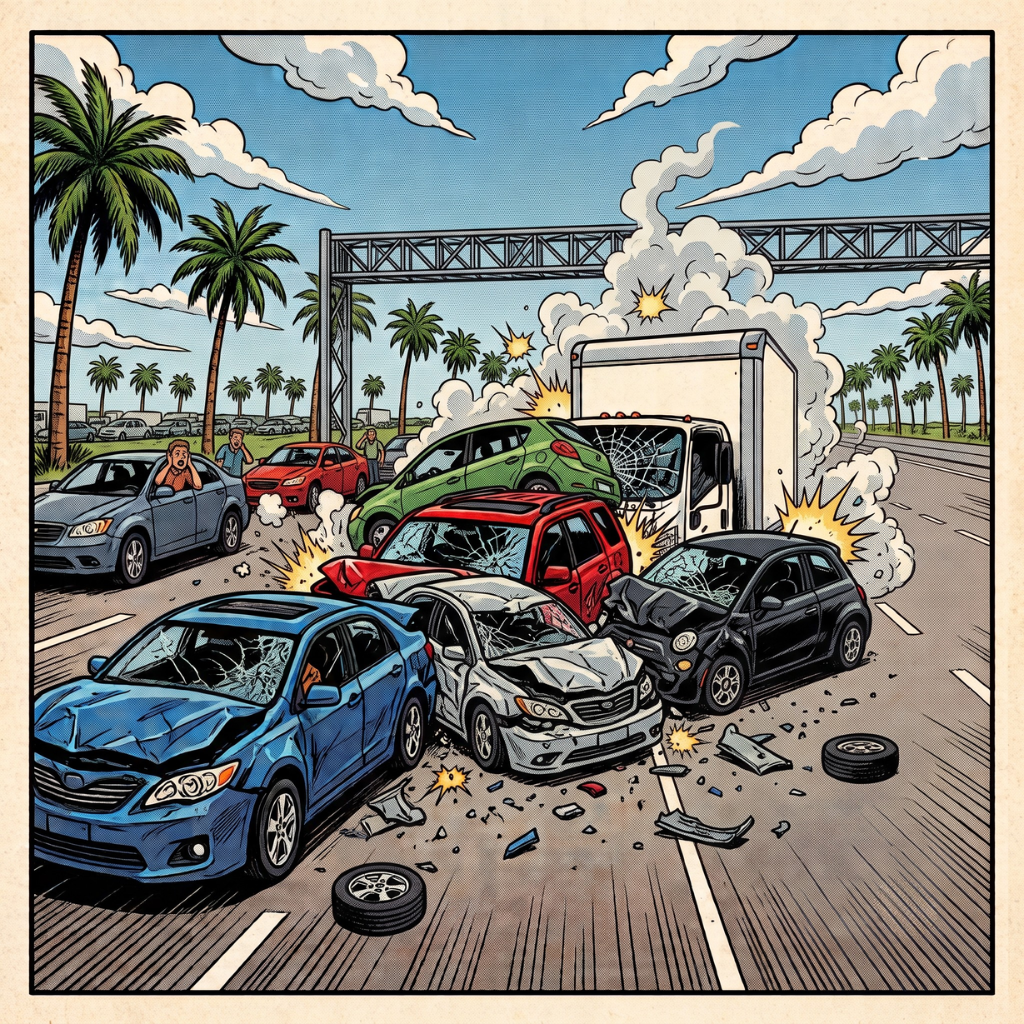
Florida holds drivers liable when poor vehicle maintenance causes a crash. Learn the laws on tires, brakes, lights, and commercial vehicle inspections.
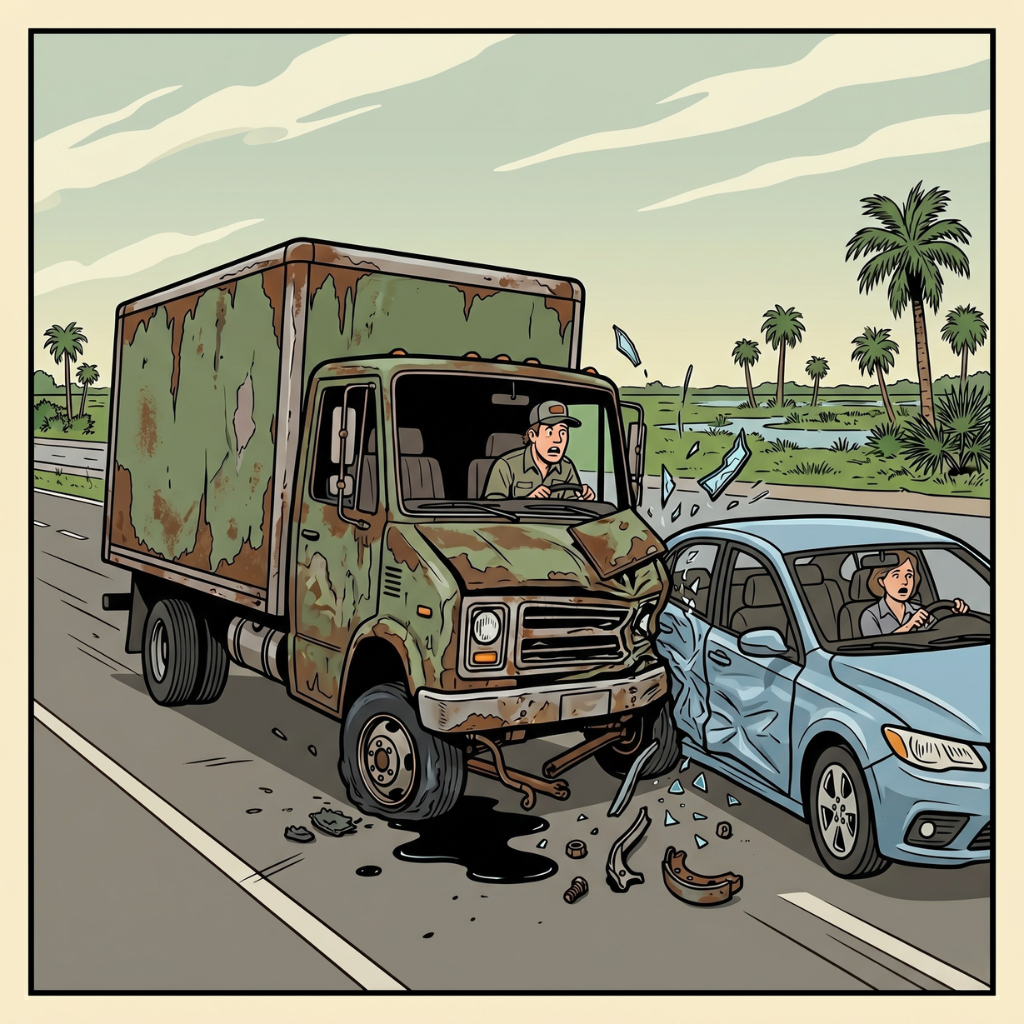
.webp)
Riley Beam
- Florida law makes it unlawful to drive or knowingly permit the use of any vehicle in unsafe condition, and a violation of those equipment statutes can be evidence of negligence in a personal injury case.
- Owners of private vehicles can be held financially responsible when foreseeable mechanical failures like worn tires or failing brakes cause injuries to passengers, other drivers, or pedestrians.
- Commercial trucking carriers face strict federal inspection and maintenance rules under 49 CFR Part 396, and violations of those rules often serve as powerful evidence of negligence after a serious crash.
Worried About Your Injury Case? We'll Review It - Free!

How Florida Law Treats Vehicle Maintenance
Florida does not require an annual safety inspection like some other states, but drivers are not free to ignore the condition of their vehicles. State law puts responsibility squarely on owners and drivers to keep their vehicles roadworthy.
The cornerstone law is Florida Statute § 316.610, titled "Safety of vehicle; inspection." It makes it a violation for any person to drive, or for the owner to knowingly permit to be driven, any vehicle that is "in such unsafe condition as to endanger any person or property." The statute also gives law enforcement authority to stop a vehicle suspected of being unsafe, require an inspection, and order it removed from service if continued operation would create an unduly hazardous condition.
Equipment-Specific Requirements
Florida law spells out the specific equipment every passenger vehicle must have in working order. Florida Statute § 316.221 requires most motor vehicles and trailers to display at least two working taillamps visible from 1,000 feet (some cars and pickups built before 1972 need only one). Florida Statute § 316.222 requires functioning stop lamps and electric turn signals. Florida Statute § 316.261 sets brake performance standards. A vehicle missing or failing any of these systems is not just illegal to drive. It is a danger to everyone on the road.
When repairs are needed, the Florida Motor Vehicle Repair Act, found at Florida Statutes sections 559.901 through 559.9221, regulates how repair shops handle their work. The Act generally requires a written estimate for repairs expected to cost more than $150 unless the customer declines one in writing, prohibits unauthorized repairs, and creates remedies when shops cut corners or perform shoddy work that later causes harm.
Negligence and the Duty of Care for Private Vehicle Owners
Florida personal injury cases rest on a simple framework: duty, breach, causation, and damages. Every driver owes a duty to operate a reasonably safe vehicle. Knowingly driving a car with bald tires, failing brakes, or non-working lights breaches that duty. If the breach causes a crash that injures someone, the owner can be held liable for the resulting damages.
Safety Statute Violations as Evidence of Negligence
When a driver violates a safety statute like § 316.610, a Florida jury may consider that violation as evidence of negligence, though it is not conclusive proof on its own. A driver caught with knowingly defective brakes who rear-ends another car at a stoplight is not going to find much sympathy from a jury once the maintenance records come out. The statute exists precisely to prevent that kind of harm.
Florida's Comparative Negligence Standard
Florida operates under a modified comparative negligence system. Under Florida Statute § 768.81, as amended by 2023's House Bill 837, an injured person who is more than 50 percent at fault for their own injuries cannot recover any damages. Anything 50 percent or less reduces recovery proportionally. The more-than-50-percent rule applies to lawsuits filed after March 24, 2023. Judges decide how the law applies to the facts of each case, and some have ruled differently for injuries that happened before the change, but the law on the books stands. We explain how this reform reshapes injury cases in our guide on how Florida's comparative negligence law affects your settlement.
Dangerous Instrumentality and Owner Liability
Florida is one of the few states that applies the dangerous instrumentality doctrine to motor vehicles. The doctrine makes the owner of a vehicle vicariously liable for injuries caused by anyone driving the car with permission. We covered the basics in our article on what happens when someone not on your insurance crashes your car in Florida. When a poorly maintained vehicle is loaned to a family member or friend who then causes a crash, both the driver and the owner can be on the hook.
Federal Rules for Commercial Vehicles
When the vehicle that caused the injury is a commercial truck, an entirely separate layer of regulation applies. The Federal Motor Carrier Safety Administration (FMCSA) imposes strict rules on every interstate trucking company in the United States. These rules sit on top of Florida law, which applies them to commercial trucks rolling through Brevard County, Central Florida, and beyond, with some exceptions for smaller trucks that stay in Florida.
Systematic Inspection and Maintenance
Under 49 CFR Part 396, every motor carrier must "systematically inspect, repair, and maintain all motor vehicles and intermodal equipment subject to its control." Section 396.3 requires carriers to keep records of inspections and maintenance. Section 396.11 requires drivers to complete a written Driver Vehicle Inspection Report at the end of each day's work whenever a defect or deficiency that would affect safe operation or cause a mechanical breakdown has been discovered by or reported to them; some operations, such as carriers running only one commercial vehicle, are exempt. Section 396.17 requires a periodic inspection of every covered commercial motor vehicle at least once every 12 months.
These are not paperwork formalities. They are safety requirements. When a trucking company ignores them and an injury results, those violations become powerful evidence of negligence in court.
Federal Insurance Minimums
Federal regulations also require trucking companies to carry substantial liability coverage. Under 49 CFR Part 387, the minimum financial responsibility for a general freight carrier hauling non-hazardous materials in interstate commerce is $750,000, with hazardous materials carriers required to carry between $1 million and $5 million. These minimums reflect the catastrophic damage a fully loaded tractor-trailer can inflict when something goes wrong.
If you have been injured in a crash with a commercial truck, our truck accident lawyers know how to investigate maintenance records, electronic logging data, and federal compliance histories to build a case that holds the carrier accountable.
Common Maintenance Failures and How They Cause Injury
The maintenance failures most often cited in Florida personal injury cases fall into a handful of categories, all of them preventable.
Tire failures are among the most dangerous. Underinflated or worn tires can blow out at highway speed, especially in Florida's intense summer heat. A blowout at the wrong moment can send a vehicle across lanes of traffic.
Brake failures often follow predictable warning signs: squealing pads, soft pedals, longer stopping distances. When an owner ignores those signs, the failure that eventually occurs is no surprise. A vehicle that cannot stop in time can cause catastrophic injuries or wrongful death.
Defective lights can contribute to nighttime collisions. A vehicle without functioning taillights, brake lights, or turn signals becomes nearly invisible after dark. We discuss the specifics in our article on whether driving with one headlight is illegal in Florida.
Steering and suspension failures can cause sudden loss of control. Worn ball joints, failing tie rods, or broken springs do not announce themselves on the highway. They simply give way.
Trailer detachments are particularly devastating. We covered the safety equipment requirements in our article on Florida trailer insurance requirements, and a runaway trailer at highway speed often results in traumatic brain injuries or worse.
Proving a Vehicle Maintenance Negligence Case
A maintenance-based negligence claim does not prove itself. The injured plaintiff carries the burden of showing that the vehicle owner knew or should have known about a dangerous condition, failed to address it, and that the failure caused the crash.
The Evidence That Matters
The first priority is preservation. Once a crash occurs, the vehicle itself becomes critical evidence. Tires, brake components, light bulbs, steering linkages, and electronic control modules all tell a story. An experienced personal injury team works quickly to inspect the vehicle, often with a qualified mechanical engineer or accident reconstructionist, before the wreckage is repaired or scrapped.
Maintenance records are equally important. Under the Florida Motor Vehicle Repair Act, repair shops must keep invoices and records. For commercial trucks, federal regulations require carriers to retain inspection reports, driver vehicle inspection reports, and repair documentation. Subpoenaing those records often reveals a pattern of deferred maintenance, ignored defects, or sloppy repairs.
Expert Witnesses and Reconstruction
Most serious vehicle maintenance cases involve expert testimony. A mechanical engineer can examine a failed brake system and explain exactly how and why it failed. An accident reconstructionist can demonstrate how the failure caused the crash sequence. For commercial trucking cases, a former FMCSA inspector or fleet safety expert can testify about industry standards and federal compliance failures.
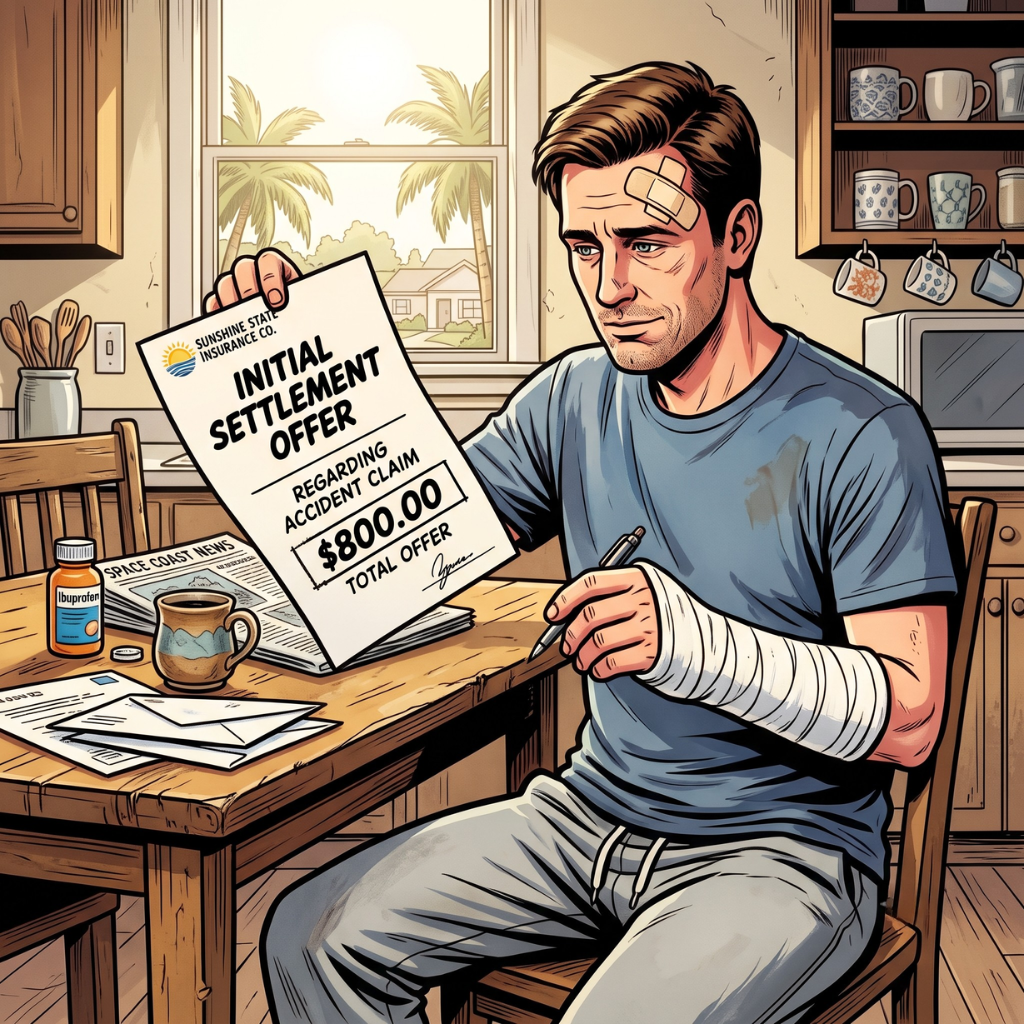
Insurance companies are quick to deflect maintenance claims onto someone else: the manufacturer, the previous owner, the repair shop, or the injured party. An experienced Florida personal injury lawyer will identify every potentially responsible party, and the insurance behind them, to pursue full compensation.
When You Have Been Injured by an Unmaintained Vehicle in Florida
If you have been hurt by a driver who failed to maintain their vehicle, the steps you take in the first days and weeks can have an enormous impact on the outcome of your case.
Surveillance footage gets overwritten. Witnesses move. Vehicles get repaired. For accidents after March 24, 2023, Florida's statute of limitations for most personal injury claims is two years from the date of the accident under HB 837; accidents before that date generally fall under the old four-year deadline. That clock starts running immediately, and delay favors insurance companies.
Florida's no-fault insurance system also requires you to get initial care from a provider type the PIP law lists within 14 days to access your Personal Injury Protection medical benefits. We explain how this works in our complete guide to Florida's no-fault insurance system. Documentation of every injury, treatment, and limitation will matter when the case is built.
Vehicle maintenance cases are technical. They involve statutes, federal regulations, expert witnesses, and adversaries who are well-resourced and well-prepared. They are not the right place to learn on the job.
Since 1988, the team at Douglas R. Beam, P.A. has fought for injured Floridians against the corporations and insurance companies that try to avoid responsibility when their vehicles cause harm. We have recovered over $1 billion for our clients, and we work on a contingency basis. You pay nothing unless we win. If a driver's failure to maintain their vehicle hurt you or someone you love, contact us today for a free consultation.
Sources
- Florida Statute § 316.610: Safety of Vehicle; Inspection
- Florida Statute § 316.221: Taillamps
- Florida Statute § 316.222: Stop Lamps and Turn Signals
- Florida Statute § 316.261: Brake Equipment Required
- Florida Statute § 768.81: Comparative Fault
- Florida Statute § 559.901 to 559.9221: Florida Motor Vehicle Repair Act
- Florida Senate: House Bill 837 (2023)
- 49 CFR Part 396: Inspection, Repair, and Maintenance (FMCSA)
- 49 CFR Part 387: Minimum Levels of Financial Responsibility for Motor Carriers
- National Highway Traffic Safety Administration: Tire Safety (TireWise)
- Florida Statute § 559.905: Written Motor Vehicle Repair Estimate
This article provides general legal information and is not a substitute for legal advice. Laws can change, and the specific facts of your situation matter. For guidance about your case, please contact a qualified Florida personal injury attorney.
Not Sure What To Do Next? We Can Help: Fast & Free.
.webp)


Worried About Your Injury Case?
We'll Review It - Free

Don’t miss an article
Florida law, local insights, and the occasional dog pic.
Delivered straight to your inbox.
More articles
Browse all articles


Free Case Review
Get a complimentary review of your case