
Why Insurance Companies Lowball the First Offer (and Whether You Should Accept It)
Insurers lowball the first settlement offer to pay less. Learn why, what Florida law requires, and whether you should accept. Free case review available.
.webp)
Riley Beam
- Insurance companies are for-profit businesses, so the first settlement offer is usually a low opening bid based on limited information, not a fair measure of what your claim is worth.
- You are never required to accept a first offer, and because signing a release permanently closes your claim, it is rarely wise to settle before you know the full extent of your injuries.
- Florida law requires insurers to handle claims in good faith under sections 624.155 and 626.9541, and strict deadlines like the two-year filing limit make it smart to act quickly and consider talking to a lawyer.
Worried About Your Injury Case? We'll Review It - Free!

The Business Behind a Low First Offer
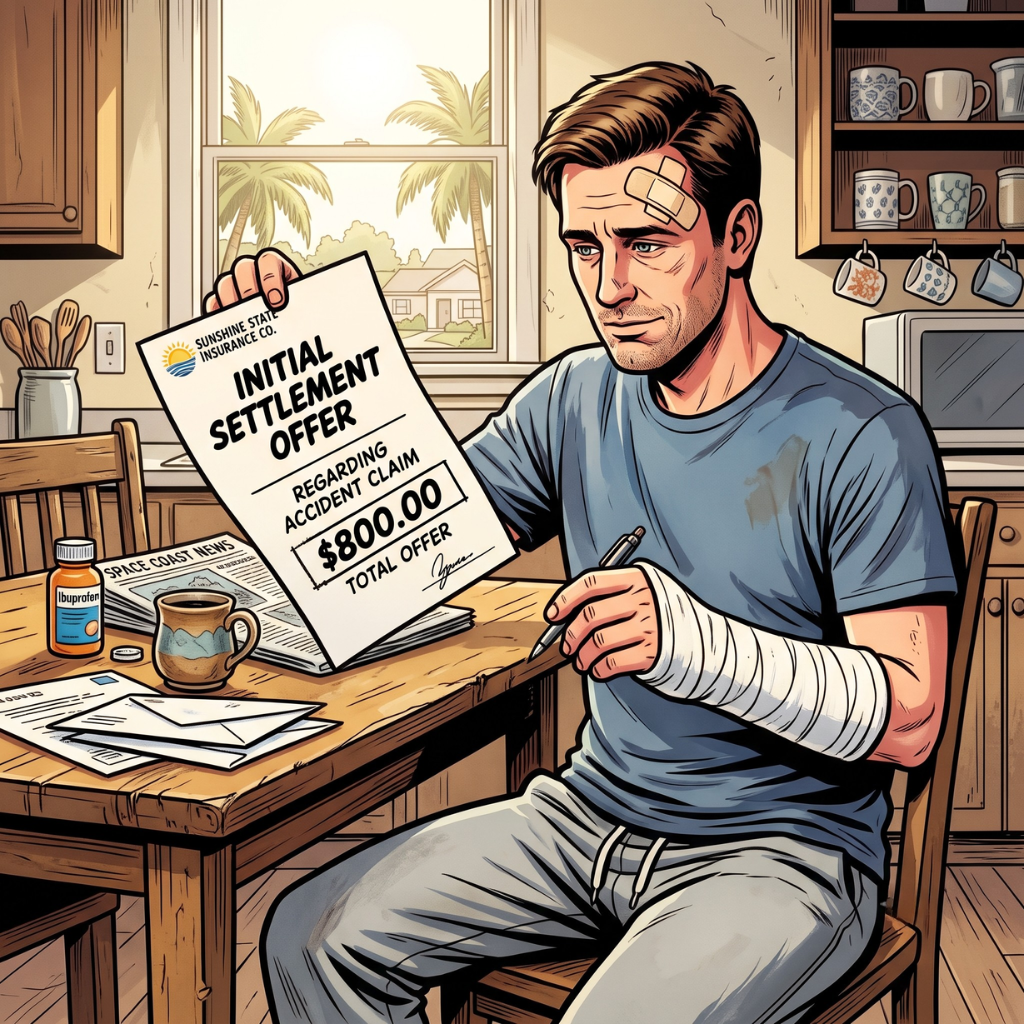
After an accident, the first call from an adjuster can feel like relief. Someone is finally paying attention, and a number is on the table. It is worth remembering, though, that the person on the other end of the line works for a company with one core financial goal: to pay as little as possible on each claim.
Insurance companies are not charities. They are for-profit businesses, and every dollar paid out on a claim is a dollar that does not stay with the insurer. That does not make them villains, but it does explain the math. When a claim lands on an adjuster's desk, the first offer is an opening position designed to test what you will accept, not a careful calculation of what your case is truly worth.
That first number is usually built on thin information. Often the adjuster has only the initial accident report and your first emergency room bill. They have not seen your full treatment, your lost wages, or how the injury affects your daily life. A low first offer is frequently just a negotiating tactic to gauge whether you understand the value of your claim.
A First Offer Is a Starting Point, Not a Final Number
Many people worry that turning down an offer will make the insurer angry or cause them to pull it back. In reality, that almost never happens. Rejecting a first offer is a normal first step in a back-and-forth process, and adjusters expect it. They usually have room in their budget to move upward, especially once they see that you understand your rights. If you have been hurt in a crash, our Melbourne car accident lawyers see this pattern in case after case.
Common Tactics That Keep the First Offer Low
A low number is only part of the strategy. Several common tactics are designed to get you to accept it before you fully understand your situation.
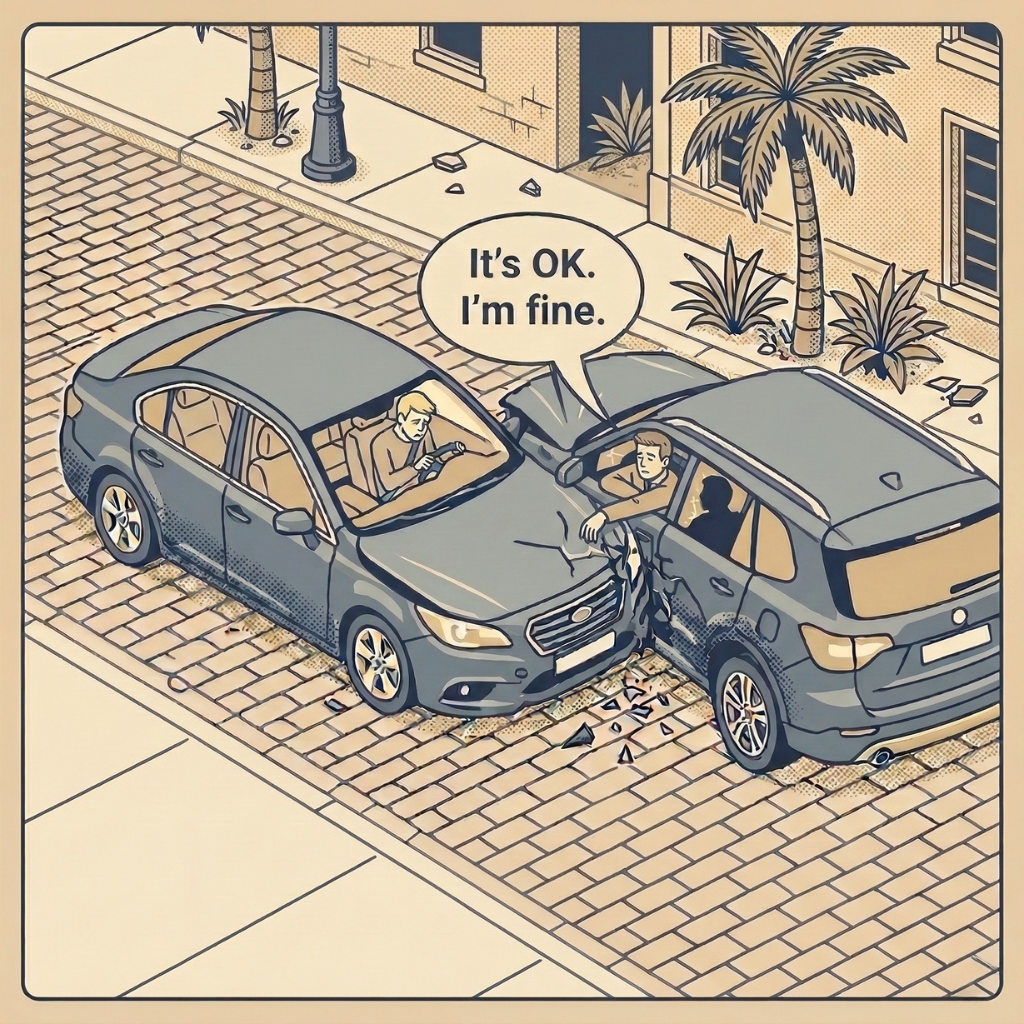
The biggest one is speed. An insurer may push a quick settlement before you have finished treatment or learned how serious your injury really is. A friendly, sympathetic tone often comes with it, because a relaxed claimant is more likely to sign quickly. Adjusters may also ask for a recorded statement, hoping you will say something that can be used to shift blame onto you or downplay your injuries.
Another quiet tactic is simply betting that you do not have a lawyer. Insurers know that unrepresented people are less likely to know what their claim is worth and less likely to file a lawsuit if talks stall.
The Unrepresented Disadvantage
This bet often pays off for the insurer. As Nolo points out, people who negotiate alone are less likely to recognize everything a claim is worth, which makes a quick, low settlement easier for an adjuster to secure. The dynamic tends to change once a lawyer is involved, because the insurer is now dealing with someone who knows the claim's value and is ready to push back. That is the real advantage of representation: an attorney understands the full scope of what you can recover and how Florida car accident settlements actually work, from future medical care to lost earning capacity to pain and suffering.
What Florida Law Requires of Insurers
Insurers are allowed to negotiate, but they are not allowed to handle your claim dishonestly. Florida law sets a baseline of fair dealing.
Under Florida Statute 624.155, an insurer can be held responsible for "not attempting in good faith to settle claims when, under all the circumstances, it could and should have done so." A companion law, section 626.9541, lists unfair claim settlement practices, such as failing to investigate properly or misrepresenting the facts of a policy. Whether an insurer crossed the line is judged on the totality of the circumstances.
It is important to be honest about what these laws do and do not mean. A single low first offer is usually just ordinary negotiation, not "bad faith." Florida also tightened these rules in 2023. Before suing your own insurer for bad faith, section 624.155(3) requires you to file a Civil Remedy Notice with the Florida Department of Financial Services and give the company 60 days to pay or fix the problem. Mere carelessness alone is no longer enough to prove bad faith. Still, the duty of good faith is real, and it gives our personal injury lawyers leverage when an insurer drags its feet or refuses to deal fairly.
Should You Accept the Insurer's First Settlement Offer?
In most cases, the answer is no, at least not right away. You are never required to accept any offer, and a low first number rarely reflects everything you have lost.
To know whether an offer is fair, you need to understand how Florida pays for accidents. Our state uses a no-fault system, so your own Personal Injury Protection (PIP) coverage pays first. Under Florida Statute 627.736, PIP provides up to $10,000 in benefits and covers 80 percent of reasonable medical expenses. PIP does not pay for pain and suffering, and you can only pursue the at-fault driver for those additional damages when your injury meets a serious-injury threshold, such as permanent injury, significant scarring, or death.
A Signed Release Is Final
Here is the part insurers count on. When you accept a settlement, you sign a release that permanently closes your claim. If your injuries later turn out to be worse than expected, if you need surgery, or if new symptoms appear, you cannot reopen the case and ask for more. The check you accepted is the end of the story.
Wait Until Maximum Medical Improvement
This is why timing matters so much. It is usually wise to wait until you reach what doctors call maximum medical improvement, the point where your condition has stabilized and your long-term outlook is clear. Serious harm, like a traumatic brain injury, can take time to reveal its full cost. Settling early can mean accepting far less than your future care will actually require.
Florida Deadlines That Shape Your Leverage
Settlement talks do not happen in a vacuum. Florida's deadlines affect how much pressure each side feels, and insurers know it.
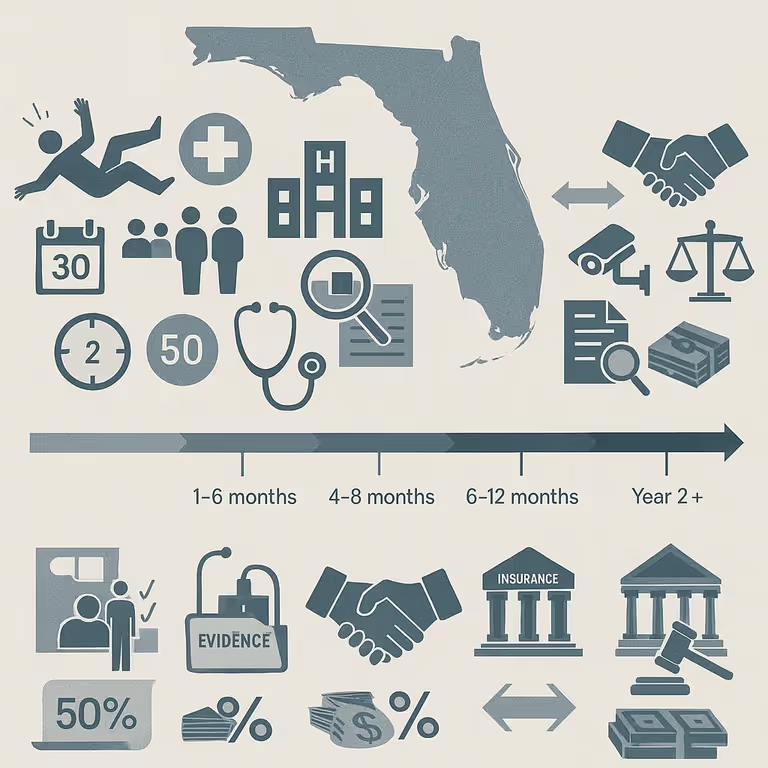
The most important change came in 2023. Under Florida Statute 95.11, the deadline to file most negligence lawsuits was cut from four years to two years for injuries occurring on or after March 24, 2023. Once that window closes, you generally lose the right to sue, which removes your strongest source of leverage. A quick PIP deadline also applies: you must seek medical care within 14 days of a crash to keep your benefits.
Fault is the other lever. Florida now follows a modified comparative negligence rule under section 768.81, which bars recovery for anyone found more than 50 percent at fault for their own harm. Insurers use this to their advantage, arguing you share blame so they can discount your claim. Understanding how comparative negligence applies to your facts is often the difference between a fair number and a lowball one.
How to Respond to a Lowball Offer
You have more power here than the first phone call suggests. The key is to slow down and respond with evidence rather than emotion.
Start by not accepting anything on the spot. Politely ask the adjuster to explain, in writing, how they reached their number and to respond to each part of your claim. Then build your case with documentation: medical records, bills, proof of lost wages, and notes on how the injury has changed your daily life. With that in hand, you or your attorney can send a demand letter that counters the offer point by point and backs every dollar with proof.
This is also the moment when legal help changes the math. A firm with a track record signals that you are prepared to take your case to trial if the insurer will not deal fairly, and that prospect tends to move offers upward. Cost should not be a barrier, either. Personal injury attorneys typically work on a contingency fee, which means no fee unless we win.
If a settlement offer feels too low, you do not have to figure it out alone. Contact Douglas R. Beam, P.A. for a free review of your offer, and let us help you understand what your claim is really worth before you sign anything.
Sources
- Florida Statute 624.155 — Civil remedy
- Florida Statute 626.9541 — Unfair methods of competition and unfair or deceptive acts or practices defined
- Florida Statute 627.736 — Required personal injury protection benefits; exclusions; priority; claims
- Florida Statute 95.11 — Limitations other than for the recovery of real property
- Florida Statute 768.81 — Comparative fault
- Nolo — What If I Turn Down the First Car Insurance Settlement Offer?
This article provides general information and is not a substitute for legal advice. Laws can change, and the facts of your situation matter. For guidance specific to your case, please speak with a qualified Florida personal injury attorney.
Not Sure What To Do Next? We Can Help – Fast & Free.
.webp)


Worried About Your Injury Case?
We'll Review It - Free

Don’t miss an article
Florida law, local insights, and the occasional dog pic.
Delivered straight to your inbox.
More articles
Browse all articles

.png)


Free Case Review
Get a complimentary review of your case