
Does homeowner's insurance pay for a dog bite in Florida?
Does homeowners insurance cover dog bites in Florida? Sometimes. Liability coverage is normally included, but not every policy covers every animal.


Riley Beam
- Sometimes: homeowner's and renter's policies normally include liability coverage, but insurers may refuse to insure owners of certain animals.
- Under section 627.4137, an insurer that may cover the claim must answer your written request within 30 days, under oath, with the limits, any coverage defense and a copy of the policy.
- Get medical care, then write down the owner's name and insurer and send a written request for the policy information under section 627.4137.
Worried About Your Injury Case? We'll Review It - Free!

Does homeowners insurance cover dog bites?
Sometimes: Florida homeowner's and renter's policies normally include liability coverage, which can pay when the policyholder is legally responsible for a dog bite, but insurers may refuse to insure people who own certain animals. Your legal claim is generally against the dog's owner, so whether insurance pays depends on the owner's policy, any animal liability add-on and the policy limits.
So who pays for a dog bite? The owner is liable for a bite Florida's dog bite statute covers, and the owner's insurer may pay if the policy covers it. The key limits:
- All coverage is subject to the limits in the policy.
- If you are not insured under the owner's policy, you must first get a settlement or verdict against a person insured under that policy, on a claim the policy covers, before you can sue the insurer.
- The owner's liability has its own limits: your own share of fault can reduce it, and a "Bad Dog" sign can limit it, with exceptions explained in the next section.
This page explains the law, not any one policy. For more on Florida dog bite claims, see dog bite lawyers in Melbourne.
What does Florida law say about dog bites and insurance?
Section 767.04: who is liable for a bite
Under section 767.04, Florida Statutes, a dog's owner "is liable for damages suffered by persons bitten." That covers a bite to someone in a public place, or someone lawfully on private property (including the owner's property), whether or not the dog had been vicious before and whether or not the owner knew.
- You are lawfully on the owner's property when you are there to perform a duty imposed by Florida law or by United States laws or postal regulations, or on the owner's invitation, expressed or implied, so an invited guest is lawfully there.
- If your own negligence (carelessness) helped cause the bite, the owner's liability is reduced by the percentage your negligence contributed.
- An owner who displayed an easily readable sign including the words "Bad Dog" in a prominent place on the premises is not liable, except to a person under age 6 or when the owner's own negligent act or omission caused the damages.
Section 624.605: what liability insurance is
Section 624.605(1)(b), Florida Statutes, defines liability insurance as "Insurance against legal liability for the death, injury, or disability of any human being," or for damage to property. This is a definition. It does not say every policy must cover dog bites.
Section 627.4136: the claim is against the insured first
Under section 627.4136(1), Florida Statutes, a person who is not insured under a liability policy "shall first obtain a settlement or verdict against a person who is an insured..." In plain words, you must first get a settlement or verdict against the insured, on a claim the policy covers, before you can sue the insurer.
Section 627.4137: how to learn about the owner's insurance
Under section 627.4137, Florida Statutes, each insurer that "does or may provide liability insurance coverage" for the claim must answer "within 30 days of the written request of the claimant." The answer is a statement under oath. For each known policy, including excess or umbrella insurance, it lists the insurer's name, the name of each insured, the liability limits, any policy or coverage defense the insurer reasonably believes it has, and a copy of the policy.
The same section helps if you don't know the insurer. On written request from you or your attorney, the insured (the policyholder, which may be the dog owner) or the insured's insurance agent must disclose the name and coverage of each known insurer and forward the request to every affected insurer, which must then supply the information within 30 days of receiving the request.
Section 767.12: insurance for a dog declared dangerous
Under section 767.12, Florida Statutes, once a final order classifies a dog as dangerous (or after any appeal that affirms that order), the owner must obtain "liability insurance coverage in an amount of at least $100,000" to cover damages from an attack by the dangerous dog that causes bodily injury to a person, and give proof of it to the local animal control authority. This rule was added by chapter 2025-61, Laws of Florida, which took effect July 1, 2025.
When does a dog owner's insurance pay for a bite?
These general examples are not a prediction about any case.
Animal liability add-ons to a homeowner's policy
Florida's Department of Financial Services lists Animal Liability or Limited Dog Liability coverage among homeowners endorsements (add-ons to a policy) that may be available. It says these endorsements give liability coverage if an animal the policyholder owns or keeps injures someone, may cover certain animals named in the policy that the homeowners policy does not cover, and typically provide liability and medical payments coverage if the animal injures another person. It tells pet owners who are not sure whether they would be covered if their pet attacks or bites someone to ask their insurance agent about animal liability coverage.
Medical payments coverage
Under section 624.605's definition, liability insurance can include medical, hospital and surgical benefits for the injured person whether or not the insured is legally liable, when issued as part of a liability insurance contract. Whether a given policy has them depends on the policy. For what a claim may be worth, see How much is my personal injury case worth?
The dog was already declared dangerous
If a final order classified the dog as dangerous before the bite (or an appeal affirming it had ended), its owner must obtain at least $100,000 of liability insurance for bodily injury from an attack by that dog. For what happens to the dog itself, see What happens to a dog that bites someone in Florida?
Other questions about dog bite insurance
Can I make a claim if a friend's or family member's dog bit me?
You may. Section 767.04 makes the owner liable for a bite to someone lawfully on private property, including the owner's property, and an invited guest is lawfully there. The fault and "Bad Dog" sign rules above still apply. Liability insurance is insurance against a policyholder's legal liability for injuring someone, so the owner's insurer may handle the claim if the policy covers the bite. For more, see Is a dog owner always responsible for a bite in Florida?
Does renters insurance cover dog bites?
It may, depending on the policy. Florida's Department of Financial Services says a person who rents or leases a home needs a renter's policy (HO-4) to cover personal property and liability. The section 627.4137 request reaches any insurer that does or may cover the claim, including a renter's insurer.
How do I find out if the dog owner has insurance?
Ask in writing, under section 627.4137. The insured or their insurance agent must disclose the name and coverage of each known insurer and forward your request, and each insurer must then answer within 30 days of receiving it. A lawyer can send the request for you.
What if the owner has no insurance or the policy doesn't cover the dog?
You may still have a claim against the owner. Insurers may refuse to insure a person who owns certain animals. Even so, section 767.04 makes the owner liable for a bite it covers. Talk to a lawyer about your options.
How do you start a dog bite insurance claim?
For every step after a bite, see What should I do after a dog bite?
- Get medical care first, and keep every medical record and bill.
- Write down the owner's name, address and phone and, if you can, their insurance company.
- Write down where the bite happened and why you were there, for example as an invited guest, since section 767.04 covers bites in a public place or where you were lawfully on private property.
- Send a written request for the insurance information under section 627.4137, or have your lawyer send it, and keep a copy and the date.
- Read the insurer's answer closely, since it must state any policy or coverage defense the insurer reasonably believes it has.
- Take photos of the injury and the place, and get witnesses' names and numbers.
Your deadline to file a lawsuit
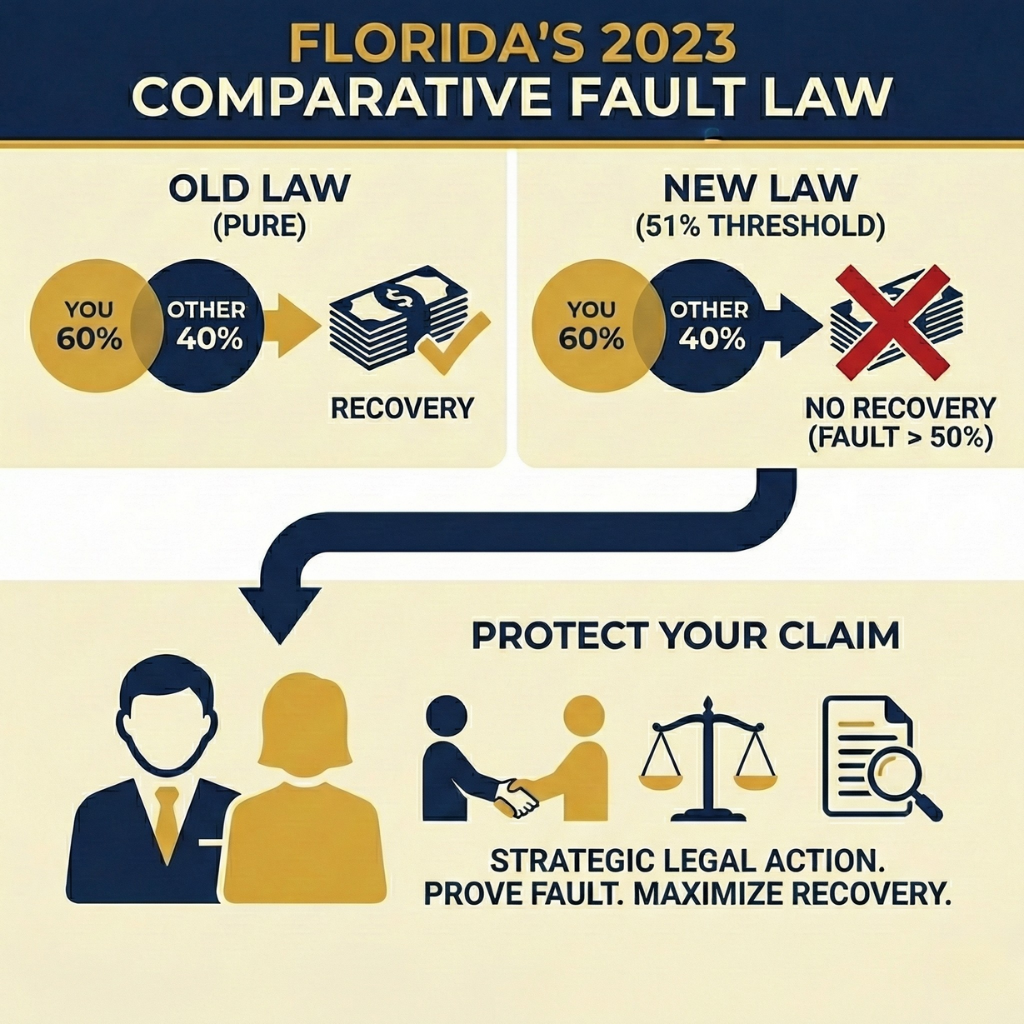
Florida's 2023 change set a two-year deadline for negligence lawsuits, which covers most injury cases from incidents after March 24, 2023. Under section 768.28, Florida Statutes, a negligence lawsuit against a Florida state or local government agency must be filed within 4 years after the claim arises, but medical malpractice and wrongful death claims follow the deadlines in section 95.11(5), Florida Statutes. Before you can sue a government agency, a written claim generally must be presented within 3 years after the claim arises (2 years for wrongful death) and then denied, or left without a final decision for the time the law allows. Talk to a lawyer about the deadline for your situation. Older claims follow different rules, explained in How long do I have to file a personal injury claim in Florida?
Talk to a Melbourne dog bite lawyer
Douglas R. Beam, P.A. is a personal injury law firm in Melbourne, Florida. In a free consultation, a lawyer can review the owner's policy and its limits with you.
Call us at (321) 723-6591 or send a message through our website. Our office is at 25 West New Haven Avenue, Suite C, Melbourne, FL 32901.
Sources
- Section 767.04, Florida Statutes
- Section 767.12, Florida Statutes
- Chapter 2025-61, Laws of Florida
- Section 624.605, Florida Statutes
- Section 627.4136, Florida Statutes
- Section 627.4137, Florida Statutes
- Section 95.11, Florida Statutes
- Chapter 2023-15, Laws of Florida
- Section 768.28, Florida Statutes
- Florida Department of Financial Services, Homeowners Insurance Overview
- Florida Department of Financial Services, Homeowners Insurance Policy Endorsements
Not Sure What To Do Next? We Can Help – Fast & Free.


Worried About Your Injury Case?
We'll Review It - Free

Don’t miss an article
Florida law, local insights, and the occasional dog pic.
Delivered straight to your inbox.
More articles
Browse all articles


Free Case Review
Get a complimentary review of your case