
How a Letter of Protection Lets You Treat Before Settling
A Florida letter of protection lets you get medical treatment now and pay from any settlement later. Learn how LOPs work under the 2023 tort reform law.

.webp)
Riley Beam
- A letter of protection is a written agreement in which a medical provider treats you now and waits to be paid from your eventual settlement or court award.
- Letters of protection give injured people access to care when health insurance, PIP, or out-of-pocket funds fall short, but Florida law now requires that they be disclosed in any injury lawsuit.
- Because the amount you can recover for that treatment is limited under Florida Statute 768.0427, having an experienced personal injury lawyer manage the process protects both your health and your financial recovery.
Worried About Your Injury Case? We'll Review It - Free!

What Is a Letter of Protection?
The Plain-English Version
A letter of protection, often shortened to LOP, is a written agreement among you, your attorney, and a medical provider. The provider agrees to treat you without asking for payment upfront. In return, you agree that the provider will be paid from any money you recover in your personal injury case. If you have heard it called a medical lien, the two ideas are related but not identical. A lien is a formal claim placed against your recovery, while an LOP is usually a contract arranged through your lawyer. Both serve the same goal, which is to make sure your doctor gets paid when your case resolves so that you can get care in the meantime.
How Florida Law Defines It
Florida law now spells this out. Under Florida Statute 768.0427, a letter of protection is "any arrangement by which a health care provider renders treatment in exchange for a promise of payment for the claimant's medical expenses from any judgment or settlement of a personal injury or wrongful death action." The statute adds that this definition applies no matter what the document is called. In plain terms, if a provider agrees to treat you now and collect later from your case, it counts as a letter of protection in the eyes of the law, even if the paperwork uses a different name for it.
How a Letter of Protection Lets You Treat Before You Settle
The heart of an LOP is timing. Personal injury cases take time to resolve. Insurance companies investigate, negotiate, and often delay. Meanwhile, your body does not wait. A letter of protection bridges that gap by separating when you receive treatment from when your providers get paid. You get the surgery, the imaging, the physical therapy, or the specialist care you need today, and your providers agree to hold their bills until your case is over.
When PIP and Health Insurance Fall Short
Many Floridians assume their own coverage will handle accident-related care. Often it does not stretch far enough. Florida's no-fault system requires most drivers to carry $10,000 in Personal Injury Protection, known as PIP, which pays 80 percent of reasonable and necessary medical bills up to that limit. A single emergency room visit, an MRI, and a few weeks of therapy can burn through that $10,000 quickly. Some people have no health insurance at all. Others have plans that resist covering injuries they believe another party should pay for. When the coverage runs out or never existed, an LOP can keep your treatment going, which is one of several reasons we walk clients through how to pay for care after an accident.
The Trade: Treatment Now, Payment From Your Recovery
An LOP is not free money, and it is not charity. It is a trade. You receive care without paying upfront, and in exchange you promise to pay the provider from your settlement or verdict. If your case succeeds, your attorney typically pays the provider out of the recovery before the remaining funds reach you. That structure is what allows a provider to feel comfortable treating you before a single dollar has changed hands. It also lets you keep your focus where it belongs, which is on getting better.
Why Injured People in Florida Turn to LOPs
Letters of protection show up most often in cases where injuries are serious and the bills are large. Car accidents are a common example, especially when liability is clear, such as a rear-end crash. Providers tend to be more willing to wait for payment when fault is not seriously in dispute. The same is true in cases involving brain injuries, spinal damage, and other catastrophic harm where specialized care is expensive and ongoing. LOPs also appear in wrongful death matters, because Florida Statute 768.0427 covers both personal injury and wrongful death actions.
Beyond access to care, treating under an LOP carries practical advantages. It can keep medical debt from going to collections while your case is pending, which helps protect your credit. It lets you see the right specialist rather than whoever happens to fit your budget today. And it creates a clear, consistent treatment record. That record matters more than most people realize. As we explain in our discussion of the role of medical records in injury cases, strong documentation is often what proves the seriousness of an injury and supports the full value of a claim.
What Changed Under Florida's 2023 Tort Reform
For decades, letters of protection were routine and lightly regulated. That changed on March 24, 2023, when Governor Ron DeSantis signed House Bill 837, a sweeping tort reform law. HB 837 created Florida Statute 768.0427, which governs how medical expenses are proven in injury cases and adds specific rules for treatment provided under a letter of protection. These rules apply to cases filed after the law took effect. A 2025 bill that proposed revising the statute, House Bill 947, did not pass, so this framework remains the current law in Florida.
Required Disclosures
Under the statute, if you treat under an LOP and then bring a claim for those medical expenses, disclosure is a condition precedent. That legal phrase means you must do it before you can ask for that money at all. You and your attorney must provide a copy of the letter of protection, itemized and properly coded billing for the treatment, and information about whether the provider later sold your bill to a factoring company or other third party. You must also disclose whether you had health insurance at the time and whether you were referred for the treatment, including if the referral came from your own attorney. If your lawyer made the referral, that fact is disclosable, and the financial relationship between the firm and the provider can be examined in court.
How Much of the Bill You Can Recover
The bigger change is financial. Before 2023, juries often heard only the full sticker price of medical care. Now, Florida Statute 768.0427 limits the evidence of what your treatment is worth. If you have health coverage but choose to treat under an LOP, the amount put before the jury is generally limited to what your insurance would have paid. If you are uninsured or covered by Medicare or Medicaid, the admissible amount is tied to 120 percent of the Medicare rate, or 170 percent of the Medicaid rate when no Medicare rate exists. And if your provider sells your bill to a third party, the recoverable amount can be limited to what that third party actually paid for it. The practical result is that the number printed on the original bill is not always the number you recover.
The Risks and Realities of Treating Under an LOP
A letter of protection can be a lifeline, but it is not without risk, and we believe in being straight with our clients about that.
What to Watch For Before You Sign
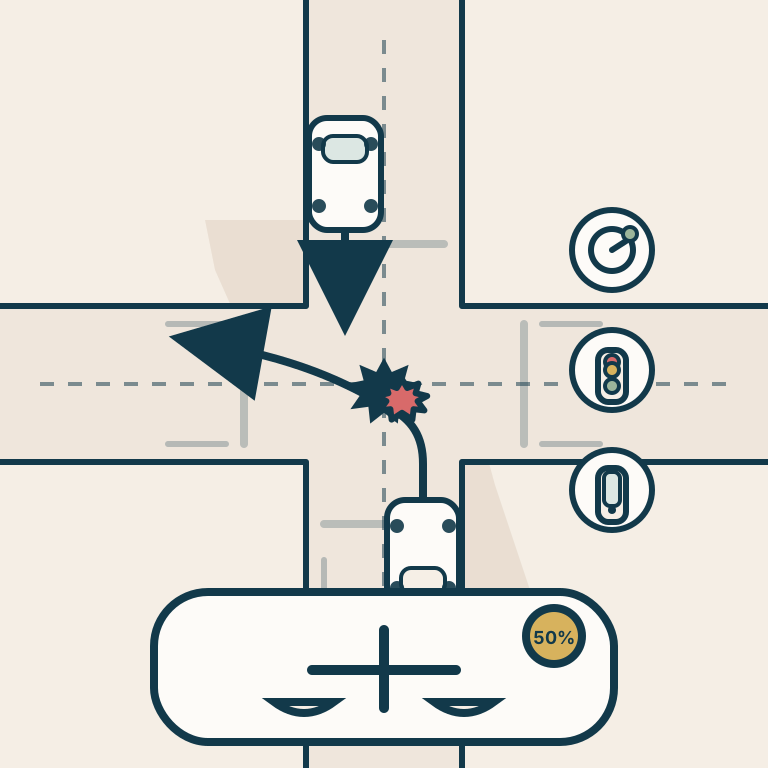
The first risk is the most important. If your case does not result in a recovery, you may still owe the provider for the treatment you received. An LOP shifts the timing of payment, not the underlying responsibility for it. Florida's modified comparative negligence rule adds to this concern, because a person found more than 50 percent at fault generally cannot recover damages, as we cover in our article on how comparative negligence affects your settlement. The second risk is the gap described above, where the amount you can recover for treatment may be less than what the provider billed, leaving a balance to negotiate at the end.
This is exactly why the choice to treat under an LOP should not be made alone. The disclosure rules are technical, the recoverable amounts are capped by statute, and a defense attorney will look closely at any referral relationship between your lawyer and your doctor. A single misstep can put your ability to recover medical costs at risk. A knowledgeable lawyer helps you decide whether an LOP makes sense for your situation, given your injuries, your available coverage, and the strength of your case, and then guides you through every step of the claims process that follows.
How Douglas R. Beam, P.A. Protects Your Treatment and Your Recovery
When you work with our firm, you are not left to navigate letters of protection on your own. We help connect injured clients with trusted providers who will treat under an LOP, we make sure every disclosure required by Florida Statute 768.0427 is handled correctly and on time, and we keep careful, organized records to support the full value of your claim. Done right, an LOP becomes a bridge to good care rather than a financial trap.
We also negotiate. At the end of a case, providers and third parties do not always have to be paid the full balance they claim, and reducing those amounts means more of your recovery stays with you. Because we work on a contingency basis, you pay no attorney fee unless we win, which we explain further in our guide to contingency fee arrangements. Over more than three decades, this hands-on approach has helped our clients turn difficult cases into meaningful results.
If you have been injured and you are worried about how to pay for the care you need, you should not have to choose between healing and going broke. A letter of protection may be one part of the answer, and the right legal strategy is the rest. Contact Douglas R. Beam, P.A. today for a free consultation, and let us help you focus on recovery while we handle everything else.
Sources
- Florida Statute 768.0427 — Admissibility of evidence to prove medical expenses in personal injury or wrongful death actions; disclosure of letters of protection; recovery of past and future medical expenses damages
- House Bill 947 (2025) — Civil Actions
- House Bill 837 (2023) — Civil Remedies
This article provides general information and is not a substitute for legal advice. Laws can change, and the details of your situation matter. For personalized guidance, please contact a qualified Florida personal injury attorney.
Not Sure What To Do Next? We Can Help – Fast & Free.
.webp)


Worried About Your Injury Case?
We'll Review It - Free

Don’t miss an article
Florida law, local insights, and the occasional dog pic.
Delivered straight to your inbox.
More articles
Browse all articles





.png)
Free Case Review
Get a complimentary review of your case